

You Should Think Twice Before Reusing Your Grocery Bags
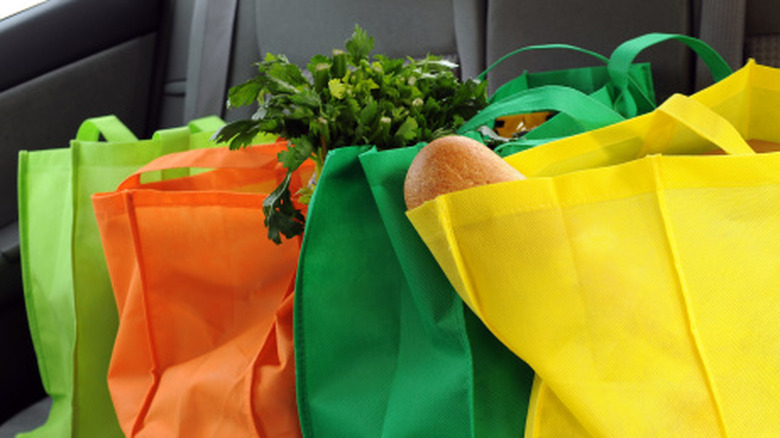
Whether its out of concern for the environment or because of state and local bans on single-use plastic, more people are bringing their own bags with them to the grocery store. Reusable bags help cut down on plastic waste and are usually sturdier than single-use plastic grocery bags, which don't have great effects on the environment. However, reusing bags is something that people should give some extra thought to. Reusable grocery bags have ecological benefits, but without extra care, they can pose a health risk.
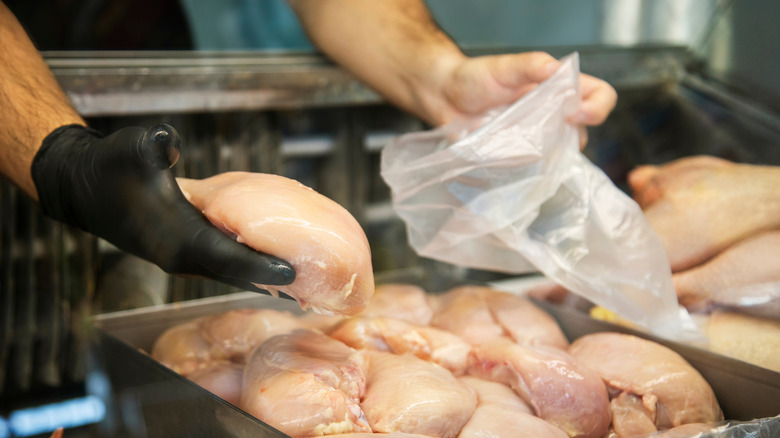
Reusable bags frequently harbor germs that can make you sick. For example, bacteria from raw meat can transfer onto the surface of a bag where it can later contaminate food on your next supermarket run. Similarly, bags can transfer bacteria to from shopping carts and conveyer belts to your kitchen counter and vice versa.
A 2019 study in Portugal found that all of the reusable plastic grocery bags in their experiment were contaminated with potentially harmful bacteria. Similarly, researchers at Loma Linda University noted that nearly all bags harbored bacteria, with 10% containing E. coli, a bacteria known to cause illness. Additionally, there was an outbreak of norovirus that was traced to a contaminated reusable bag.
Keep 'em separated
While this might seem concerning, there's no need to return to using single-use plastic bags. In fact, for many people, single-use plastic bags are no longer an option. In 2015, California enacted a ban on plastic grocery bags to help reduce non-biodegradable waste, with other states passing policies either banning or charging a small fee per bag over the past decade. With a little extra care, reusable grocery bags can be a safe alternative to single-use plastic.
One of the biggest risks with reusable bags is cross contamination. To avoid this, you should have dedicated bags for raw meat, fresh fruits and vegetables, and ready to eat grocery items and never mix them up. It's also a good idea to keep such items separate in the grocery cart and on the checkout conveyor belt. Additionally, placing packages of meat in disposable plastic bags sealed with a twist tie before putting them in your reusable bag can be helpful. Single-use bags for meat and produce may be exempt from bans and fees in some states, though your mileage may vary. It's also important to put cold groceries away in the refrigerator or freezer within two hours (one hour if temperatures are above 90 degrees), and clean areas where you set bags down.
Fresh and clean
Experts also recommend using grocery bags only for groceries. Researchers have found that around one third of people use the same bags they use for groceries to carry clothes and other items. They also recommend not storing grocery bags in a car trunk, where the dark and warm conditions are ideal for bacterial growth. Additionally, regularly cleaning reusable bags is an effective but often overlooked way to stay safe.
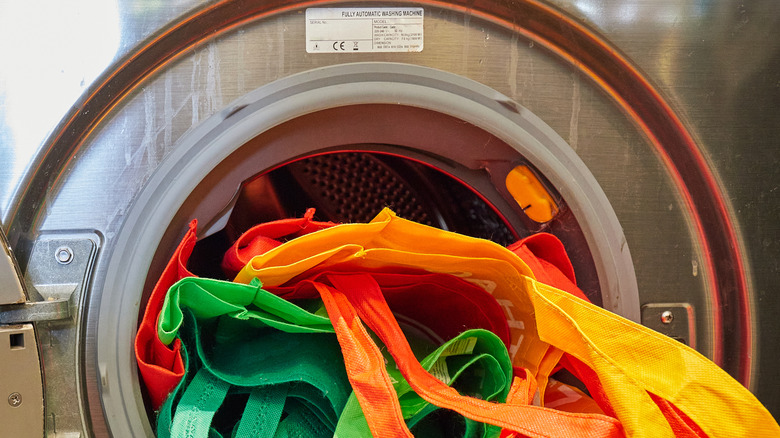
Experts recommend cleaning reusable grocery bags as often as you'd wash kitchen towels. The best way to clean bags depends mostly on the type of bag. Cotton or canvas grocery bags are possibly the easiest: Just toss them in the washing machine with hot water and dry either in a dryer or air dry. Nylon or plastic reusable bags can also be cleaned in a washing machine using warm water and a gentle cycle and line dried. For insulated grocery bags, the best course of action is cleaning inside and out with a damp rag and then wiping them down with a disinfecting wipe or spray. You can also hand wash bags in a sink with warm water, letting them soak for at least 15 minutes before rinsing and drying.
Routine cleaning and following safety practices like only using certain bags for certain grocery items can reduce the risk of cross contamination. Reusable bags have many benefits, but before you reuse them you should think twice.