

Myth Or Mystery: Can Dogs Really Sense An Oncoming Storm?
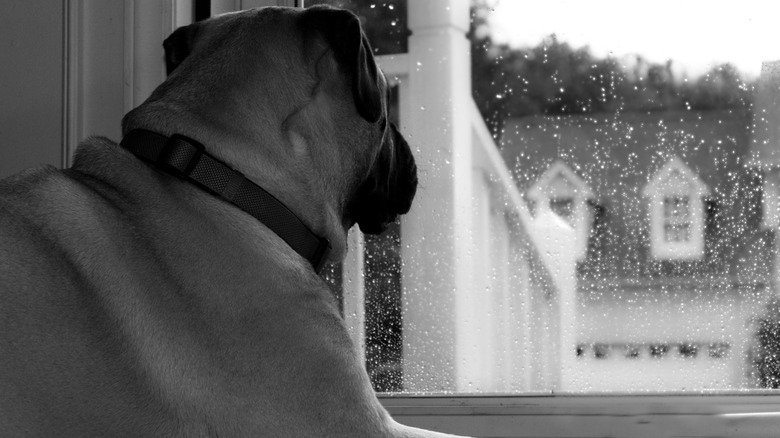
Like other animals, dogs are often lauded for having instincts about situations that humans might miss on their own. In fact, researchers have confirmed that dogs are among the animals that are smarter than you think. Many have even claimed that their dogs can sense storms before humans can hear or see signs of them. While such a scenario seems straight out of a movie, you may have witnessed changing behaviors in your own dog or someone else's. For a long time, the ability of dogs to sense an oncoming storm seemed like a myth, due to a lack of solid evidence. However, research does confirm that some dogs may exhibit behavioral changes in response to inclement weather, but there are also several nuances to consider before relying on your dog for meteorological predictions.
A dog's ability to perceive weather changes boils down to their senses, some of which are heightened compared to ours. For example, dogs may be able to hear thunder sooner than their humans can, and those with noise phobia may be more attuned to such changes. According to The Weather Channel, dogs' sensitive olfactory systems allow them to smell changes that might point to adverse weather events, such as rain. They can even pick up on a warning sign that lightning is about to strike by smelling ozone. Some dogs are capable of feeling drops in pressure associated with inclement weather. Furthermore, dogs might experience static electricity in their fur in response to these adverse weather events, says PetMD. If a dog's senses pick up on these clues, it's no wonder that they might act unusual in response.
The ability of dogs to sense storms is not always so straightforward
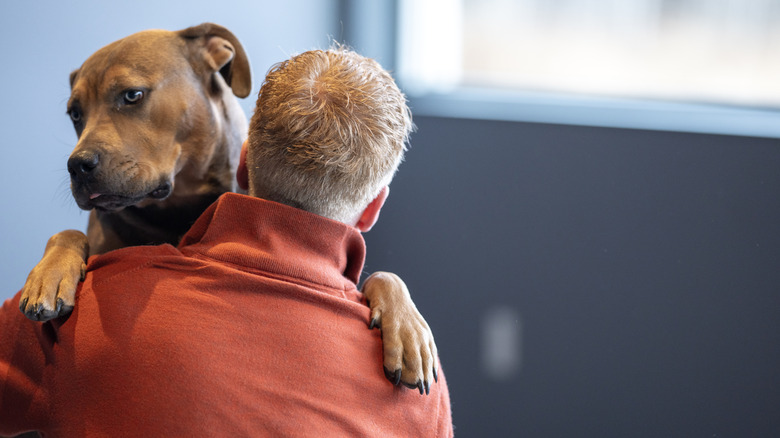
Scientists have also begun researching how dogs respond to storms. One study published in Applied Animal Behaviour Science revealed that, out of 1,326 dogs, 43.6% experienced a fear of thunder. However, the level of fear and subsequent behavioral responses not only varied by breed, but dogs who were with humans that were afraid of thunder were more likely to exhibit fear themselves. Interestingly, the level of fear and behavioral changes were more pronounced in dogs who lived in houses. Such data suggest that the ability of a dog to sense a storm and exhibit behavioral changes is much more complex. The fact is that many dogs experience storm phobia, with some cases being more debilitating than others. There are also dogs who are not bothered by storms at all, and subsequently may not exhibit any behavioral changes.
Furthermore, the ability to sense storms is not exclusive to dogs. One 2022 study from Frontiers in Veterinary Science investigated whether climate change–fueled weather events were connected to behavioral changes in both dogs and cats. Here, the authors explained how both animals responded adversely to thunderstorms, noting that about 47.7% of dogs exhibited fearful behaviors. Such behaviors were noted in 57.7% of cats. Researchers have also hypothesized that wild birds might predict adverse weather events due to their ability to pick up on sound waves that are undetected by humans, and they may be more sensitive to drops in pressure.
The bottom line? Dogs are more sensitive to the warning signs of thunderstorms than humans. However, the way dogs can respond to storms widely varies, with more research needed to unravel this phenomenon.