

Morning Sickness Myths That Have Been Debunked By Science

Early in pregnancy, it's common to experience nausea and vomiting. Better known as morning sickness, this pregnancy symptom is thought to be associated with hormone fluctuations that can make you feel queasy and sick. It's most prevalent in the first trimester, with most cases easing up in the second. While rare, some people may experience morning sickness during all stages of human reproduction. Overall, it's estimated that morning sickness affects at least 70% of pregnant women, according to the Cleveland Clinic.
Despite the near-ubiquity of morning sickness in pregnancy, there are unfortunately some myths that surround this common experience. These can be related to timing, severity, and even gender predictions. Such myths can understandably increase the risk of stress around experiencing morning sickness. In severe cases, a misunderstanding about morning sickness may also prevent pregnant people from seeking medical help when they need it. It's always important to seek advice from a doctor, midwife, or other medical professional if you have questions about morning sickness or any other forms of discomfort during pregnancy.
Morning sickness isn't exclusive to mornings
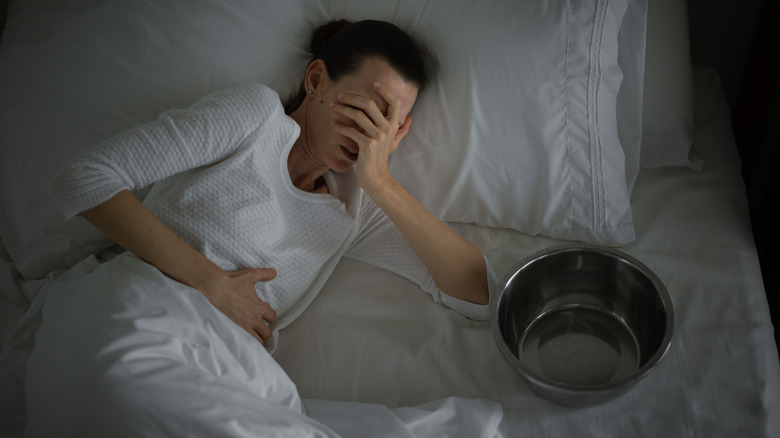
Morning sickness involves nausea and vomiting that primarily occurs early in pregnancy. The severity of these symptoms can greatly vary, and it's possible for some people not to vomit as much as others. The associated symptoms can arise seemingly out of nowhere, or even when smelling specific odors or eating trigger foods. Aside from nausea and vomiting, it's also possible for morning sickness to cause headache, loss of appetite, heartburn, and acid reflux.
Yet the term "morning sickness" is a bit misleading. While it most often occurs in the morning hours, morning sickness can technically occur at any time of day or night. Some people may experience heightened queasiness in the mornings, while others might have ongoing nausea that isn't specific to any time frame. It's also possible to experience morning sickness at different times each day. While morning sickness is generally worse during the first trimester, the Cleveland Clinic says that most cases peak at around 8 to 10 weeks. At the same time, it's important to keep in mind that peak morning sickness can be just as variable as the time of day symptoms occur.
Morning sickness has numerous physiological causes
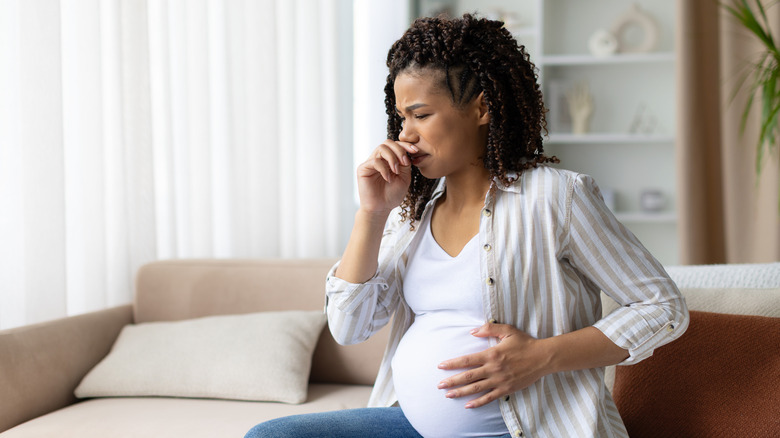
Morning sickness is primarily attributed to hormonal changes that develop in early pregnancy, especially with an increase in estrogen and human chorionic gonadotropin hormones. According to MedlinePlus, the average onset of morning sickness is 4 to 6 weeks after conception. Researchers also believe that morning sickness may be attributed to other physiological changes, including fluctuations in blood pressure, blood glucose in the body, and your metabolism.
Yet it's a myth that morning sickness has specific mental risk factors, or that anxiety and stress can cause morning sickness. While the Cleveland Clinic notes that both stress and anxiety may worsen morning sickness, there's no scientific evidence of any causal relationship. The same goes with mood disorders, which make morning sickness worse, but are not direct causes. Morning sickness may also be worsened (but not directly caused) by fatigue, hot weather, and motion sickness. Additionally, research suggests that severe, untreated morning sickness could exacerbate anxiety and depression.
Morning sickness cannot accurately predict a baby's gender

Perhaps one of the more enduring and scientifically unfounded myths surrounding morning sickness involves gender. In particular, it's commonly believed that experiencing severe morning sickness symptoms is associated with having a girl. Such cases are much more nuanced, and so far no research has established any direct link between morning sickness and the biological sex of a fetus.
Yet the current body of research does point to a gray area here. This involves a severe form of morning sickness called hyperemesis gravidarum, which the Cleveland Clinic says affects between 1% and 3% of pregnancies. Interestingly, the risk of hyperemesis gravidarum may be greater in people who are pregnant with girls. At the same time though, there's no evidence that severe nausea and vomiting automatically means a baby is female. The most accurate way to find out whether a fetus is male or female before giving birth is through an ultrasound starting at around the 12- to 13-week mark, says WebMD.
Morning sickness may not be better in a subsequent pregnancy

While common, morning sickness is a complex phenomenon, and scientists still don't know exactly why some people experience worse symptoms than others. However, the Mayo Clinic does say that the risk of morning sickness may be greater if you have a history of queasiness and vomiting associated with unrelated medical issues. Examples include migraine and motion sickness.
It's also a myth that morning sickness is worse with a first pregnancy, or that you won't experience nausea and vomiting with any subsequent pregnancies. In fact, people who have morning sickness in a prior pregnancy are much more likely to have it again during another pregnancy. A 2026 study published in Frontiers in Medicine noted that the rate of recurrence of morning sickness in a second pregnancy can be as high as 80%. At the same time, you might notice that your triggers are different between pregnancies, including varying odors or foods.
Not all cases of morning sickness are harmless
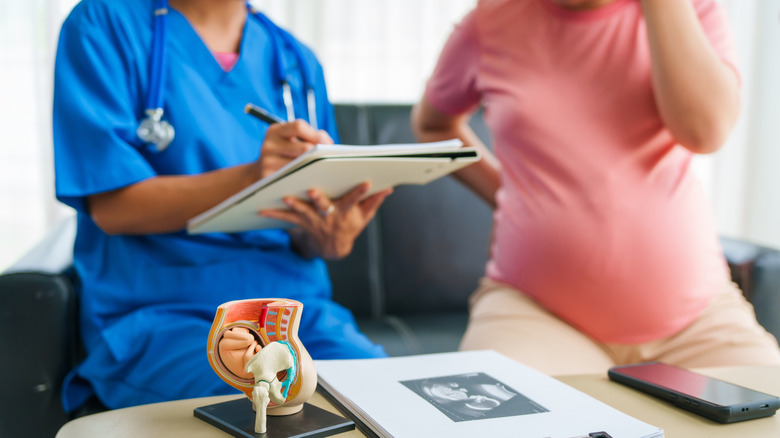
Overall, most people who experience mild cases of morning sickness early in their pregnancies are unlikely to have any complications. If vomiting is severe though, dehydration is possible. Early signs and symptoms of dehydration include dark urine, reduced urine output, as well as dizziness and weakness. (To catch dehydration early, it's important to know what urine color can reveal about your health.)
Hyperemesis gravidarum is another possible complication of morning sickness. This condition is characterized by ongoing nausea you might experience most of the day, as well as vomiting more than three to four times per day. Hyperemesis gravidarum can cause women to lose 5% or more of their pre-pregnancy bodyweight, says the Mayo Clinic. This is a serious condition that often requires hospitalization.
For these reasons, it's important to call a doctor right away if you're getting sick several times a day, or if you are experiencing flu-like symptoms in addition to nausea and vomiting. You should also reach out to a healthcare professional if you cannot keep any liquids down, are experiencing dehydration, or if you're experiencing dizziness and a rapid heart rate. Any of these situations may point to a more serious problem requiring treatment. Early treatment and lifestyle modifications could improve quality of life during morning sickness while also reducing the risk of more serious complications.