

In 1967, Lab Workers Handling Imported Monkeys Started Falling Ill; Scientists Found A Deadly New Virus

The summer of 1967 was particularly warm in Marburg, Germany. As the hot days of the season neared their end in August, several individuals with peculiar symptoms were admitted to the local hospital. Physicians, perplexed by the duration and nature of these symptoms, began to investigate. They discovered that of the 29 admitted patients, all primary cases of the illness had something in common. It wasn't simply age or neighborhood; it was where they worked. These individuals all worked in a lab that made poliomyelitis (polio) vaccines. Their exposure eventually was linked back to the animal model that they worked on called grivets, or African green monkeys.
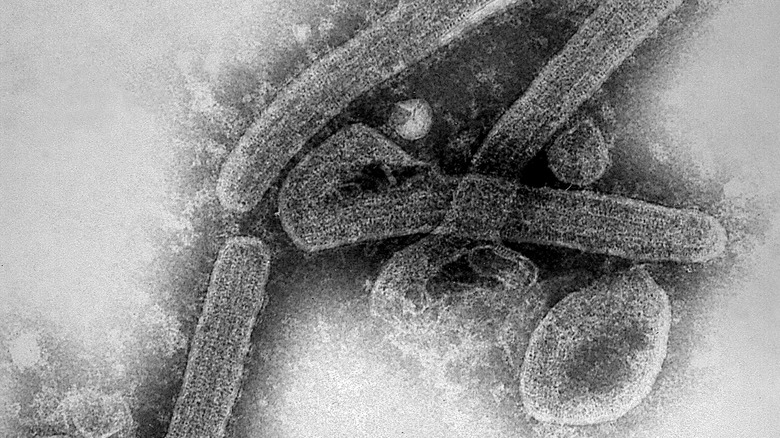
Interestingly, polio vaccine manufacturing had only recently begun relying on grivets as their non-human primate resource. Previously, polio vaccines had been propagated through kidney cells in Indian rhesus monkeys, but this specific strain of monkey was known to carry the herpes B virus. So, grivets became a more sought-after model, as they were thought to be incapable of introducing pathogenic viruses that could transfer to humans. As it turned out, this was a severe miscalculation, and the sudden introduction of these new cases made that error known, leaving seven people dead. A whole new viral organism was characterized by these mysterious occurrences and were named after the plagued region: the Marburg virus.
Marburg virus
The African green monkeys had been imported from Uganda for use in polio vaccine development. Prior to transport, the animals had supposedly received a certificate of good health from a veterinary office. Scrutiny later fell on the exporters and doubts arose as to the validity of their health certification claims. However, the leader of this operation insisted that they had been properly assessed.
Initially, the symptoms that patients were presenting were not particularly severe and elicited little concern from healthcare providers. However, roughly a week after symptoms first began, more alarming indicators arose. Nausea and vomiting made physicians worry that the patients might have typhoid fever, and they were admitted for inpatient care. At this point, many patients also developed pink eye and rashes. Meanwhile, similar cases were emerging in Frankfurt, Germany among employees at another institute that developed vaccines through non-human primate cell cultures.
Within the second week of symptoms, most patients began to exhibit hemorrhaging, with a quarter of all patients developing severe manifestations, such as extreme bleeding from needle pricks and blood pooling from all orifices. Such symptoms provided its other colloquial title: the bleeding eye virus.
It was later discovered that many of the infected individuals had specifically worked with blood, organ, and cell culture samples of the monkeys. Meanwhile, workers who had cleaned the cages or handled the monkeys did not develop infections. This information allowed researchers to later recognize the virus as a bloodborne pathogen.
Marburg's cousin
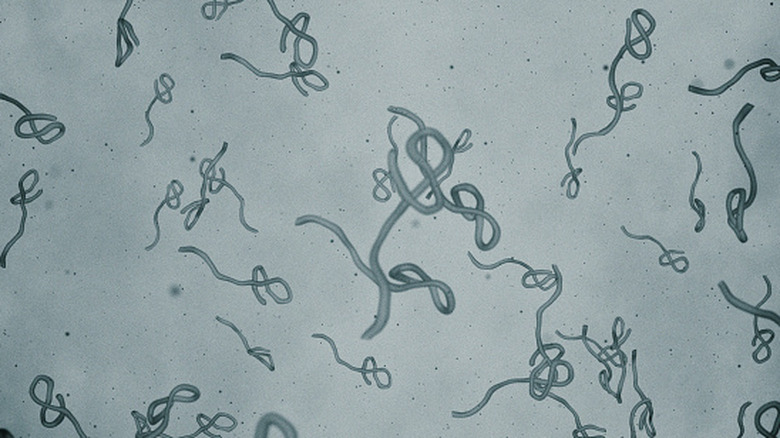
Researchers operated quickly to identify the cause of the disease, and in less than three months, a new virus had been characterized. By analyzing blood serum from infected patients and non-human animals, scientists uncovered the very first filovirus. These are RNA viruses and look like a ribbon under a microscope. Another famous member of this viral family is the Ebola virus.
Interestingly, an Ebola outbreak with striking similarities occurred in a non-human primate facility in the United States in 1989. Cynomolgus monkeys that had been transported to Reston, Virginia from the Philippines died following the development of hemorrhagic fever. Some of the deceased animals were found to have simian hemorrhagic fever, which is not known to infect humans. However, others had been infected by an Ebola virus, of which certain strains can infect humans. The strain identified in these monkeys looked like Zaire, which has a 90% mortality rate among human populations.
But this outbreak had a very different outcome that appears remarkably lucky in retrospect. While four individuals who worked in the facility tested positive for Ebola, they never developed any symptoms. Although it looked incredibly similar through the microscope, the virus did not actually belong to the Zaire strain, but an entirely different one that was newly characterized. Fortunately for all involved, this particular variant (now known as the Reston strain) is not harmful to humans. However, such outbreaks offer a sobering reminder of the caution that must be placed when performing animal testing.