

Scientists Say This New Treatment Could Completely Eliminate HIV In Newborns
Over the past four decades researchers have developed an array of therapies for HIV (a retrovirus that uses RNA instead of DNA) that have made the disease a manageable, chronic health condition for those who can obtain and afford treatment. HIV infects and destroys immune system cells known as helper T cells. Antiretroviral therapies can reduce the number of viruses circulating in the body (the viral load) to an undetectable level, but this doesn't mean patients are cured. However, researchers recently found a combination of treatments that could get rid of HIV infections in newborns.
In a study published in Nature Microbiology, researchers tested a combination of three treatments in nonhuman primates infected with HIV. They treated rhesus macaques 72 hours after infection using antiretroviral drugs, broadly neutralizing antibodies, and an experimental monoclonal antibody known as leronlimab. The research team found that the subjects had no detectable HIV levels one year after a one-time administration of this combination therapy. Further research in humans is needed, but these findings could point to a treatment that can eliminate HIV in the more than 120,000 babies that are infected each year. Additionally, this one-time treatment could mean that infected babies would not need to take medication for the rest of their lives.
A need for better HIV treatments
Currently, around 1.4 million children around the world live with HIV. Without treatment, around 80% of the infants infected with HIV at birth will die within their first five years of life. This is because the weaker immune systems of infants and small children allows HIV to progress faster. Treatment of HIV in children is possible, though pediatric populations are even less likely to get treatment than adults. Because of this, prevention is crucial.
Around 95% of pediatric HIV infections result from vertical infection. This is where the virus passes from the mother to the baby during pregnancy, childbirth, or breastfeeding. During childbirth, human newborns can be exposed to HIV by swallowing fluids or getting them in their eyes. The virus can also pass through breastmilk. Reducing the mother's viral load decreases the chances of infecting the child. With screening and the use of antiretroviral therapies during pregnancy, childbirth, and breastfeeding, the odds of passing HIV from mother to child is less than 1%.
However, testing and treatment is not available or affordable to everyone around the world. Thus, being able to clear HIV from infants in those cases or when treatment failed would be groundbreaking.
A winning drug combo
The most commonly used treatment for HIV — antiretroviral therapy — works by targeting different actions of the virus using a combination of medications. These medications include drugs that prevent the virus from attaching to cells, keep it from breaking apart and reassembling proteins to make new copies of itself, or stopping HIV from replicating inside cells. Antiretroviral therapies are effective at reducing viral load, but even after years of treatment patients still carry the virus.
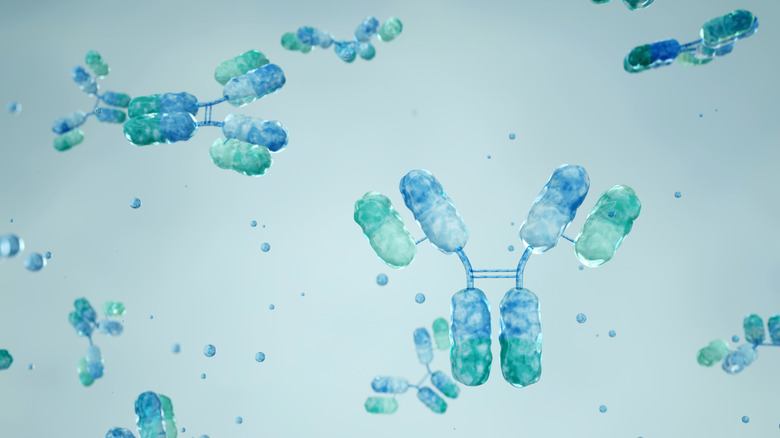
To deal with HIV in newborns, the research team combined antiretroviral therapy with two other treatment methods that can also reduce, but not eliminate the virus on their own. Neutralizing antibodies essentially round up HIV in the body, reducing the amount that can circulate. Keeping the virus from moving around and stopping it from making copies of itself can further reduce viral load. The third part of the therapy is leronlimab, a monoclonal antibody that blocks CCR5, a cell surface protein that HIV uses to enter and infect cells.
Combining these three therapies is what eliminated HIV in the study's nonhuman primate subjects. After this success, the next step is human clinical trials, most likely in newly infected adults. Further study will clarify how this combination works and whether the treatment will work beyond three days after infection.