

The Popular Sleepwalking Myth That's Been Debunked By Science
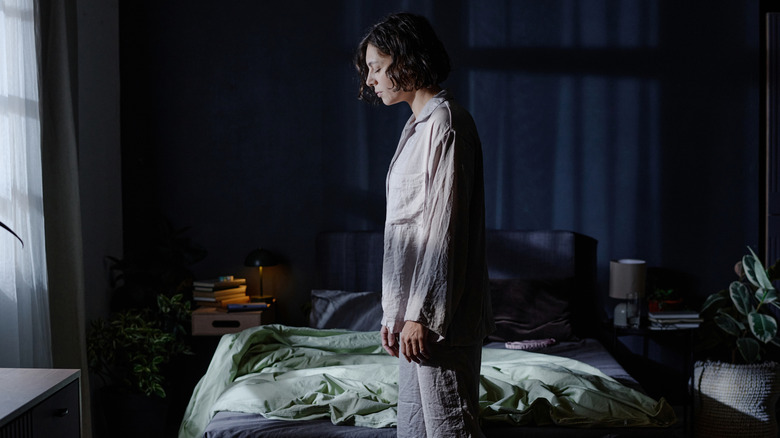
If you live with someone who sleepwalks, you've likely heard that you must never wake them, for fear that it could be incredibly dangerous for the sleeper. Some claims suggest that it can cause them to have a stroke, a heart attack, or put them in a coma, but you will be pleased to hear that these are all myths. While care must be taken when dealing with a somnambulist, waking them is likely to cause confusion and disorientation, rather than physical harm.
Watching someone walking around while asleep is an unsettling and eerie sight, and your first instinct should always be to keep them safe. Sleepwalking is a type of parasomnia, a sleep disorder that causes people to behave strangely while asleep, and can include walking, talking, or hallucinating without waking up. Someone who is sleepwalking is genuinely still asleep, and waking up suddenly could be incredibly confusing or frightening for them. This is likely where the myth of there being danger in waking them came from, as some experts believe that it is best not to wake them if it can be avoided.
Of course, it is not safe to allow individuals to walk freely around their home in a sleep state, especially if there are stairs, windows that can be opened, or if they are able to get outside. There have been documented cases of sleepwalkers driving and having no recollection of the event, which can obviously be incredibly dangerous for themselves and others on the road. To prevent risky situations, waking a sleepwalker may sometimes be the right course of action, but it must be done with some care.
The issue with waking a sleepwalker

Sleepwalking is a common condition in children, with around a third of kids walking in their sleep at some point. Though the most common age is between four and eight, it can continue longer and into adulthood, though it is rarer. It happens when a person in a deep state of sleep is partially awoken, which leads to them being able to move around while they remain sleeping. There is a genetic component, with children of sleepwalking parents significantly more likely to have parasomnia than others. Other factors for adults include lack of sleep (you need between seven and nine hours), alcohol consumption, and sedative medications.
When someone is sleepwalking, waking them up will feel just as sudden and shocking as abruptly being woken from a deep sleep by your alarm clock. They will then be disoriented and even frightened to find themselves in an unexpected environment, and in rare cases could become aggressive or violent, especially if they believe they are being restrained. In the same way that you would feel confused and groggy if someone woke you from a deep sleep during the night, the sleepwalker's brain will need to come out of its slow delta wave state, which usually promotes rest and relaxation, and return to a conscious state. This often causes confusion and could even prompt panic if they have no memory of leaving their bed. As the person who is alert and in-control, it is vital that you remain calm, no matter what the sleepwalker says or does if they wake.
How to help someone who is sleepwalking

The first course of action with a sleepwalker is to assess their risk. If they are in danger of behaving in extreme ways — as in the incredible case of the teenager who climbed a 130 foot-high crane while asleep before curling up at the top without waking up — this requires a different approach than if they are simply shuffling around the bedroom. Where possible, the advice is to guide them back into bed as gently as possible, trying not to wake them in the process. Sleep medicine specialist Dr. Raghu Reddy advises, "Try to ease them back to bed without making forceful attempts. If unsuccessful, just watch closely to assure their safety and try again after some time has passed."
Even once they have settled back into bed, it is important to assess the risk of further sleepwalking attempts. For children, stairgates may be a good option, while with sleepwalking adults a door sensor could alert you if they get out of bed, while it would be prudent to remove tripping hazards from the floor and lock windows, just in case. Although waking someone who is sleepwalking is not dangerous, keeping them calm and helping to keep them safe is key, and if it is safe to let them stay asleep, it is probably best to do so.