

5 Common Sunscreen Myths That Have Been Debunked By Science
We may receive a commission on purchases made from links.
At the first sign of a sunny day, many of us get straight outdoors to soak up those precious rays. Applying sunscreen is an important part of enjoying the sun safely, but there are many prevailing myths that can make a day outdoors more dangerous than it should be. Believing these commonly held untruths can leave your skin exposed without you being aware, and the long-term consequences can be serious.
According to Cancer Research UK, damage from the sun is the biggest cause of melanoma, a type of skin cancer, and it is believed that 90% could be avoided by safer behavior in the sun. The ultraviolet (UV) radiation from the sun falls into three categories: UVA, UVB, and UVC. UVA rays primarily contribute to premature aging and wrinkles, while UVB rays are the main cause of sunburn. UVC rays do not penetrate Earth's atmosphere, so at least we don't need to worry about them.
Sunburn damages the skin's DNA, which can ultimately lead to skin cancer, especially if skin is repeatedly damaged. Applying sunscreen can drastically reduce the chances of sunburn and the associated cancers, as long as it is applied correctly and replaced regularly. Not believing the following common myths should help you in your quest for sun safety.
Myth: You only need sunscreen on a hot, sunny day
It seems logical to assume that the hotter the weather, the greater chance of sunburn, but that is not always the case. The heat we feel from the sun is caused by infrared radiation, rather than the UV radiation that causes skin damage. Even if the sun is hiding behind a cloud, which will make it feel cooler, up to 80% of UV rays can still pass through, according to the Environmental Protection Agency. The UV rays that cause damage can not be detected by our skin, so sunscreen is a good move even on days where the temperature is a little cooler.
Instead, the UV index is a better guide to how much protection is needed, with sunscreen being recommended from level 3 and above, especially for children. The risk is highest when the sun is high in the sky, which can be from 10 a.m. until 4 p.m., depending on what part of the world you live in. Keeping in the shade as much as possible during peak hours is recommended, and sunscreen should always be worn during these times.
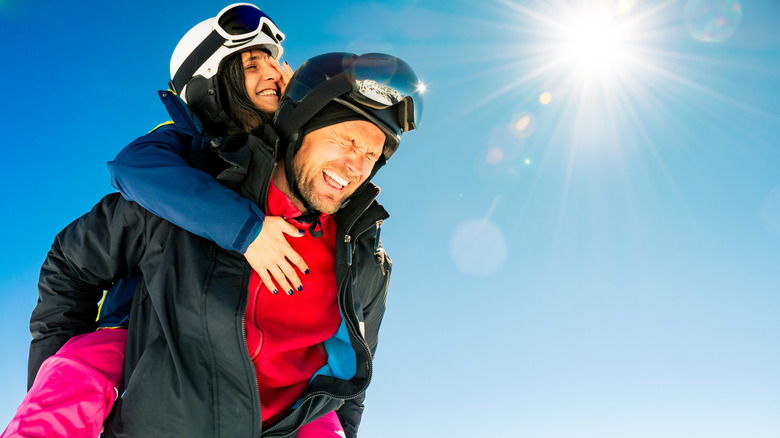
Winter doesn't automatically mean the sunscreen can be packed away either, especially if you are skiing. At high altitude, the atmosphere is thinner, meaning more exposure, and the snow can reflect the majority of UV rays, meaning a sunburned face if you don't take precautions. Tinted ski goggles and high SPF sunscreen is crucial if you are planning a trip to the ski slopes.
Myth: A higher SPF means sunscreen can be applied less often
Sun protection factor (SPF) is a measure of how much protection a particular sunscreen gives your skin. An SPF of 50 is going to be more protective than an SPF of 20, making it easy to choose the best protection for you and your family. However, it is logical to assume that you can spend 50 times longer in the sun after a sunscreen with SPF 50 applied than if no protection was used, but it is not quite as simple as that.
On The Skin Cancer Foundation website, Steven Q. Wang, a dermatologist and photobiologist, explains "Think of SPF as a sunscreen filter strength, not a time allowance. SPF measures how much more UVB energy is needed to burn protected skin compared to unprotected skin. I repeat: It is not a time multiplier."
The more time sunscreen spends on the skin, the less effective it is likely to be under real conditions. The sweat from your body, rubbing your face, or playing in the sand can all reduce the quantity or effectiveness of the sunscreen, so reapplying every two hours is essential, no matter what number is on the bottle. The application is important too, since it has been found that most people apply far less sunscreen than is used during studies, meaning that protection could be even less than if it is applied correctly.
Myth: Waterproof sunscreen saves you needing to reapply it after swimming

If you are planning to swim in the sun, a water-resistant sunscreen, such as Banana Boat Sport SPF 50, is a must. This doesn't mean, however, that you are protected long after leaving the water, and the recommendation is to reapply as soon as you have dried off. Your skin is still at risk while you are in the water, as UVB rays can penetrate, and the cold water may make you feel as though you are not at as much risk. In most cases, people towel dry after coming out of the water, meaning that the sunscreen will be wiped off anyway, so reapplication is essential.
The FDA doesn't actually allow sunscreens to be labeled as "waterproof," so in the U.S. at least, you won't find any with that claim. Instead, it may say "water-resistant" or "sweat-resistant" and must have been rigorously tested to make that claim. The FDA website advises reapplying sunscreen more often than the usual two hour intervals if you are in and out of the water. Whenever water is involved, and especially if you have towel dried, assume that the effectiveness of your sunscreen has been reduced, and be overly cautious about regular reapplication.
Myth: A base tan will prevent you from burning
A long-prevailing idea is the concept of getting your skin used to the sun before a vacation by getting a "base tan." In theory, the skin will be prepared before encountering the intense sun, but this is not the case, as it doesn't provide anywhere near the protection that sunscreen can.
Cancer Research UK explains that the process of tanning is a sign of early skin damage, as the body tries to protect itself from the sun's rays. It is thought to provide protection similar to around SPF 3 or 4, which is nowhere near the recommended minimum SPF of 15 for adults and 30 for children.
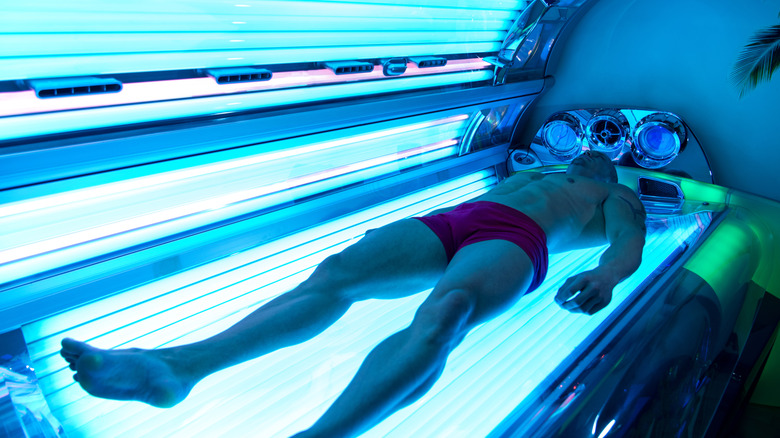
If you are planning to use a tanning bed to acquire the base tan, that is an even worse idea, since tanning beds are thought to cause even more damage than the equivalent natural sun exposure. The statistics for indoor tanning are very concerning, according to a 2016 study It found that of the 63 women in the study who were diagnosed with melanoma, an enormous 97% of them had used tanning beds. The beauty expectation of a "healthy glow" is in fact putting young people in serious danger, in an attempt to get the beach bronzed look. A much safer option for those wanting to look tanned for vacation is a spray-on tan, such as L'Oreal Paris Sublime Bronze Self Tanning Mist, but it must be remembered that they offer no SPF protection, so sunscreen still needs to be applied in the usual way.
Myth: After-sun products can reduce the damage done by the sun
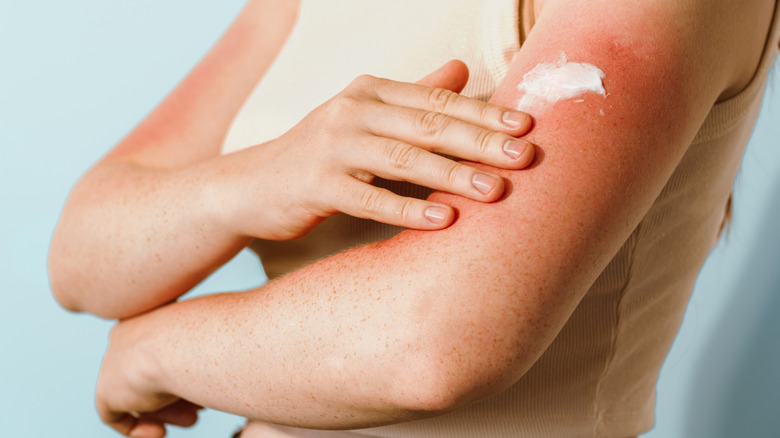
Even when taking precautions, getting caught out in the sun can happen, along with the dreaded red skin appears later that day. After-sun products like Hawaiian Tropic After Sun Body Butter are effective at reducing the symptoms and discomfort in the days following sunburn, but they do nothing to reduce the damage done to the skin, and the potential increase in the risk of skin cancer.
Cancer Research UK recommends seeking shade as soon as you suspect that your skin may be burning, and not returning to the sun for the rest of the day if possible, even with high SPF sunscreen. Any DNA damage will have already been done, so preventing more intense sunburn is the immediate goal. Common symptoms of sunburn include itchy skin, blisters, and peeling areas after a few days. Applying after-sun lotion to the area liberally can help with these symptoms, as can drinking water regularly and taking a cool bath. If the sunburn is serious, be sure to keep blistered areas clean and seek medical advice if they appear to be infected.
The only way to prevent skin damage from the sun is to stay in the shade, but sunscreen provides adequate protection to allow us to enjoy the warm weather without too much risk. Applying it correctly and staying out of the sun at peak hours are the most sensible ways to spend time outdoors, and prevent the discomfort of sunburn and the potentially dangerous long-term effects.