

In The '60s, The US Military Tried To Bury Nukes Underground. They Didn't Expect What Happened Next.
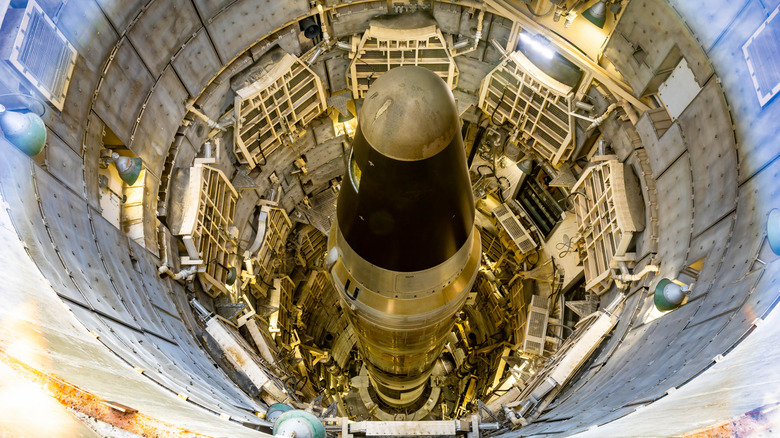
During the Cold War, the United States focused heavily on countering the massive power of the Soviet Union. This rivalry is part of what led to the creation of NASA and the push toward its goals, as well as driving the early space program and motivating ambitious projects on land. One of these projects, known as Project Iceworm, buried nuclear missiles under the surface of the Greenland ice sheet where they'd be hidden from the Soviet Union's prying eyes. However, military leadership didn't anticipate that the ice itself would wreck their plans.
Project Iceworm consisted of a network of hidden missile silos connected by tunnels beneath the surface of Greenland's ice sheet. A system of sub-ice tunnels measuring nearly 2,500 miles held railroad tracks that allowed the military to continually shuffle 600 nuclear missiles from one silo to another on specialized rail cars. The idea was that this would keep Soviet military planners from knowing exactly where the missiles were at any given moment. The military also operated a research center, known as Camp Century, in part to serve as a public-facing cover story for Project Iceworm. The military abandoned Camp Century and Project Iceworm a few years later because maintaining rail tunnels beneath the surface of Greenland's ice proved to be too difficult.
Camp Century and the military presence in Greenland
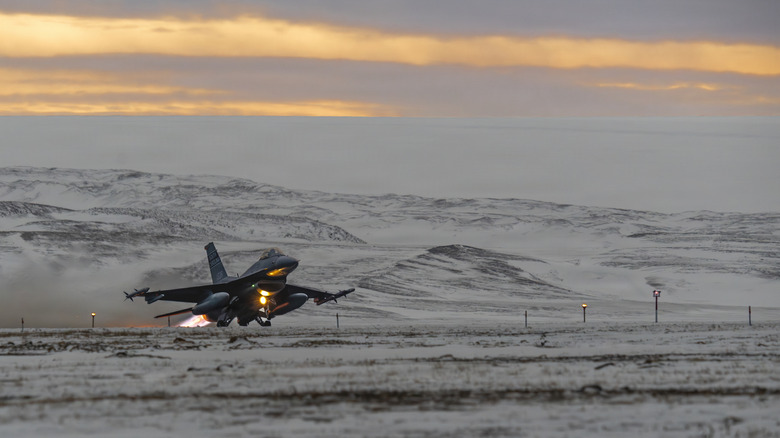
The United States has had a military presence in Greenland since the Second World War. After the war, in 1951, the military opened Thule Air Base near the town of Qaanaaq on the northwestern coast of Greenland and installed radar installations across the island. Now known as Pituffik Space Base, it remains operational today. But throughout the 1950s, military officials also conducted surveys of the Greenland ice and settled on a location 150 miles from Qaanaaq to build Camp Century.
The harsh conditions of northwestern Greenland, with an average of 4 feet of snowfall per year, temperatures dipping to 70 degrees below zero, and wind gusts of up to 125 miles per hour, made the surface inhospitable. Because of this, engineers built what was essentially a small city beneath the ice, with laboratories, barracks rooms, offices, and even a movie theater. Powering the base was a small nuclear power plant designed to provide electricity and heat to remote sites. However, as ambitious as this project was, Greenland's constantly shifting ice and snow had different plans. Tunnels became too narrow for rail cars to pass through, and at one point, the room housing the camp's nuclear reactor had to be expanded to stay in operation.
Greenland's constantly moving ice
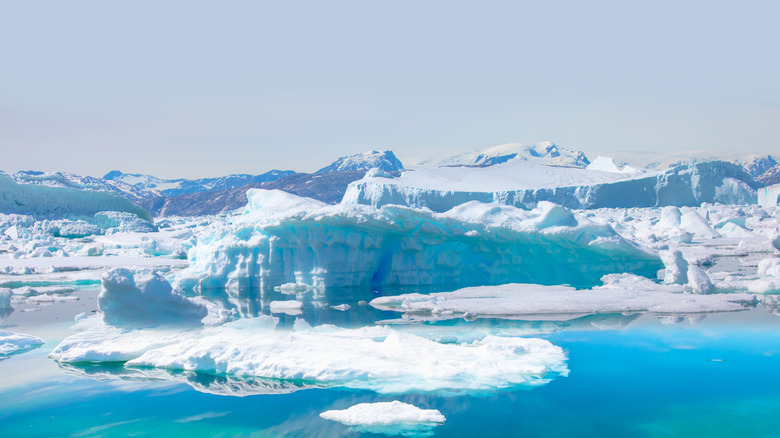
The problem facing Project Iceworm was that a large mass of ice like the Greenland ice sheet is not stationary. Even in extremely cold conditions, ice sheets spread out like honey on a plate. Snow falling on the surface slowly compacts under its own weight, forming ice that flows toward the ocean. The region where Camp Century was located was thought to be ideal because it is relatively flat. But over time, the moving ice became too much for engineers to handle. In 1964, the military shut down and removed Camp Century's nuclear reactor and abandoned the station completely by 1966.
The prevailing thought at the time was that the shifting ice that plagued Project Iceworm would lock Camp Century away forever. However, while the public was already aware of Camp Century, they also learned about Project Iceworm years later thanks to a 1997 investigation by the Danish government which released documents about the project. Even more recently, a team of NASA engineers detected the remains of Camp Century beneath the ice while studying Greenland with an advanced ice-penetrating radar instrument.
And while the public now knows the extent of Camp Century, the physical remains of the camp itself may also soon see the light of day. The prevailing thought in the past was that the shifting ice that plagued Project Iceworm would lock Camp Century away forever, but climate change might jeopardize that. In 2016, scientists reported that the effect of rapid global warming on the Greenland ice sheet could expose the materials the military left behind. The military had big plans for Camp Century, but it seems that Greenland's ice keeps doing the unexpected.