

The Science Behind The Viral Gen-Z 'Sleepmaxxing' Trend
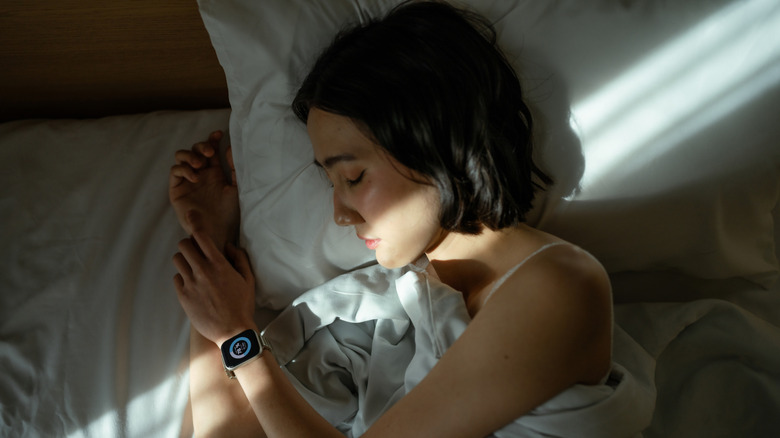
Viral trends come and go, and many are arguably too good to be true. The "sleepmaxxing" trend still seems to have some staying power, though, as it addresses the ongoing problem of sleep deprivation. As its name suggests, the trend focuses on maximizing sleep quality and improving your sleep environment to benefit your overall health. Followers of the trend might also try sleepmaxxing to get the amount of sleep really needed. Before you dismiss sleepmaxxing as just another Gen-Z trend, it's important to unpack the concept to understand why people might follow it. While some of the viral rules and suggestions have no research backing them up, others are similar to clinically proven methods of sleep hygiene. The key, of course, is to separate the scientifically-backed features of sleepmaxxing from those that are unhelpful (and possibly dangerous).
First, it's important to note that the concept of sleepmaxxing has not yet been evaluated in any clinical setting. According to Old Dominion University, the concept isn't recognized by sleep medicine experts, either. One could interpret this to mean that sleepmaxxing doesn't have any scientific backing, but jumping to this conclusion ignores many of its healthy aspects that are based in science. Part of the problem is the numerous features associated with sleepmaxxing. These include standard sleep hygiene practices, such as getting enough sleep, consistent sleep-wake times, and avoiding stimulating foods, drinks, and activities before bed. Keeping your room quiet, cool, and dark is also important, but it is not novel advice that's exclusive to sleepmaxxing.
Parts of the 'sleepmaxxing' trend that are not based in science
On the flipside, there are parts of sleepmaxxing that have zero scientific basis. Some rules are relatively harmless, such as eating kiwis before bedtime. Others might not be safe, like taking supplements and taping your mouth closed. Melatonin is one such supplement advocated by sleepmaxxers that the National Center for Complementary and Integrative Health does not recommend for everyone, or for long-term use. Sleepmaxxing may even be counterproductive in some cases, especially if you feel pressured to get perfect sleep every night. This can lead to an unhealthy obsession with sleep perfection known as orthosomnia, says Harvard Health.
Another gray area in sleepmaxxing has to do with universal rules, such as going to bed before 10:00 p.m. The problem with the 10:00 p.m. rule? It does not account for shift work and other responsibilities, nor does it address differences with your sleep chronotype. This is just one instance where sleepmaxxing rules might make sense to some degree, but their universal application doesn't work for everyone.
Instead of following the latest sleep trends, it's important to go back to scientifically backed basics of good sleep hygiene. Going to bed and waking up at the same time each day is always a win, rather than following this sleep shortcut. Aiming for 7 to 9 hours of sleep every night also helps, says MedlinePlus. It's a good idea to talk with a doctor if you're experiencing persistent insomnia, getting too much sleep, or excessive daytime sleepiness despite following these basic rules. They can also help rule out possible sleep disorders.