

Penguin Poop Has An Unexpected Effect On Antarctica's Skies
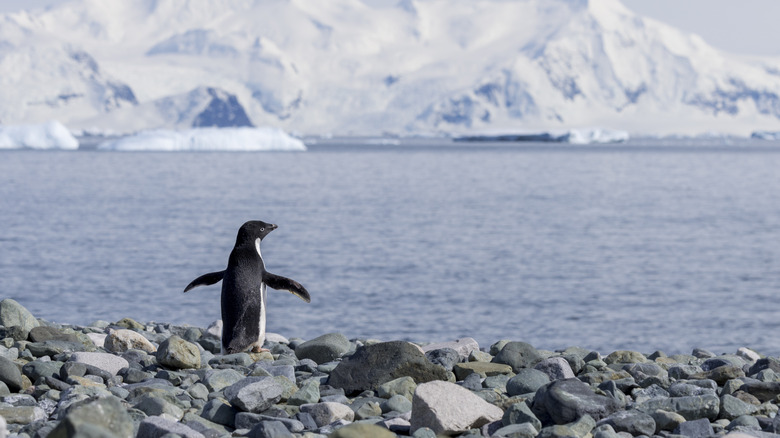
Penguins gather in colonies of tens of thousands throughout Antarctica and inevitably leave behind a ton of poop, scientifically known as guano. Although you might not want to stand downwind of these foul mounds of feces, a 2025 study published in Nature's Communications Earth & Environment provides evidence that penguin poop may play a critical role in influencing weather patterns in the region. Nitrogen waste breaks down into ammonia gas, which may stimulate the formation of clouds and fog when combined with gases emitted by microscopic organisms in the ocean called phytoplankton.
Clouds seeded from chemicals in penguin poop may potentially act as a protective shield in the Antarctic region and bounce sunlight back into space, similar to when you put sunscreen on your skin to protect it from the sun. Since there are relatively few sources of these chemicals in the region, penguin poop is likely a major contributor of the tiny particles that lead to cloud formation called cloud condensation nuclei (CCN). The research team at Marambio found up to a 10,000-fold increase in CCN formation in areas with penguins.
The researchers took measurements of ammonia levels in the atmosphere at Argentina's Marambio Station about 5 miles from a colony of nearly 30,000 breeding pairs of Adélie penguins and another colony about half the size 6 miles northwest. Not only did the researchers find that ammonia levels were higher in areas around the penguin colonies, they also found that levels spiked when wind blew from the direction of the colonies.
How penguin poop may contribute to cloud and fog formation
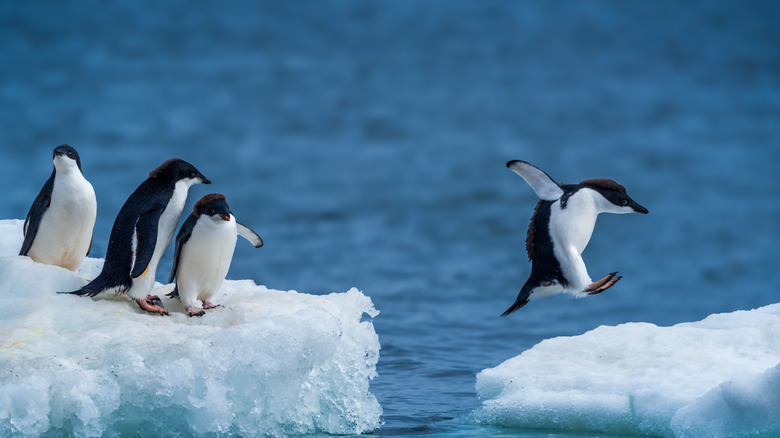
Seabird poop is a major source of gaseous ammonia in the atmosphere of remote regions. The research team at Marambio Station found that levels of ammonia around the Antarctic Peninsula were about 13.5 parts per billion (ppb) — about 1,000 times higher than normal — in areas around the penguin colonies compared to areas without penguins. A month after the penguins had departed, levels of ammonia emissions were still 1 ppb, roughly 100 times higher than normal.
Antarctica has one of the most extreme climates on Earth, with temperatures in the milder coastal regions dropping below -40 degrees Fahrenheit in the winter and -76 degrees Fahrenheit in the interior. Despite these frigid conditions, the oceans are filled with marine phytoplankton that play an important role in the local ecosystem. Phytoplankton are small, plant-like organisms that convert sunlight to energy and provide food for krill, which are a dietary favorite of penguins and many other seabirds.
Marine phytoplankton also produce sulfurous gases that may contribute to the formation of CCN when they contact ammonia and other chemicals originating from seabird poop, such as dimethylamine. Over the past 80 years, humans have been artificially seeding clouds to change weather patterns. The compound we use for cloud seeding is usually silver iodide, phytoplankton apparently use penguin poop.
The potential effects of penguin poop on combating climate change
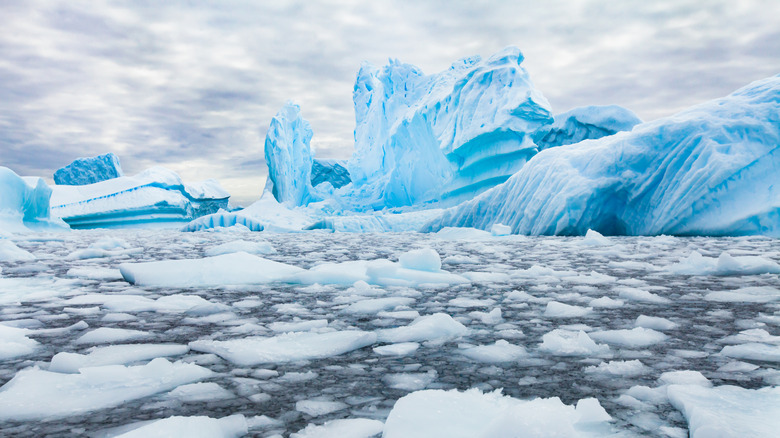
Although the list of animals in Antarctica may be shorter than in many parts of the world, disruptions to the local flora or fauna have the potential to cause climate repercussions for the entire planet. About 90% of the freshwater on Earth is found in Antarctica, and the region is experiencing accelerated ice melting due to warming. Melting ice caps in Antarctica can potentially be a contributor to rising sea levels globally. In 2021, the Intergovernmental Panel on Climate Change predicted an 11- to 21-inch rise in sea levels by 2100, with a worst-case scenario potentially reaching six feet.
Penguins aren't the only birds doing their part to help combat climate change by potentially contributing to cloud formation in the region. Previous research from the Arctic has also provided evidence that poop from migratory seabirds is a major contributor to atmospheric ammonia in the region. These emissions seem to have a noteworthy effect reflecting sunlight away from the Arctic in the warm summer month and having a cooling effect in the local region.
Although we may not fully understand how penguins and other animals affect their local climates, it's extremely likely that disruptions to their population could have major consequences for Antarctica and beyond. Factors such as pollution, ship traffic, and climate warming have the potential to impact seabird populations and cause ecological problems.