

Astronauts Can Lose Their Fingernails In Outer Space. Here's Why
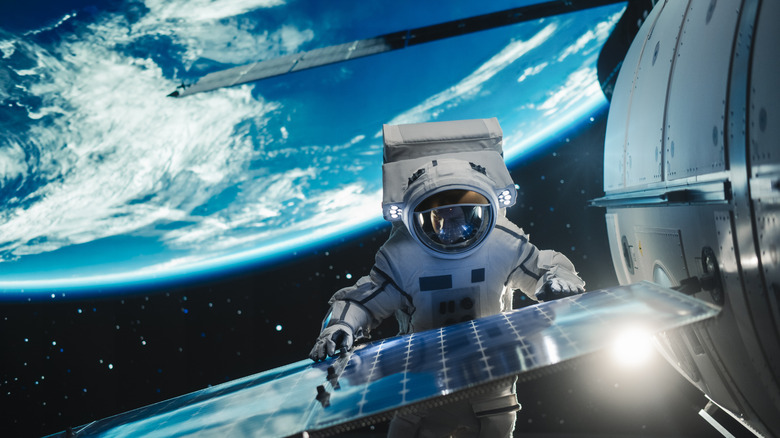
You may have watched footage of astronauts doing a spacewalk and thought about how fun it would be, but the reality is not quite as graceful as it looks. Walking safely in space is a complicated matter, and astronauts' fingernails can pay the price, sometimes separating from the nail bed. While microgravity affects the bones and muscles of astronauts, the main cause of fingernail damage is associated with the spacesuit worn when leaving the spacecraft.
The spacesuit is designed to protect astronauts from the harsh conditions around them, but the trade-off for being able to grip objects and work in the microgravity environment of space is that the astronauts' hands are subjected to a lot of pain and discomfort. The suit must be pressurized due to the near-vacuum of space, creating enough pressure to keep them alive, and this pressure extends to the hands, too. The gloves of the spacesuit are also pressurized, and astronauts' fingertips push against the inside of the gloves as they move and work. They can spend many hours inside their spacesuit, and this can lead to their fingernails becoming separated from the nail bed, known as onycholysis.
With onycholysis, part of the fingernail becomes detached from the nail bed, and over time can fall off completely. Advice on how to minimize the effects of nail separation includes discontinuing activities that may cause trauma to the nail bed. Since astronauts may be wearing the pressurized gloves for hours at a time, the fingernails could be subjected to sustained trauma, which increases the chances of the nail falling off.
Spacesuit gloves put a lot of pressure on astronauts' hands
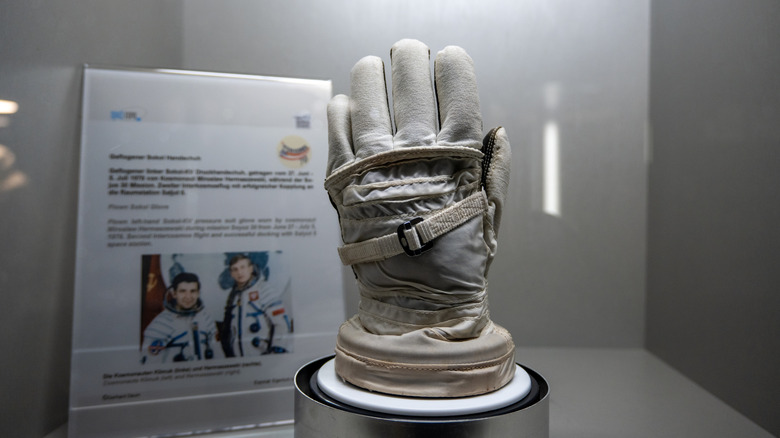
Though they may not seem significant in terms of size compared to the rest of the spacesuit, the gloves are an incredibly important part of keeping the astronauts safe and allowing them to function during an extravehicular activity, or EVA. Dava Newman, Professor of Aeronautics and Astronautics and Engineering Systems at MIT describes the gloves as the biggest challenge when designing a spacesuit. "It's like you're fighting inside a pressurized balloon with very limited ability," she explains (via MIT News), as hands and fingers need a huge range of motion to allow the astronauts to carry out their tasks.
Every time an astronaut working outside of the spacecraft picks up a tool or grabs a structure to help them move around, their fingers are fighting against the pressure in the gloves, which can be very painful. A 2005 study by Strauss et al. looking at 352 symptoms reported while in a spacesuit, found that almost half of them, 166 complaints, were in the hands. The researchers concluded that "moisture and hard glove contacts resulting in fingernail injuries," were the main cause of the hand injuries. Moisture is known to make onycholysis worse, meaning that sweating while wearing the spacesuit may aggravate the symptoms.
Fingernails separating from the nail bed are relatively painless, but once the nail is detached, it cannot reattach. While space has been shown to permanently damage astronauts in various ways, thankfully a healthy nail will eventually grow back, though this can take around six months.
Why some astronauts are more at risk than others
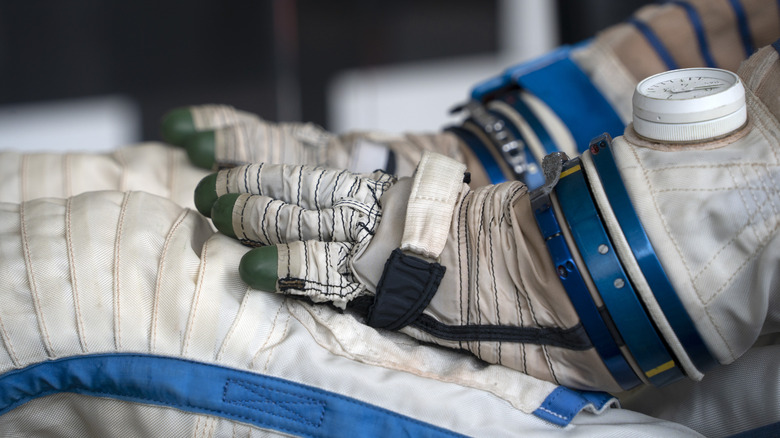
The factor that was previously thought to affect the chances of astronauts' fingernails being damaged by space gloves was the length of their fingers, but this doesn't seem to be the case. A 2010 study by Opperman et al. studied injury records from 232 crewmembers, looking to test the hypothesis that long fingers contributed to higher risk of fingernail injury. No correlation was found, but the width of the hand was the significant factor instead. The circumference of the metacarpophalangeal (MCP) joint was found to have a significant effect on the chance of injury, with a circumference of more than 9 inches associated with a 19.6% probability of injury, compared to 5.6% with a smaller width.
A separate study from 2009 by many of the same authors found that blood flow to the fingers decreased by more than 60% during compression, particularly to the finger pads. They concluded that the effort required by the finger pads to move tight, pressurized space gloves may contribute more to fingernail injury than the fingertips themselves pressing against the gloves.
Research like this provides crucial information for developing spacesuits that are more comfortable for astronauts, and reduce how hard their hands need to fight against their gloves. Professor Newman has been involved in developing the MIT BioSuit, which is designed to improve flexibility and function by acting more like a "second skin" than traditional, restrictive spacesuits. She believes the alternative design could reduce the chance of hand injuries, helping astronauts keep their fingernails intact as they carry out their work outside of the spacecraft.