

Scientists Transplanted Human Brain Tissue Into Mice. Here's What Happened Next
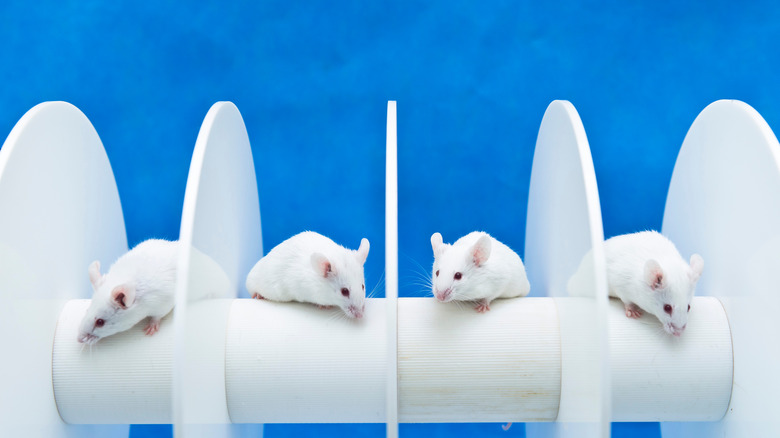
The use of rodents in medical experiments is so ubiquitous that the term "guinea pig" literally means a test subject. Maybe the term should be changed to "mouse" or "rat" since these types of rodents are more commonly used in modern research. In a study published in Nature, researchers brought mice to the forefront of research again when they injected human cells into mice brains. The cells grew into healthy brain tissue that filled in missing parts that the researchers engineered into the rodent's brains.
It may sound like something from science fiction, but the mice aren't going to think or act like humans any time soon. The brain cells used in the study were reprogrammed from a type of stem cell usually produced from donated skin cells. The researchers injected the cells days after the mice were born to fill in the artificial gaps after the brain's core wiring had already developed.
Mental disorders and psychiatric conditions remain difficult to treat since researchers can't easily and ethically access live human brain tissue. Studies rely on individual cells in petri dishes, animal studies, post-mortem studies, or imaging studies, which all have their limitations when researching higher-order functions in the brain. The goal of this groundbreaking study was to create brain tissue that more closely mimics a real human brain and provide scientists with a new research avenue.
Why did researchers inject human cells into mouse brains?
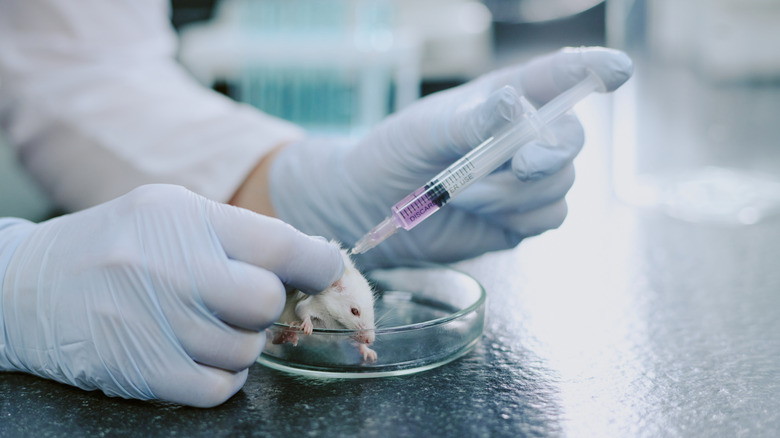
Mental and psychiatric conditions are notoriously difficult to treat, in part due to the difficulty of testing potential treatments on actual human brains. Studies performed on humans need to pass strict ethical guidelines, especially when there's a risk of harm or serious side effects. Genetically engineering mice with human cells comes with ethical concerns, but it does open up new research avenues with potential benefits.
Imaging methods like functional magnetic resonance imaging allow researchers to see when certain parts of the brain are active and help to understand the anatomy of the brain, but they aren't able to show molecular and cellular changes that contribute to conditions such as post-traumatic stress disorder. Animal studies don't fully replicate the complexity of the human brain and have a limited role in helping us understand symptoms like suicidal thoughts.
The cluster of brain cells derived from human tissue in the Nature study is called an organoid. An organoid is a tissue model grown from human cells that can mimic certain aspects of the tissue in isolation. This isn't the first time researchers have created a human brain organoid in rodents. In a study published in August 2026, researchers cultured human brain organoids for five years and found that the cells retained a memory of time spent outside of an organism. In a 2022 study, researchers inserted human brain organoids into rats to study a rare genetic disease called Timothy syndrome.
Could we breed a mouse that thinks like a human?
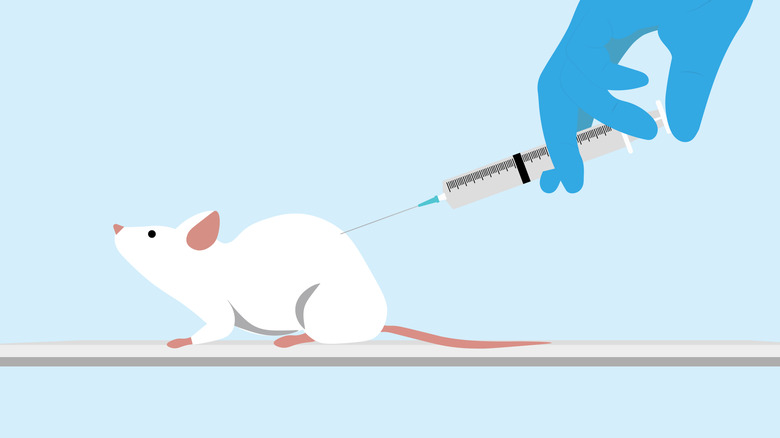
In the Nature study, the research team injected the mice with human cells several days after they were born to ensure that the human-derived cells didn't take over complex thinking. The scientists put the mice through tests after the human cells integrated with their brains and found no change in their intelligence or behavior compared to other mice. The goal of the study wasn't to give the mice human traits, intelligence, or thinking patterns, but it does highlight potential ethical concerns if researchers did start going down this route.
Mice and humans share a lot of DNA and organ systems, which is a large part of the reason why we frequently use rodents in research. As of now, researchers haven't injected any animals with human cells with the intention of giving them human traits, but it's likely that doing so is more of an ethical limitation than a scientific one. For researchers to get funding for their research, they would have to run their study by a bioethics committee first with a justification of why the potential benefits outweigh potential harms.
Researchers often flirt with the line between scientific advancement and crossing ethical boundaries. The results of this study provide a new framework for better testing of medications and treatments in humans. It's possible that the results will provide a research avenue for many types of psychiatric conditions in the future.