

In The '40s, Scientists Dropped Dry Ice Into A Hurricane. They Didn't Expect What Happened Next.
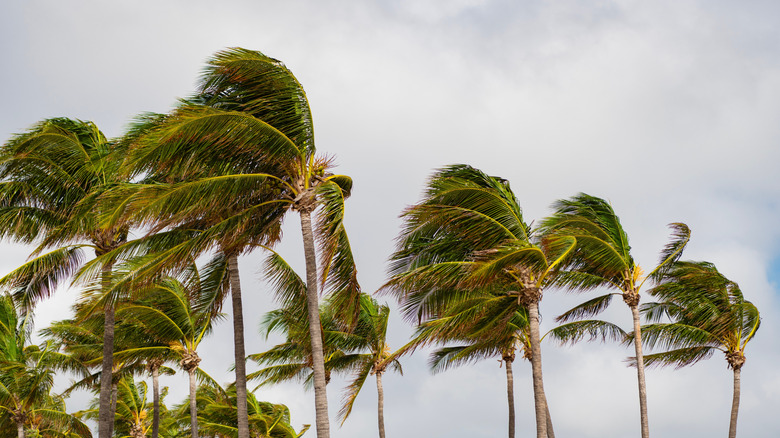
Hurricanes are among the most powerful and destructive phenomena on Earth. A hurricane's strong winds, heavy rain, and storm surge leave a path of devastation wherever they interact with land. Over the past 100 years we have improved our ability to forecast hurricanes, and it's now possible to predict where a storm will make landfall days in advance and take steps to protect people from hurricanes. However, for years scientists looked for ways to weaken hurricanes. In 1947, an experiment known as Project Cirrus had planes drop more than 100 pounds of dry ice into a hurricane. The idea was to induce rainfall that would disrupt the storm and weaken it. However, the next day the hurricane surprised scientists by strengthening and turning back toward land.
In October 1947, a pair of Air Force B-17 bombers flew out to intercept Hurricane King, a storm more than 400 miles east of Florida that was moving farther out to sea. The planes made two passes, with one plane dropping crushed dry ice into the clouds while the other watched for changes. After dropping the dry ice, the researchers observed that the cloud tops continued to grow, hinting that their efforts would be successful. However, the next day the storm was far from where the scientists expected it to be. It was now heading due west and had actually strengthened.
Damage to coastal communities and scientist reputations
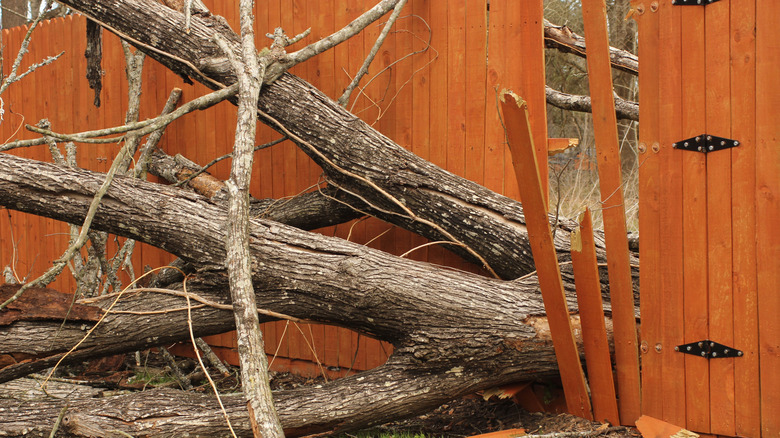
Hurricane King made landfall on the Georgia coast, causing $2 million in damage and one death. When word got out about Project Cirrus the public became furious. Many blamed the storm's about face and sudden strengthening on the scientists and their cloud seeding experiment. But meteorologists quickly found several other cases where hurricanes had behaved similarly, which was enough to stop the threat of lawsuits. Yet this incident put a damper on research attempting to seed clouds in hurricanes for several years.
The idea behind this hurricane experiment, cloud seeding, was relatively new. In 1946, American scientist Vincent Schaefer carried out the first cloud seeding experiments. For rain to come down from clouds, water droplets need some kind of particle like dust, smoke, or ice to serve as a nucleus. Additionally, even at well below freezing, water droplets stay as a supercooled liquid. This can be a problem for aircraft as supercooled water would freeze on contact with a plane's surfaces. Laboratory experiments showed that dry ice would cause supercooled water to freeze. So the idea for Project Cirrus was to drop crushed dry ice into clouds to give supercooled water something to freeze around, causing more rain to fall.
What can cloud seeding actually do?
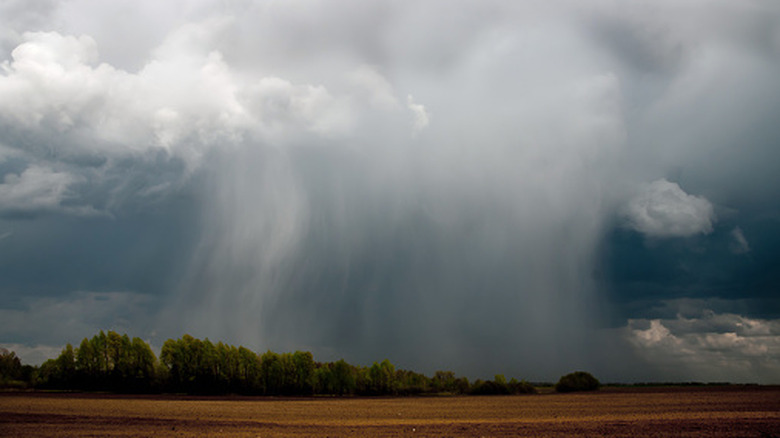
Although Project Cirrus did not achieve its goals, scientists continued studying cloud seeding in hurricanes. Starting in 1962, scientists tried seeding four different hurricanes with silver iodide, another compound used for cloud seeding. They observed decreases in wind speeds on some days, but no changes on others. By the 1980s scientists determined that cloud seeding had no chance of affecting a hurricane in any significant way and the project was canceled.
Cloud seeding has been used to increase precipitation in limited cases. There are studies that show seeding can slightly increase the amount of rain a cloud can produce under the right conditions, but some scientists question whether cloud seeding does anything at all. Even if it can cause more rain to fall, cloud seeding's effects are highly localized. A hurricane is simply too large and powerful for even a planeload of dry ice or silver iodide to make a difference. Additional research has also found that hurricanes may lack the supercooled water to make cloud seeding effective, even on a localized scale.
Just as the sudden turn and strengthening of the hurricane in Project Cirrus was a natural occurrence, so were the few changes seen during experiments in the '60s. Researchers have since turned their focus toward better understanding hurricane physics. This has helped improve forecasts, giving people more time to prepare.