

The Common Daily Habit That Could Be Making You Fart More

If you feel like you've been a bit gassier lately and don't know why, a simple daily habit could be to blame. Chewing gum may make your breath fresher, but it can also have the opposite effect at the other end, since chewing regularly can make you fart more often. There are two main reasons that chewing and farting are directly related, and one of them has nothing to do with the ingredients of the gum.
Throughout the day, we swallow air as we carry out normal tasks, and particularly when eating or drinking. The medical term for swallowing too much air is aerophagia — translating from the Greek for "air eater" — and this can be heightened by eating too quickly (a strange habit that could also be messing with your health) or drinking fizzy drinks. The excess air needs to escape from the body somehow, and this will often be upward, which is why we tend to burp after drinking soda. If there is a lot of trapped air, it may move downward, causing farting instead.
Chewing gum increases the chances of aerophagia, since you are taking in small pockets of air as you chew. While chewing gum may provide you relief, whether you are trying to give up smoking or simply enjoy the minty experience, it may lead to digestive discomfort over time as the air accumulates. Farting regularly is not usually a concern, with up to 25 instances a day being considered normal, but it can be embarrassing or even painful if a lot of gas builds up.
Sugar-free gum creates double the flatulence

In addition to the extra air swallowed when chewing for long periods of time, the type of gum you chew can also affect the amount of flatulence it causes. Around 85% of gum sold in the U.S. is sugar-free, and the ingredients in some aren't doing any favors when it comes to farting.
If you look at the ingredients list on a pack of sugar-free gum, you will likely spot a few substances that end with "ol." These are sugar alcohols — sorbitol, xylitol, and erythritol are commonly used — and they are included to provide the sweetness without any actual sugar. The bad news for your digestive system is that these sweeteners are not easily digested, meaning that they hang around in your gut for longer than is ideal, and end up fermenting in the large intestine. Fermentation leads to the build up of carbon dioxide gas, as well as a few others, which results in you desperately trying to hold in a fart during your afternoon meeting.
A study published in the European Journal of Clinical Nutrition in 2006 compared the effects of xylitol and erythritol on the digestive system, including symptoms of nausea, bloating, and watery faeces. Xylitol was found to have a much greater impact than erythritol, which was well tolerated, especially in small doses.
You don't need to quit gum entirely to reduce flatulence
If you are now realizing that your fondness for gum is wreaking havoc on your digestion, you don't necessarily need to chuck your current pack straight in the bin. Sugar alcohols are found in many processed foods, and knowing to look out for them means you could cut them out elsewhere instead. Many foods that are labeled sugar-free contain these sweeteners, whose names are actually pretty confusing since they contain neither sugar nor ethanol. If you are diabetic, or actively limiting the sugar you eat, you may find that xylitol and other sugar alcohols are present in many of the sweet treats you enjoy, and cutting down on this ingredient could relieve bloating and excessive farting.
Switching to sugary foods and gum is not a good solution though, since the average American adult already eats 22 teaspoons of added sugar per day, significantly more than the recommended limit of 6 teaspoons for women and 9 teaspoons for men. Instead, cutting down on the number of sticks of gum you chew, or sugar-free snacks you enjoy is a good way to reduce the bloat without upsetting your dentist.
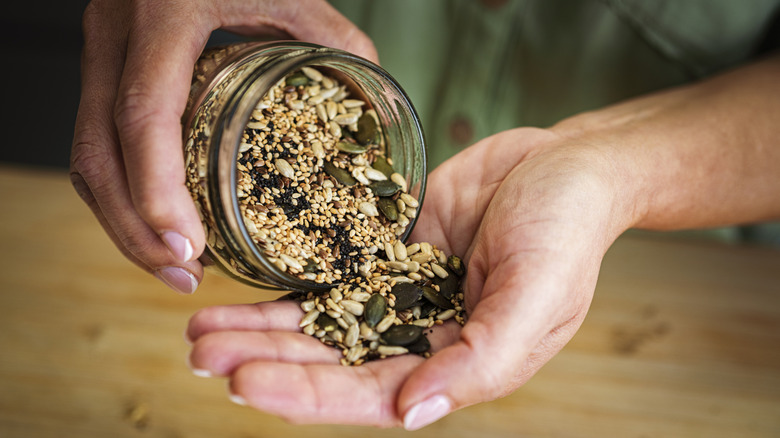
Alternatively, start checking the labels of your gum before you buy, and opt for a pack with alternative sweeteners. Or you could replace the gum altogether, chewing on fresh herbs if your main aim is to have minty fresh breath, or a portion of seeds if you enjoy the chewing action. Both will still result in a little extra air in your digestive system, but will avoid the double whammy of the sugar alcohols creating uncomfortable amounts of gas in the intestines.