

Scientists Looked More Than 1,800 Feet Underground And Found A Hidden World Of Life
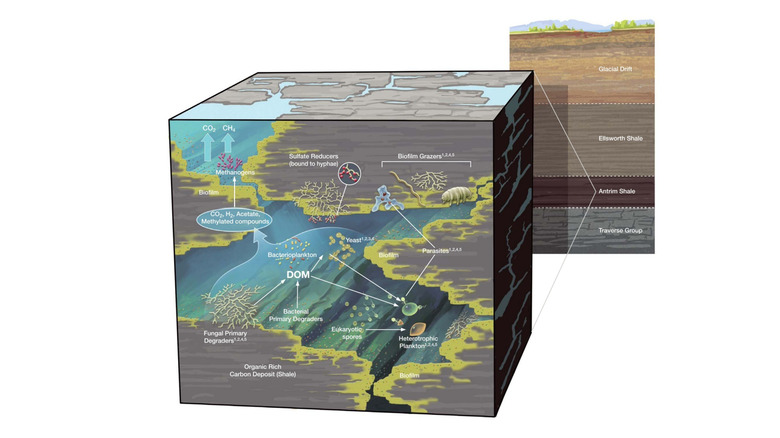
Biologists have identified only a fraction of all the species on our planet. In the oceans, an estimated 10 to 25% have been discovered, while on land that number is about 15%. Whatever the true amount of undiscovered life may be, it's clear that we've just scratched the surface of cataloging life's diversity. In a 2026 study, researchers bored over 1,800 feet into the shale rock near the Great Lakes and discovered a shocking abundance of life in its pitch-black depths.
The team drew water from various bore holes ranging from 810 to 1,824 feet in depth and sampled the organisms living there. They expected to find at least some life since scientists have known for decades about extremophiles, organisms that live in extreme environments where many of the typical conditions for life aren't met. Microscopic extremophiles, such as the tardigrade or the seemingly indestructible "Conan the Bacterium," have been found everywhere from the boiling acid pools in Yellowstone to the deceivingly-named Dead Sea, and some bacteria can even survive the sterility of space.
The researchers found that not only can fungi and prokaryotes live over a quarter-mile under the ground, but they can thrive. Granted, the test site was in the perfect location to find deep-rooted life forms. The Antrim Shale of the Great Lakes region is packed with carbon-rich organic materials, one of the few key ingredients for life. Such depths are considered by geologists to be part of the "deep subsurface" layer, where carbon sequestered by ancient plants was preserved in clay during its process of becoming a fossil fuel. The researchers drew from existing natural-gas probe wells, looking not for fossil fuels but for living organisms.
An abundance of unknown complex life deep beneath our feet
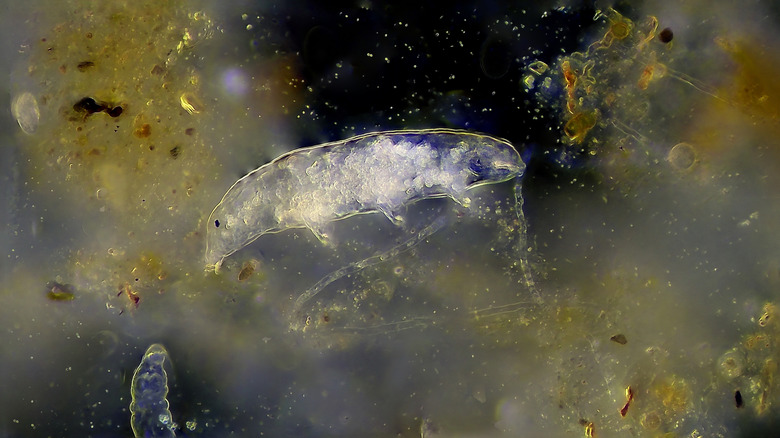
The planet's deep subsurface layers contain a rich reservoir of organic carbon. But without sunlight for photosynthesis nor oxygen for respiration, this geological layer was considered sterile for many years. Recent research, however, has painted a different picture. It turns out that this abundance of protein-building carbon can be "mobilized" to sustain life, only via well-adapted organisms that capture energy by consuming their rocky surroundings instead of sunlight.
According to the researchers, these extremophiles live in a diverse ecosystem, with "abundant fungal communities." This means both prokaryotic (single-celled) and eukaryotic (multi-celled) species have evolved to withstand little air and no light hundreds of feet below the ground. Such evidence has been found in the ocean's deep blue holes, and now it appears to reach deep into the ground, too.
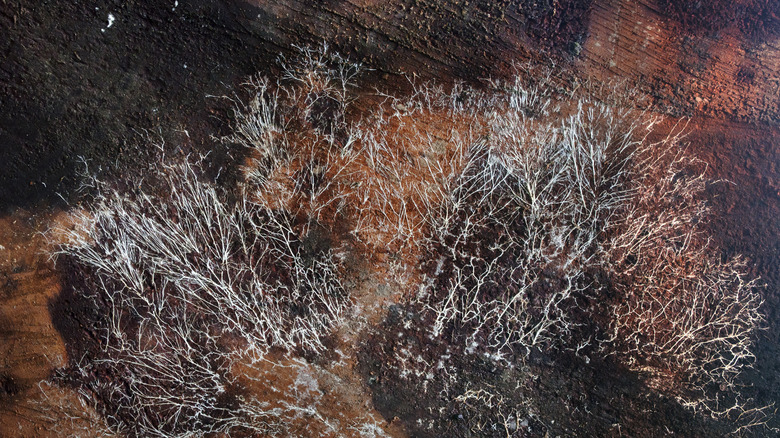
The researchers highlight how the abundance of fungi in their samples demonstrates that complex life forms can survive in extreme environments. Biologists once assumed the "deep subsurface layer" was only capable of supporting the "simplest" life forms, or prokaryotes such as bacteria and archaea. It was imagined that eukaryotes, wouldn't be able to survive the energy- and oxygen-poor environments hundreds of feet below us, since their metabolisms are faster and more demanding. Of course, life finds a way — the fungal colonies discovered by the Michigan research team were extracting their energy from the very rocks themselves.
How to eat when photosynthesis isn't an option
Life in the oxygen-poor, pitch-black depths of the Mariana Trench primarily survives through a chain of predation on the organic debris that floats down. The debris, or "marine snow," is made up of sand, dust, poop, and decaying organisms that died and slowly descended nearly 7 miles into the ocean's depths. Marine snow provides crucial food for the extremophiles on the ocean floor, who have evolved into some truly bizarre deep-sea life forms. This food source ultimately comes from photosynthetic organisms, such as plants, algae, and cyanobacteria, after they die or are eaten by predators through the ocean food web.
A similar phenomenon is supporting life underground. In the Michigan study, the researchers found that the fungi were surviving by consuming the carbon left over from fossilized dead organisms (hence the reason they collaborated with natural gas prospectors). Normally, this carbon-rich material isn't biologically available. However, the fungal colonies and their single-celled cohabitants evolved a delicate web to break down the ancient carbon and convert it into energy. Just as the Mariana Trench is powered by photosynthesis, the fungal colonies rely on the energy stored by ancient photosynthetic producers.
The fact that fungi and prokaryotes have found a way to mobilize the energy of dead plants 1,800 feet below the ground suggests that life pushes its own boundaries. Clearly, organisms can adapt to survive in truly extreme environments. For astrobiologists, who study hypothetical extraterrestrial life forms, such research adds more evidence to support the idea that the prerequisites for life may be found beyond the surface of Earth, and maybe even on other planets.