

The Common Snoring Myth Doctors Want You To Stop Believing
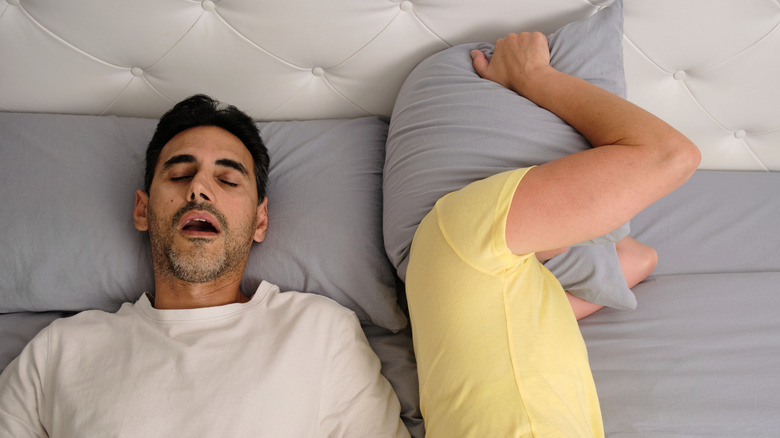
If you've ever lain awake at night listening to someone's deafening snoring, you have probably told yourself that there must be something seriously wrong with them to create such a disturbance. One common suggestion for people who snore very loudly is that they must have sleep apnea, but it is a myth that this condition is the only cause of snoring. While it is true that snoring is one of the symptoms of obstructive sleep apnea (OSA), only 12% of the population have the condition, compared to 45% of people who snore occasionally.
Simple snoring happens when air passes through your throat as you sleep, which produces a vibration in the tissue. Sometimes this can be due to sleeping in an awkward position, particularly on your back — which can also increase your risk of heart problems — but around 25% of people report being regular snorers. Nasal congestion increases the chance of snoring, while several factors such as age and weight can also affect the likelihood.
OSA is different, however. While loud snoring is a common symptom of the condition, it also causes breathing to stop for short periods of time, and this can happen repeatedly throughout the night. Repeatedly waking in order to breathe properly means that those who struggle with OSA can have headaches, exhaustion, and other sleep deprivation symptoms, which are uncommon in those who are simply snoring loudly.
The difference in your breathing between snoring and sleep apnea
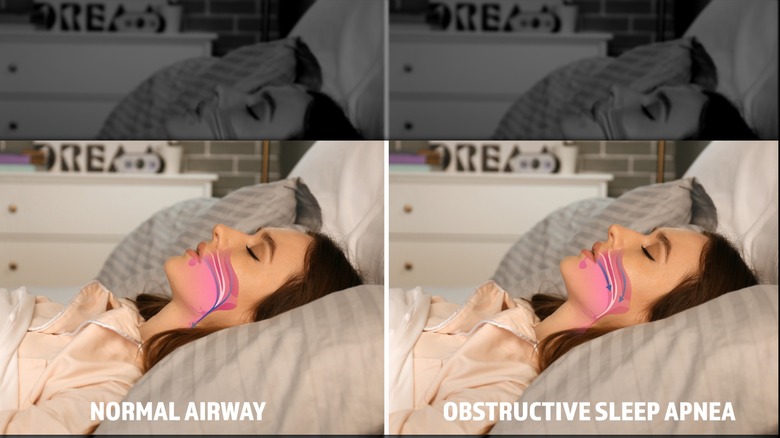
Loud snoring and OSA can sound very similar — especially if you are the one lying beside them trying to sleep — but medically they are very different. The cause of the vibrating noise in snoring is often narrowing airways in the throat as your body relaxes, which is why congestion makes it sound even worse. OSA occurs when the air passages of the throat narrow so much that breathing becomes restricted, or can even stop momentarily.
This short pause in breathing can reduce blood oxygen levels pretty quickly, and after a drop of a few percent, the brain forces the body to wake up so that normal breathing can be resumed. This can often sound quite alarming, similar to choking or struggling to catch a breath. The individual will usually fall straight back to sleep, unaware of the distress they may have caused their sleeping partner with this worrying chain of events.
Unfortunately, as they drift back toward a deep sleep, the same process is likely to occur again, preventing them from getting into a genuinely restful sleep state. In some cases, people with OSA can repeat this cycle every few minutes, meaning their restorative sleep is severely disrupted. It is this repeated interruption to normal breathing that can help to distinguish regular snoring from OSA.
How to determine if your snoring is the sign of something more concerning

The sounds from snoring and OSA can differ, which could be picked up by someone sleeping in the same household. With simple snoring, the rasping noise can be loud and harsh for a long time, often until they change position and the air can flow more freely (we've all given the classic stop-snoring nudge at some point!) With OSA, however, the snoring will likely be interrupted by periods of silence, as the airway narrows so much that the vibrating air can't get through at all. As the sleep-deprived partner you may enjoy a short reprieve from the rattling, it is likely a sign of the more serious medical condition.
If your or your partner's snoring is concerning you, keep an eye out for signs that it may be more than simply noisy sleep. In addition to exhaustion throughout the day from lack of proper rest, people with OSA may display a range of other symptoms that they may not connect to sleep issues. Headaches on waking are common, as is a dry mouth, and blood pressure can become elevated too. If you suspect OSA, it is important to seek medical advice. A sleep study can be done, where breathing patterns and oxygen levels are monitored during sleep to determine whether breathing is being interrupted throughout the night.
So snoring on its own is not a reason to assume an underlying medical issue, no matter how loud and irritating it may be. The bigger concern is when snoring is broken up by gasping or choking, or when daytime symptoms are present too. In these circumstances, a visit to a doctor or sleep specialist may be required.