

You Should Think Twice Before Flushing Your Old Medication Down The Drain
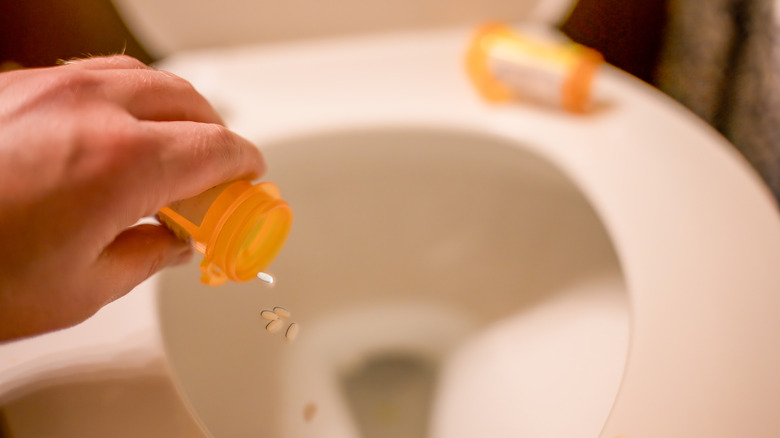
Unless you're taking a medication prescribed by a doctor for a long-term medical condition, chances are you might have old, unused pills hanging around your home. To reduce medication-related clutter, your first thought might be to flush them down a toilet or sink. While the U.S. Food and Drug Administration (FDA) recommends flushing only a handful of dangerous prescription drugs down the toilet, it's generally not appropriate for medication disposal. In other words, you should think twice before flushing old medications, since these can end up in natural water sources as well as public drinking water.
When you dump medications down the drain, they don't just disappear. Like anything else that goes down your plumbing, they ultimately end up in types of wastewater. The disposed medications then go to treatment plants, where they aren't fully eradicated. They can then enter the environment via surface water resources, such as rivers, streams, and lakes. Because of this, there may be trace amounts of numerous types of drugs in tap water, including antibiotics, pain killers, oral contraceptives, anti-depressants, and even cancer treatments.
While there is a lack of evidence supporting any direct connection between specific adverse health effects of wastewater left untreated for pharmaceuticals, there's still a concern regarding potential risks. Until more definitive evidence comes to light, it's best not to flush most meds down the drain. It's worth noting that these residual traces of pharmaceuticals also make it into water systems through human excretion.
Better ways to safely dispose of old medications (with some caveats)
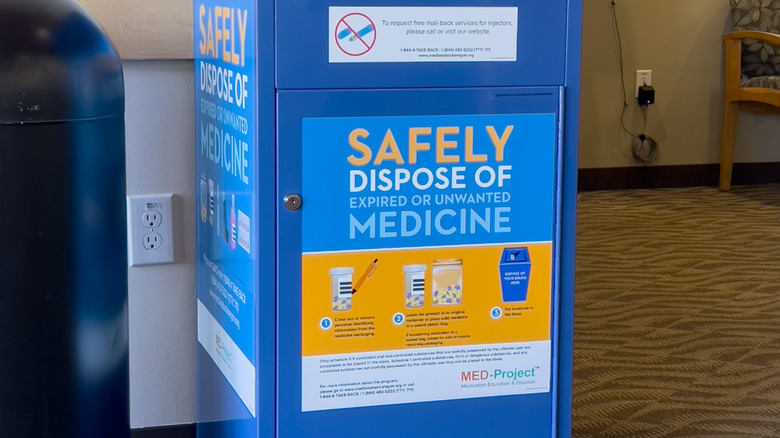
Fortunately, there are several ways to dispose of unwanted medications that don't involve flushing them. First, you can send back old meds to the manufacturer with prepaid envelopes, which are often sold at pharmacies. This is arguably the most convenient option on your end, and you can rest easy knowing the recipient will dispose of the medications safely.
Another option is to participate in various pharmaceutical take-back programs. This involves physically dropping off unneeded medications at designated locations. These can be offered by local law enforcement, where you can usually find a drop-off box to to leave your meds with no questions asked. This option is usually offered year-round. The U.S. Drug Enforcement Administration also occasionally holds take-back initiatives, as do some pharmacies, hospitals, and medical centers.
If none of these options are available and you need to get rid of old meds, you can throw them in the trash as a last resort. Just know that medications that end up in landfills can also affect the environment. Yet there are some circumstances where the FDA advises flushing medications down the toilet, and never in the trash. These include medications that could be harmful if vulnerable members of your household get a hold of them. Those containing fentanyl, methadone, oxycodone, and morphine are common examples (you can also review the entire list here). In such cases, the need for immediately removing these drugs outweighs the risks of flushing them down the drain.