

Not Skin, Not Nails: Scientists Say This Body Part Is A Quiet Indicator Of Health Issues

The main reason experts recommend yearly checkups is that a routine physical exam can often catch early signs of a wide range of health problems. Checking blood pressure, listening to heart and lung sounds, and even sneaking a peek at your hair, skin, or finger nails are simple and effective ways to check your general health. At the same time, while we may not think about our feet much on a daily basis, this body part can give subtle early warnings about certain medical problems.
Many of us rarely give our feet a second thought unless we've worn the wrong shoes or spent too much time walking or standing. But the human foot contains 28 bones, 33 joints, fibrous connective tissue like tendons and ligaments, nerves, and blood vessels. The body exerts force on the foot's bones and connective tissues with every step, and the nerves and blood vessels in the foot are sensitive to a variety of changes in the body. Pain, numbness, tingling, swelling, and changes in color and temperature are a few symptoms that can alert health care professionals that something is not right.
Circulation and your feet
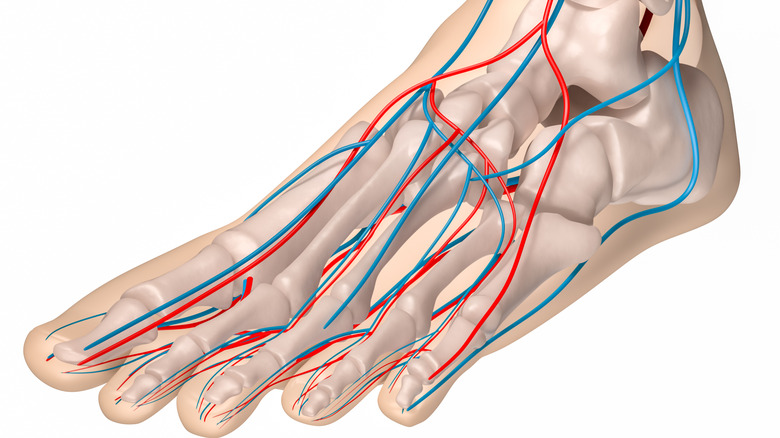
The feet are the part of the body farthest away from the heart, so it makes sense that evidence of circulatory problems would first show up there. One circulation problem that can be found in the foot is peripheral artery disease. In peripheral artery disease, the arteries narrow, making it harder for blood to flow to the extremities. Common symptoms include changes in skin color, skin feeling cold to the touch, and a weak or absent pulse in one or both feet. This can be caused by a buildup of fatty deposits in the arteries, which can lead to heart attack and stroke. The narrower blood vessels in the foot clog sooner, meaning that poor circulation in the foot could be a warning sign for more serious problems.
Another circulatory issue that shows up in the feet is deep vein thrombosis, or DVT. Signs of a DVT include swelling, tenderness, and skin discoloration in the leg or foot. This condition occurs when a blood clot forms in a deep vein in the legs or pelvis. This clot can sometimes break free and travel to the lungs, blocking the pulmonary artery, a dangerous condition called a pulmonary embolism.
Sometimes people experience slight swelling of their feet after a long day of walking or standing, which is normal. But persistent and unexplained swelling, especially in one foot, could indicate problems like DVT, peripheral artery disease, kidney disease, or heart failure and should be taken seriously.
A pain in the foot

Feet are sensitive to pain, which can be an early warning for health problems. Foot pain after a long day of walking or standing is fairly common, but sharp pain in the bottom of the foot when standing could be due to inflammation of connective tissues in the foot. However, with as many bones and joints as the human foot has, pain could also be a sign of arthritis or an autoimmune disorder.
In addition to pain, numbness or tingling in the foot could be a clue that something's wrong. Nerve damage from a back injury could cause numbness or tingling. But symptoms like these are a fairly common occurrence for people with diabetes. Around half of all people with diabetes experience nerve damage known as diabetic neuropathy. When neuropathy affects the feet it can cause difficulty feeling pain or sensing movement, which can lead to changes in gait, loss of balance, and increased risk of falling. Loss of sensation can also make people less likely to notice foot sores that could get worse over time, especially with how diabetes hinders healing processes. This is why experts recommend that diabetics pay special attention to their feet.
Like other indicators, the condition of someone's feet can tell a lot about their health. Whether it's swelling, pain, or numbness, feet can serve as a subtle indicator of underlying health issues.