

Why Experts Compare The Drug Used In Christa Pike's Failed Execution To Drowning
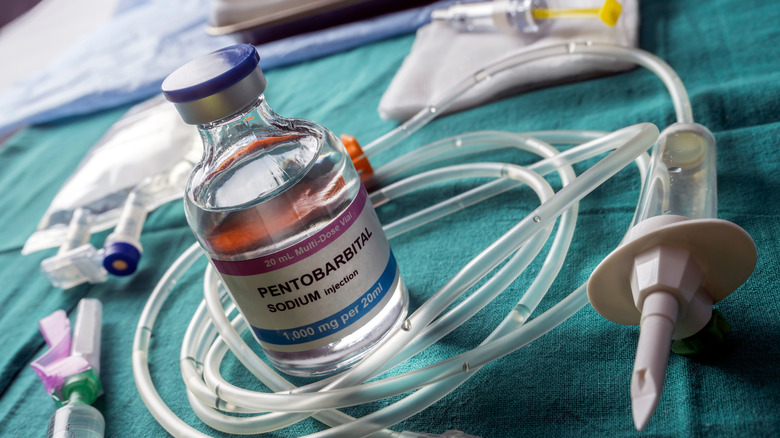
Since the United States' conception, its citizens have debated the legality of the death penalty. The Constitution implicitly permits capital punishment, which includes the death penalty, though it also prohibits "cruel and unusual punishments." To juggle this constitutional conundrum, all 27 US states with the death penalty have officially adopted lethal injection as the "ethical" option. Unfortunately, the drugs used in lethal injections may induce a sensation of drowning and not be as humane as commonly believed, as the recent failed execution of Christa Pike clearly demonstrates.
On September 30, 2026, Christa Pike was scheduled to be executed at the Riverbend Maximum Security Institution by the State of Tennessee after serving 30 years on death row, but her execution was botched. In most states with the death penalty, the lethal injection procedure has been reduced from a cocktail of drugs in different phases to a "one-drug protocol." Historically, lethal injection procedures used a sedative, then a paralyzing drug, and then potassium chloride. Today, "one-drug" states simply inject lethal amounts of the sedative and skip the rest.
In Tennessee the drug of choice is pentobarbital. Christa Pike was given two lethal doses, but the IV was improperly injected and she survived. Nonetheless, experts believe it's likely that Pike experienced flash pulmonary edema through the ordeal, which occurs when frothy blood enters the airways and convinces your brain that you're drowning. Pike may have experienced the first stages of what it feels like to die, but she survived her execution.
When pentobarbital suffocates a person on their own blood

Pike survived two lethal doses of pentobarbital and was sent to a hospital to recover. Reportedly, she survived because the IV injection entered her muscle tissue instead of a vein, preventing the drug from circulating. Although it didn't stop her breathing, experts believe it's likely she suffered from a flash pulmonary edema caused by a blood clot. The evidence comes from reports that she experienced respiratory distress and now has pneumonia.
Flash pulmonary edema occurs when the lungs fill with blood and other bodily fluids. The frothy mixture enters the airways, causing the sensation that one is drowning (it happens surprisingly often on planes). NPR published an investigative report that estimated up to 84% of executions by lethal injection result in a pulmonary edema, and the researchers believe many occurred while the condemned was still conscious.
For decades, pentobarbital has been a go-to sedative for a range of uses, from treating insomnia to inducing emergency comas. It's also the most commonly used agent veterinarians use to euthanize animals (different word, same purpose). When used on humans in lethal doses, it can cause a person to experience drowning in the foam of their own bodily fluids while the rest of their muscles fail them.
Shortly after the execution attempt, doctors checked Pike's reflexes and declared her to be brain dead. She later woke up, but only after being brought to the suffocating brink — twice. So far, there's very little information on her first-hand experience. But as the subject of the first failed lethal-injection execution in U.S. history, Christa Pike's story revives the long debate over "cruel and unusual punishments."