

Scientists Put 3 Dead Alligators 6,600 Feet Deep. They Didn't Expect What Happened Next
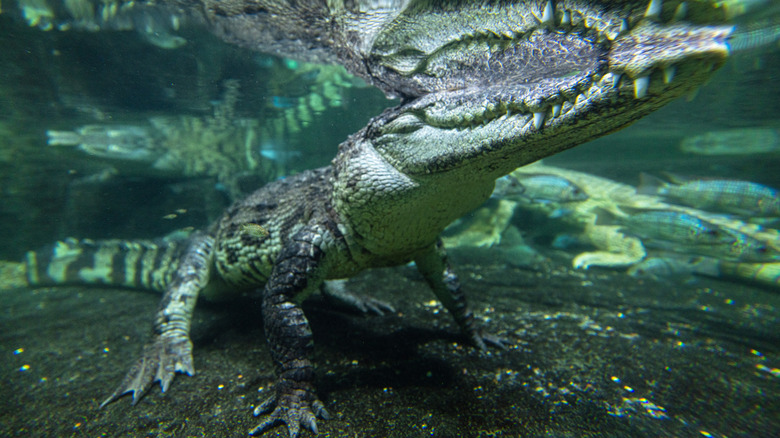
In many ways, the ocean depths are as mysterious as outer space. Don Walsh became the first person to reach the bottom of the Mariana Trench, the deepest part of the ocean, only nine years before humans landed on the moon. In an effort to unravel some of those deep-sea mysteries, a research team from the University of Louisiana at Lafayette conducted a study where they dropped three alligator carcasses to the bottom of the Gulf of Mexico to understand the effect on the local ecosystem. All three of the carcasses were devoured by sea creatures, including one that was mysteriously dragged away, and one that led to the discovery of a new species.
Ocean depths greater than 3,280 feet (1,000 meters) are effectively devoid of light since sunlight can't penetrate beyond this distance. In most underwater ecosystems close to the surface, small plant-like lifeforms called phytoplankton convert sunlight to energy and make up the basis of the food web. Animals such as krill eat these organisms, and larger animals like seabirds, fish, and whales then eat them.
All life on Earth requires the element carbon to live. It makes up the backbone of molecules such as DNA, muscle tissue, bone, and almost every other type of organic tissue. Carbon supply is a limiting factor for life in the deep ocean, and sinking plant and animal remains may be a major source of it. In an environment with little food up for grabs, the alligator carcasses effectively became a buffet plate that the local organisms couldn't resist.
Researchers find new bone-eating worm at the bottom of the ocean
The research team sank the three alligator bodies to a depth of 6,600 feet at the bottom of the Gulf of Mexico. They chose to use alligator carcasses since alligators sometimes hunt away from shore when faced with food shortages, making them a plausible species that could end up on the ocean floor. There are few animals or types of plants living at the bottom of the ocean, but that doesn't mean there aren't scavengers patiently waiting for their next meal — including one that was previously unidentified.
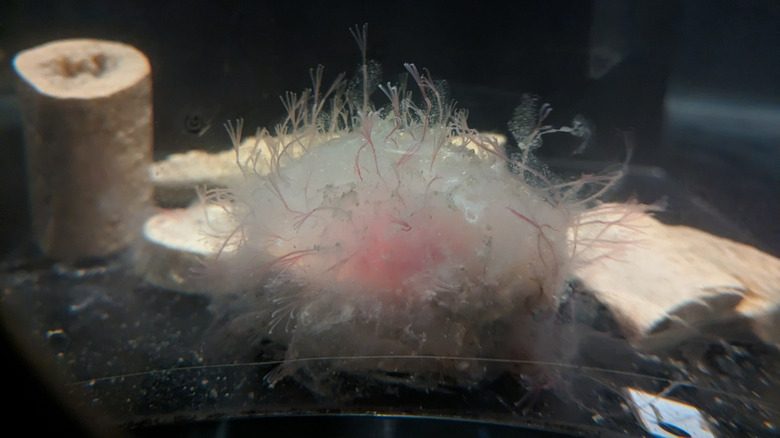
The researchers hypothesized that the reptiles' tough skin would be difficult for scavengers, however, the bodies were consumed more quickly than expected. They observed the bodies in intervals of 24 hours over 51 days and found that scavengers started munching on the alligators as quickly as 43 hours after their deployment. There have been many unusual deep-sea discoveries throughout history, and you can add a bone-eating worm to the list. The research team identified a new type of Osedax on one of the three bodies. Osedax are worms that have evolved specifically to break down and consume bone tissue.
It's not the first time one of these worms has been discovered, but it was the first time this particular species was observed. Although the type of worm the researchers observed hadn't previously been identified, similar species have been found widely distributed between California, Japan, and Antarctica. These highly specialized worms don't have a mouth or stomach, but they produce an acid that helps break down the tissue, and contains bacteria that symbiotically live on the worm to help it absorb nutrients.
A new understanding of the complex deep sea ecosystem
The bottom of the ocean is effectively a carbon desert with tiny oases mixed in. A lot of the carbon is delivered through particulate organic carbon, suspended carbon molecules that fall from the upper levels of the ocean. A small amount may be produced by breaking down food molecules through a process that doesn't require sunlight called chemosynthesis. Neither of these processes explains the total volume of carbon at the bottom of the ocean, so there's strong evidence that dead plants and animals settling to the floor are a large contributor.
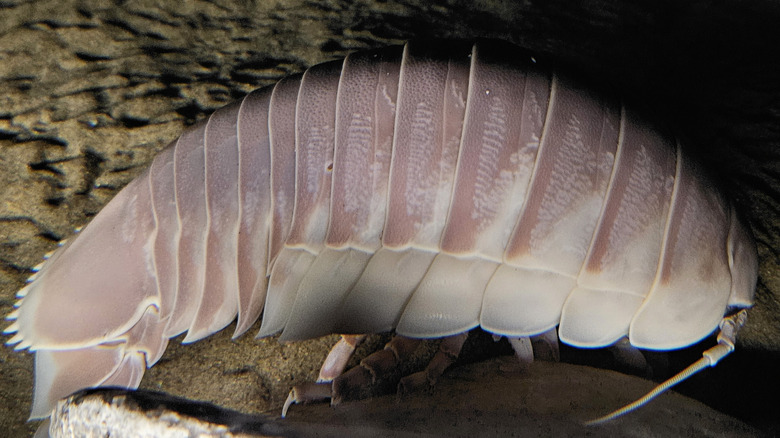
In this study, the worms weren't the only creatures responsible for consuming the bodies and getting their share of this essential element. The researchers found nine giant isopods munching on the first carcass. They also observed amphipods (small shrimp-like creatures) and macrourids (cod-like fish) snacking away. One of the alligator carcasses disappeared within eight days, so the research team theorized that a large scavenger like a sleeper shark may have consumed it, with evidence that the body may have been dragged to a new location.
Researchers are still making discoveries in the deepest ocean trenches. The findings of this study highlight the complexity of the ecosystem at the deepest parts of our planet. While we still don't have a great understanding of how life functions so deep below the surface, this study does give us a little more insight about the importance dead plants and animals falling to the ocean floor may play.