

Scientists Discovered A New Organ Hiding In This Body Part

Who needs to take a trip to Mars to make new scientific discoveries when we can simply look inside our own bodies? In a recent study published in Nature, researchers found evidence of a newly discovered immune structure in the skull bone marrow of mice, and it's thought that humans might have the same structure. The new evidence suggests that this lymph tissue may contain cells similar to those in lymph nodes and may act as part of the body's adaptive immune system.
The skull's main role is to provide the brain with a thick, protective barrier to prevent damage. Previously, the general assumption was that the brain and immune system don't directly communicate with each other. This study suggests that not only do they communicate, but that bone marrow in the skull may act as a sort of watchtower looking out for brain disease.
The findings come after the senior author's research team previously discovered lymphatic vessels connecting the dura and skull bone marrow. The dura is the outermost membrane that covers and protects your brain. These channels may allow your brain to mobilize a defense against brain cancer cells to destroy them before they grow and form a tumor.
The potential immune system function of the skull bone marrow
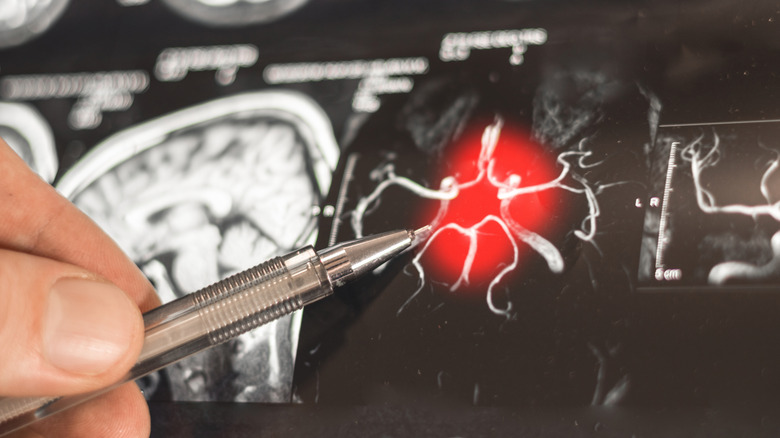
When you think of your immune system, you probably primarily associate it with the body system that protects you from contagious illness. However, your immune system does a lot more than fight off colds. Your bones produce the white blood cells that recognize abnormal or absent proteins on the surface of cells. This allows your immune system to monitor and destroy unhealthy cells and protect you from disease. In the Nature study, the researchers found evidence that the skull bone marrow may act as a surveillance system monitoring for cancerous changes in the brain.
The research tested the role of skull bone marrow in protecting the brain from cancer by inducing a rare but aggressive form of brain cancer in mice called glioblastoma. The research team found that disrupting this hub of immune cells in the bone marrow with a medication caused the cancer to grow faster and reduced the survival of the mice.
As part of their research, the team also developed a targeted therapy designed to increase antibody production inside the bone marrow. They achieved this using three immune-boosting proteins in a gel. This gel increased the immune system's response to the cancer, and mice given the gel had better survival than those not given the gel.
The role of the skull in neurodegenerative diseases

The researchers' findings could have applications for helping guide treatments for human brain cancer in the future. The brain is the master organ of most complex lifeforms, and without it, survival wouldn't be possible. Cancer that starts in the brain is relatively rare compared to many other types of cancer, but it also tends to have worse survival rates.
Rates of new brain cancer and other nervous system cancers in the United States have hovered around 5.5–7.0 cases per 100,000 people per year, making up a little over 1% of diagnosed cancers. On average, people diagnosed with brain cancer from 2016–2022 are only about a third as likely to live at least five years as people without brain cancer. Most brain cancers don't have a known genetic cause and it usually isn't clear why they form. Problems with the immune system may be one potential contributing cause to cancer formation, and immune dysregulation has been linked to higher cancer rates.
The results of this study could be useful beyond treating brain cancer since they provide researchers with a new understanding of neuroimmunology, a field of research focused on how the immune system and nervous system interact. It may provide direction for researchers developing treatments for neurological conditions such as Alzheimer's disease, Parkinson's disease, and schizophrenia that have an immune component. Future research may examine how to best leverage immune cells to deliver medications to healthy cells in the brain.