

This Seemingly Healthy Protein Could Have An Unexpected Effect On Your Brain

Protein is arguably the most talked-about macronutrient these days, and many people are exploring different sources. The American Heart Association advocates for eating mostly plant-based types of proteins, while also including regular amounts of fish to gain heart-healthy omega-3 fatty acids. Tuna is one such fish you can consider, which can be a good source of protein and omega-3. Despite all the benefits of tuna, eating too much of this type of fish can have some serious downsides when it comes to your brain health due to the risk of neurotoxicity from methylmercury. Such risks are also greater among specific populations, as well as with the type of tuna you eat.
While there are certain characteristics that all fish have in common, mercury may not be the first that comes to mind. Methylmercury is a form of mercury that can be found in both water and soil, and it is derived from naturally-occurring mercury within Earth's crust. Both freshwater and saltwater fish may be exposed to the toxic metal, which is then stored in their tissues. Larger (and older) fish like tuna usually contain the most amount of methylmercury, since they eat smaller fish which consume the metal that then builds up in their bodies over time. The mercury can then be transferred to humans who eat the exposed fish.
The possible brain damage from methylmercury is linked with vision problems, memory loss, nervous system issues, seizures, and even death. Possible side effects of mercury exposure in fetuses and young children include brain and nervous system damage, as well as hearing loss.
The overall safety of tuna, and who should consider avoiding it

According to the Harvard Gazette, tuna is the largest source of methylmercury exposure for people in the U.S. It's also the most commonly consumed fish in the world. High levels of exposure are arguably more likely with tuna given its affordability and wide availability in canned form.
Given both the nutritional benefits of tuna as well as the risks associated with it, the goal is to eat it in moderation. While anyone who eats a large amount of mercury-containing fish is at risk of poisoning, fetuses and babies exposed to methylmercury during pregnancy or nursing are at the highest risk, says the Cleveland Clinic, who also notes that symptoms of organic mercury poisoning can take several years or decades after long-term exposure.
Also, while healthy adults may be able to eat two servings of tuna or other fish a week, there are other specific guidelines for special populations. First, the U.S. Food and Drug Administration (FDA) recommends that people who are pregnant or nursing eat between 8 and 12 ounces of a variety of lower-mercury fish, including canned light tuna. At the same time, the American Academy of Pediatrics recommends limiting consumption of albacore tuna to just 6 ounces a week. The FDA also has weekly guidelines that are age-specific for children 11 years old and younger.
The issue of methylmercury in various types of tuna (and in other fish)
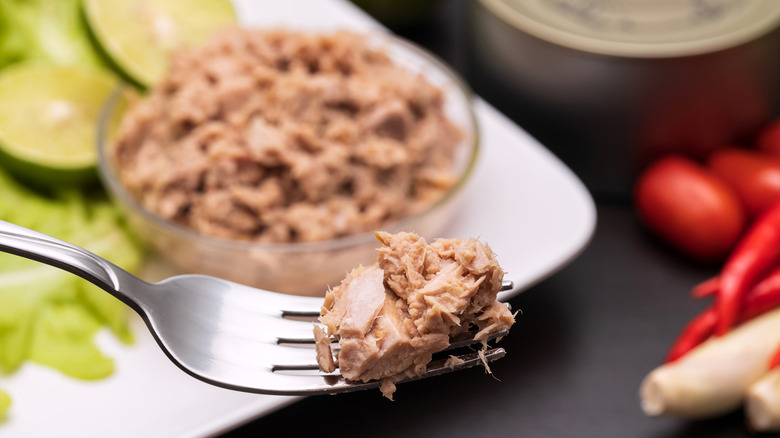
The issue of methylmercury isn't exclusive to tuna since the toxin is found in almost all types of fish and commercial seafood more generally. What's more, some types of tuna contain more mercury than others. Bigeye tuna contains the most, followed by albacore tuna. Because of this, these types of tuna are not considered safe options for children. Canned, light varieties from skipjack tuna contain the least amount of methylmercury. Just keep in mind that even if you choose lower mercury tuna, you'll still want to keep your portions in check to limit exposure.
Overall, the FDA also recommends that high-risk groups avoid bigeye tuna, as well as other higher-mercury fish selections such as bass, walleye, northern pike, marlin, swordfish, king mackerel, orange roughy, tilefish, and shark. Even healthy adults not at high-risk ought to avoid consuming such options on a regular basis to prevent possible issues with mercury poisoning. If you do eat fish as part of your diet, consider keeping a list of sources of methylmercury on hand, and to eat them all in moderation, or as recommended by your doctor.