

The Difference Between Yellow And White Corn Is Easily Explained By Science
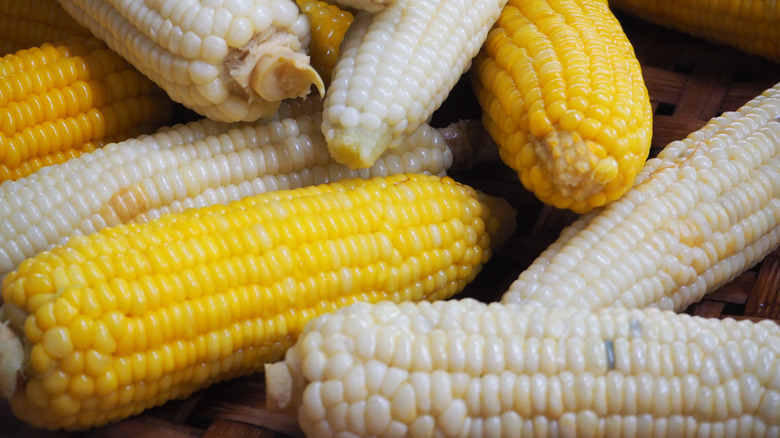
Corn can be grown in a variety of different colors, including red, blue, purple, and even rainbow shades. Yet the most commonly grown corn for human consumption is sweet corn, which is available in yellow, white, or bi-colored kernels. If you've ever wondered why some corn is white or yellow, there is a scientific explanation behind different kernel colors. It all boils down to carotenoids, which give darker colored kernels their color. Additionally, yellow offers slightly different nutrients, but both have the same benefits overall.
Carotenoids are natural pigments that give vibrant fruits and veggies their color. Aside from plants, these substances are found in a variety of algae, bacteria, and even animals. According to the Journal of Natural Medicines, there are at least 850 types of carotenoids, and they are also considered antioxidants (which are different than oxidants). Yellow corn contains beta-carotene, which is the same carotenoid that gives orange carrots and sweet potatoes their bright hues. Notably, beta-carotene has anti-inflammatory properties and plays a role in eye health. Different types of carotenoids are behind the surprising way egg yolks support eye health.
While yellow corn doesn't contain a lot of beta-carotene compared to richer sources like carrots, sweet potatoes, and cantaloupe, this carotenoid is still what differentiates it from white corn. White corn contains 1 microgram of beta-carotene per 100 gram serving, says the U.S. Department of Agriculture (USDA). On the other hand, the USDA also notes that the same amount of yellow corn has 47 micrograms of beta-carotene. When you consume beta-carotene, it turns into vitamin A. For this reason, you can consider yellow corn a better source of vitamin A than white corn.
Other differences (and similarities) between yellow and white corn

The distinction surprisingly stops there for the most part. Technically, there are slight nutritional differences between the two, but they are too nominal to argue that yellow sweet corn offers more health benefits than white. In fact, according to the USDA's nutritional database, a 100 gram serving (or close to 1 cup) of raw yellow and white corn are nearly identical from a nutritional standpoint. The USDA estimates that yellow sweet corn kernels offer slightly more vitamin A compared to white kernels, though, thanks to its carotene content.
As for differences in taste, it turns out there isn't much of a consensus regarding white versus yellow corn. While many people might find white corn is the sweetest of the two, others might find yellow slightly sweeter. Rather than the color of the kernels though, these variations in taste are attributed to different sweetness levels. These range from normal and sugar-enhanced, to super-sweet varieties, says The Kitchn. So the next time you shop for corn, keep an eye out for these types of labels if you prefer corn that is sweeter (or less sweet) based on your own taste buds and other chemical senses. Just know that of the two main types of sweet corn, yellow technically offers more antioxidants due to its higher levels of carotenoids.