

The Common Refrigerator Myth That Could Make Your Food Less Safe
We may receive a commission on purchases made from links.
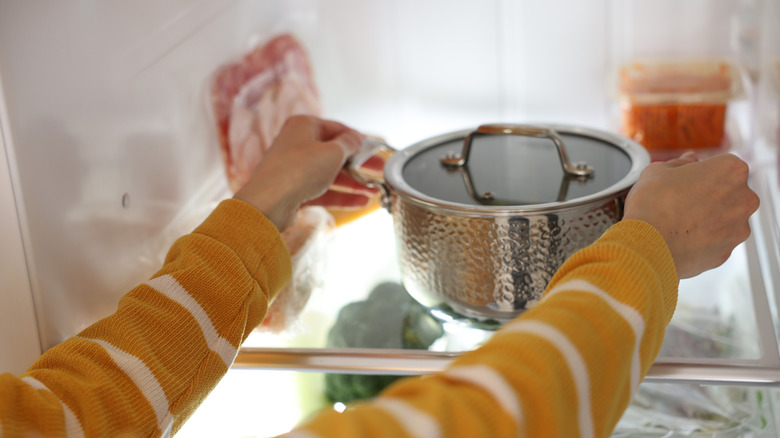
Whether you have spent the afternoon meal prepping for the week or have cooked a huge feast and have an abundance of leftovers, we have all had occasions when hot food needs to be refrigerated. If your first thought is always to let it cool fully before popping it into the fridge, you may be surprised to find out that this is a widely-held culinary myth. Leaving your food to cool down in a warm room could actually be more dangerous than putting hot food into the fridge.
This myth does seem to make sense, and is based on the idea that putting hot food into a cold fridge will heat up the temperature of the food around it, and the fridge as a whole, putting the already-chilled food at risk. This idea likely comes from when ice boxes were used to chill food, before the invention of the electric refrigerator in the early 20th century. In this case, adding hot food to an ice box would cause the ice to melt, thus reducing the effectiveness of the freezer box dramatically. With modern refrigerators, that is not the case as they have cooling systems to keep the temperature constant, so adding hot food is not going to make a lasting impact on the overall appliance temperature.
Instead, the real risk comes from leaving food sitting out at room temperature for many hours after cooking. This slow cooling creates the perfect environment for bacterial growth, which could potentially lead to food-borne illness.
Why prompt cooling is important for food safety
The reason hot food should be cooled quickly is to avoid what the USDA calls the Danger Zone, which refers to the temperature range between 40 and 140 degrees Fahrenheit. According to Vanessa Coffman, program director at Stop Foodborne Illness, "Foodborne bacteria can double in number every 20 minutes when food is left in the temperature danger zone between 40 and 140 degrees Fahrenheit." When food is cooked until piping hot, most of the bacteria are destroyed, but allowing it to sit for long periods of time in the Danger Zone can create an unsafe situation. While most of us assume that meat and fish are high risk foods for bacterial growth, cooked rice and pasta also fall into this category, due to their high moisture content.
This doesn't mean that you need to rush to cool food down instantly when it comes out of the oven, but the longer you wait, the more opportunity there is for bacteria to multiply, since temperature is a significant factor in the growth of microorganisms. The USDA says that food must be refrigerated within 2 hours of cooking, unless it is being kept warm, which would prevent it dropping below the crucial 140 degrees. If your kitchen is at a temperature of 90 degrees or above, the time window drops to 1 hour, after which food should be thrown out.
This is where waiting until the food feels cool can be seriously problematic. Depending on the meal, that could take many hours to happen, and dangerous microbes such as salmonella could already be present before the food makes it to the fridge.
How to cool hot food safely
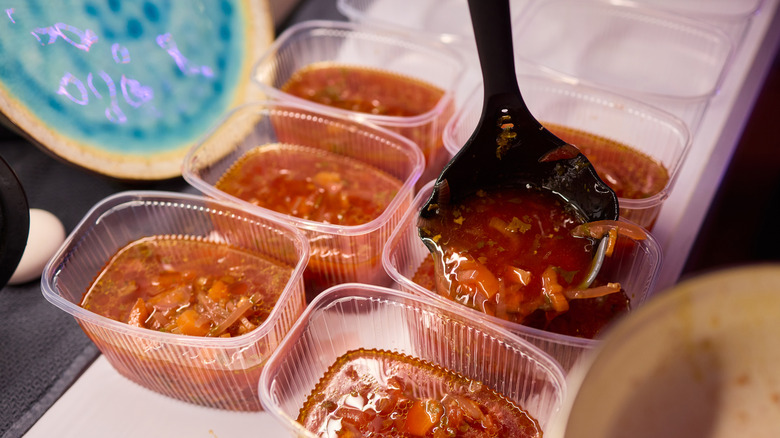
Now that you know that warm food should not be left at room temperature for long, common sense still needs to be applied. Popping a few slices of roast chicken into the fridge is not the same as adding an enormous pot of piping hot soup, and the latter is unlikely to cool quickly enough, even at the relative cool of a 38 degree fridge. Instead, food should be portioned out to allow it to cool more quickly, meaning the time spent in the Danger Zone is reduced.
As a rule, the outside surface of food will cool much more quickly than the inside, so increasing the surface area is key to improving the food safety as it cools. If you have a large joint of meat, carve it before refrigerating and store it in smaller containers. Similarly, soups and sauces should be portioned out before cooling. The FDA also recommends not overpacking the fridge in general, to allow the cool air to circulate more efficiently.
If you are still unsure about adding hot food to the refrigerator — some habits are hard to let go of — you can add the container to an ice bath for a few minutes before refrigerating, which will help the temperature drop quickly. You could also purchase a fridge thermometer, such as the TempPro TempAir Refrigerator Thermometer. This will tell you the genuine temperature inside the fridge, rather than just the setting you have selected, and reassure you that the hot food you've put inside isn't having a detrimental effect on the rest of the fridge's contents.