

The Surprising 'Vital' Organ You Can Actually Live Without
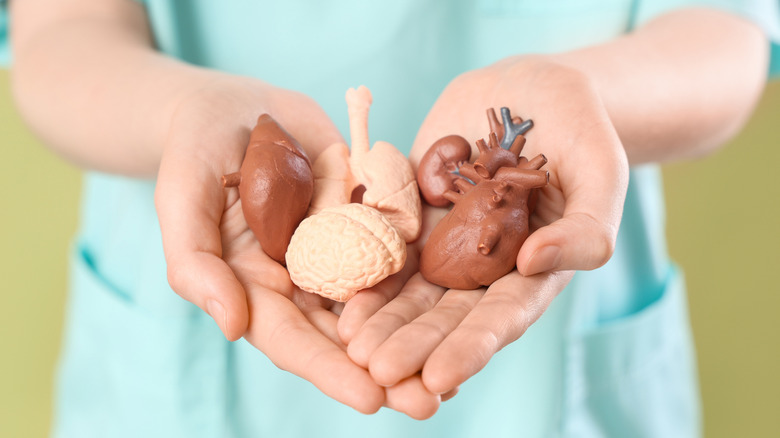
Your heart, brain, stomach, and liver — these are all essential organs that you can't live without, right? Except you can live without one of them. Can you guess which? Although it might seem impossible, your stomach doesn't actually serve an essential role for survival.
Surgery to remove the stomach is called a gastrectomy. A partial stomach removal is sometimes used to aid with weight loss for people with obesity who don't respond to other treatments. In these cases, doctors usually remove about 80% of the stomach to reduce the amount of food that can fit inside. People who have had most of their stomach removed feel full more quickly since there's more pressure against the walls of their stomach after eating, which signals fullness to the brain. Removing all or most of the stomach also lowers levels of hormones that control your appetite.
The entire stomach is sometimes removed to treat conditions such as stomach cancer or peptic ulcer disease. About 3,000 of these surgeries are performed each year in the United States. In extremely rare cases, some babies are born without a stomach entirely. Although living without a stomach can make eating more challenging, many people can live full lives with some dietary modifications to account for the changes to their digestive tract.
What is the role of the stomach?
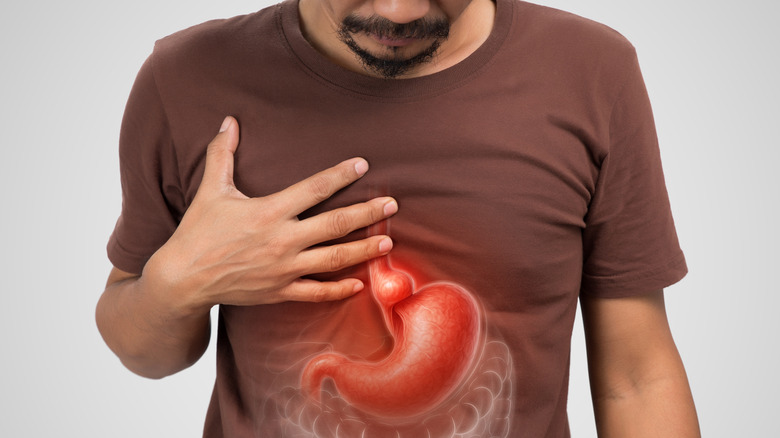
The stomach is the first place food lands in your digestive tract after you swallow it. You may think of it simply as a holding container for food, but your stomach is extremely active in the digestive process. Although these processes are important, they aren't absolutely essential for survival. If you have your stomach removed or are born without a stomach, it's still possible to survive with some lifestyle changes.
Your stomach produces a liquid mixture called chyme and mechanically breaks down food before sending it along your digestive tract. Chyme is a mixture of water, hydrochloric acid, and various digestive enzymes. Hydrochloric acid is produced by exocrine cells in the stomach to help break down proteins. Stomach acid is very strong, but luckily the lining of your stomach contains a protective layer to keep itself from getting dissolved. Along with helping break down your food, hydrochloric acid activates pepsin in the stomach, which helps your body absorb proteins.
Another essential role of your stomach is producing the hormone ghrelin, one of the key hormones that stimulates your appetite. It works together with leptin produced by fat cells to modify your appetite. Smaller amounts of ghrelin are produced by your small intestines, pancreas, adrenal glands, and brain. Even if your stomach is removed, your body can still produce traces of this hormone.
What happens without a stomach?
If you don't have a stomach, your body is unable to break down food in the same way as most people's bodies. Your esophagus connects directly to your small intestines, and food moves through the gastrointestinal tract much quicker. The stomach plays an important role in breaking down proteins, but proteins are primarily absorbed in the small intestines. People living without a stomach need to be extra cognizant about chewing their food thoroughly so that their body can absorb it without hydrochloric acid and pepsin.
After stomach removal surgery, many people have problems absorbing nutrients. Healthcare professionals often recommend eating frequent, small meals to help with nutrient absorption and give food time to pass through the digestive tract before adding more. Doctors also often recommend limiting liquids with meals to prevent fullness that may lead to not getting enough food and essential nutrients.
The human body is highly adaptable and can live without many organs that we generally think of as essential if it's necessary. Doctors also sometimes remove large sections of the bowels for people with bowel cancer, and even other organs such as the gallbladder can be removed to protect from cancer or other conditions that can be life-threatening.