

Your Joints Start Aching More When You Reach This Age
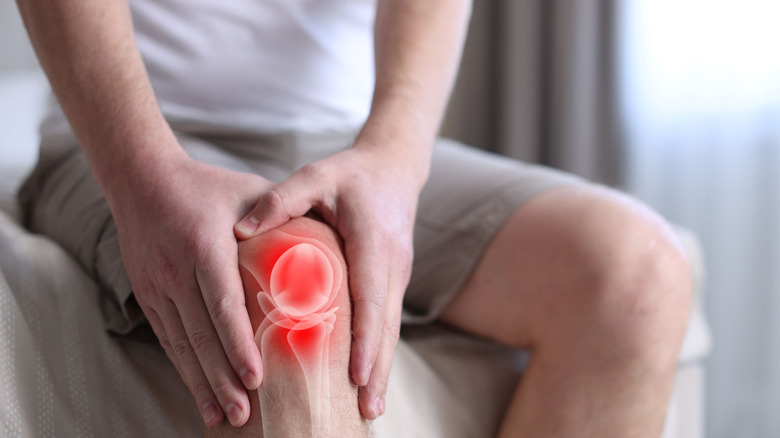
The 40-year-old Austrian snowboarder Benjamin Karl won Olympic gold at the 2026 Winter Olympics, seemingly defying the aging curve in an event not known to be joint-friendly. You may have heard people warn you that your joints will hurt when you hit 30. Or they may have warned you about turning 40, 50, or 60. The reality is there's no magic age where your joints suddenly start throbbing, but by the time most people reach their 60s, the majority have some form of knee pain.
One of the most common causes of joint pain is osteoarthritis, where the cartilage in a joint breaks down from wear and tear and your bones rub together. This rubbing can cause pain that ranges from mild to severe. Osteoarthritis is the most common type of arthritis and becomes more frequent with age. According to the CDC, only about 3.6% of adults between 18 and 34 have osteoarthritis, but rates increase to 53.9% in adults over 75.
About half of people over the age of 65 show evidence of knee osteoarthritis in imaging, and the majority of people have experienced or are currently experiencing joint pain by this age. Maintaining good lifestyle habits while you age can help you keep your joints as healthy as possible. However, some causes of joint pain, like your biomechanics, may make you more prone to certain types of injuries no matter how careful you are.
Why joint pain becomes more common with age
Many of the most common causes of joint pain, such as arthritis, traumatic injury history, and inflammatory conditions, become more likely as you age. Osteoarthritis is the most common form of arthritis, but there are more than 100 other types, such as rheumatoid arthritis and psoriatic arthritis. Rheumatoid arthritis develops when your immune system attacks healthy cells in your joints, with ages 65–80 being the typical range when people are diagnosed. Psoriatic arthritis is an inflammatory arthritis that develops in about 20% of people with psoriasis, most commonly between the ages of 30–60, with the peak age of diagnosis closer to 60.
Traumatic injuries are also a common cause of joint pain, even many years after the original injury. The longer you've been alive, your body has more time to accumulate more injuries. Pain may result directly from degenerative changes from your original injury or indirectly due to biomechanical changes like changing the way you walk. Age-related conditions like osteoporosis may also make you more prone to major bone, muscle, or connective tissue injuries as you get older.
Many inflammatory conditions that cause joint pain are also most common among middle-aged and older adults. Gout is an inflammatory condition that usually develops after menopause in women and in middle age in men. Some non-physical causes of joint pain, like fibromyalgia, are typically diagnosed in young to middle-aged adults.
Reducing your chances of joint pain as you age

Some of the factors that lead to joint pain are out of your control or are somewhat out of your control, but focusing on healthy lifestyle habits while you age can help minimize your risk. For example, excess body weight is a risk factor for osteoarthritis, since this extra weight can put stress on your joints. Eating a healthy diet along with regular exercise can help you keep your weight in a healthy range.
Exercising regularly can also help strengthen your connective tissue and muscles to take stress off your joints. Any type of load-bearing exercise like walking, running, or dancing can help support your joint health. If you have injuries that make it difficult to perform high-impact exercise, many people find activities like swimming or water aerobics more joint-friendly since the water's buoyancy reduces loads on the joints.
Everybody's body is unique, and you may have biomechanics that predispose you to certain muscle or skeletal system injuries. For example, walking with your toes out may put excess stress on your knee. If you develop joint pain, it's a good idea to see a healthcare professional to learn how to best manage your symptoms. Many people find working with a physical or occupational therapist helpful for managing pain.