

Scientists Had 13 Men Lie Head-Down For 60 Days. Here's What Their Brains Revealed
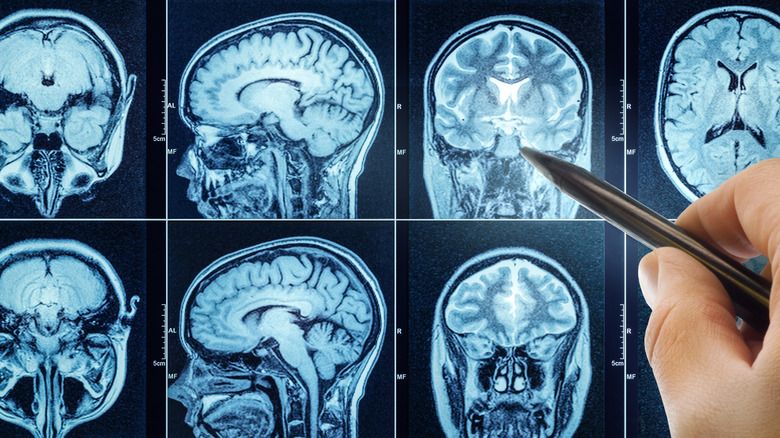
Scientific research can sometimes look a little strange at first glance. But as unusual as experiments might seem, there's typically a good reason for those odd methods. One example is how scientists had a cohort of 13 healthy men lie head-down for 60 days. The purpose of this was to simulate how the weightlessness experienced during spaceflight affects the brain. What these scientists found was that the human brain goes through significant changes in cerebrospinal fluid volume, brain activity, and metabolic function, which could influence memory and other cognitive functions.
Long-duration spaceflight is known to have a variety of effects on the human body thanks in part to microgravity. In microgravity, bones and muscles can weaken, which is why astronauts follow strict exercise routines while in space. However, studies have shown that microgravity can also affect the brain. We rely on gravity to figure out where we are and how to move. Without this cue, the brain has to adapt to allow the body to function normally. At the same time, fluids in the body shift around in microgravity. Scans of astronauts' brains have shown changes in brain tissue composition and connectivity and cerebrospinal fluid distribution. However, our understanding of how long it takes for astronauts to recover from these changes and what they mean for the brain's ability to function is still limited.
Keeping heads down for science

While scanning the brains of astronauts can reveal a lot about the effects of spaceflight, there are only so many astronauts that can be studied. Because of this, scientists have people lie head-down to simulate the effects of microgravity. However, previous studies using this method have been relatively short, with 90% being shorter than 30 days. A trip to Mars is several months each way, meaning much longer exposure to microgravity. At the same time, previous studies have been somewhat limited in their use of brain imaging techniques.
To deal with this, the researchers behind the study published in npj Miocrogravity used a 60-day study period to tease out effects from longer duration space travel. They recruited 13 healthy male volunteers between the ages of 25 and 45 for the study. The purpose of the study was to identify changes in the brain induced by head-down bed rest, explore how these changes might relate to cognitive function, and look into possible physical mechanisms for any noted changes. The researchers used several different neuroimaging techniques, including structural MRI and resting-state functional MRI, as well as neuropsychological assessments and genomic analyses to look for possible biochemical adaptations.
Pump up the fluid volume
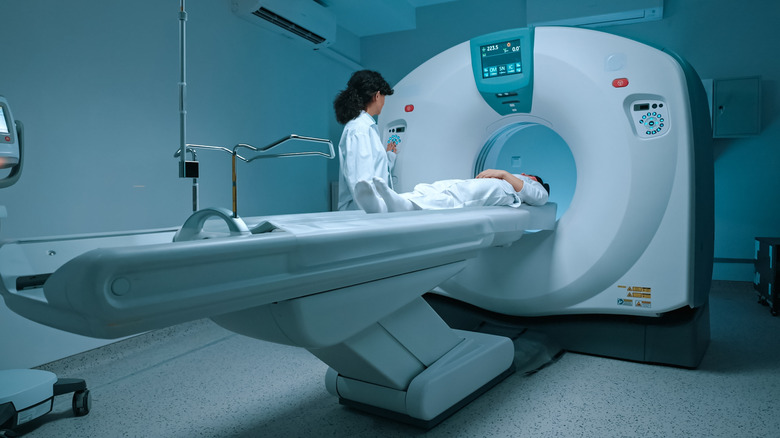
Brain scans found a notable increase in cerebrospinal fluid volume in the volunteers' brains in response to simulated microgravity. They also observed changes in activity in the right prefrontal cortex, a part of the brain's anatomy responsible for attention, memory, and decision-making. In addition to imaging, the researchers had the volunteers take neuropsychiatric assessments before and after the 60-day head-down bed rest protocol to measure potential cognitive changes.
These assessments revealed an unexpected increase in memory scores. However, the researchers suspect that may be due to the participants taking the same test twice. To account for this, they had an additional 26 healthy male volunteers take the same assessments 60 days apart without experiencing simulated microgravity. They found no significant differences in memory scores between the head-down and control groups. In addition, genomic analyses of the 13 volunteers found changes in pathways related to protein translation. This suggests that brain tissue has unusual metabolic demands as it remodels to adapt to microgravity.
The findings of this study add to our understanding of how long-duration space travel affects the human brain. Further research that does more detailed imaging and monitoring could reveal more about the ways the brain responds to microgravity. This information could help astronauts prepare for and possibly counter some of the potential negative effects of long space missions.