

Science Reveals Why You Should Think Twice Before Putting Ice In Your Drink
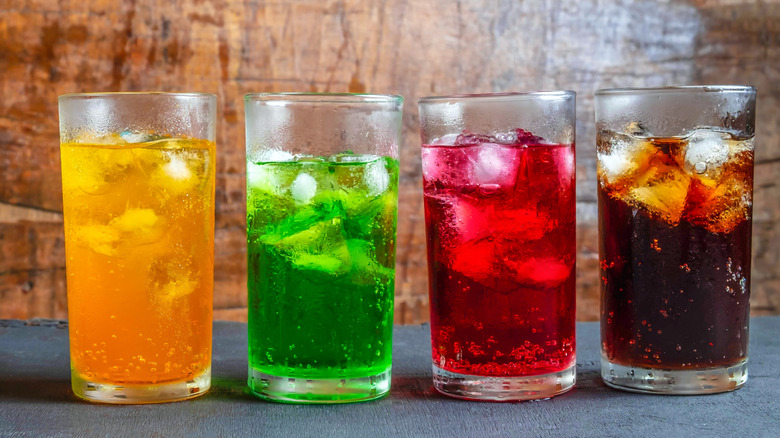
Agreeing to have ice added to your drink is something most of us do automatically, and likely associate with a better drinking experience. However, in the interest of our health, we should probably stop it doing immediately.
We rarely stop to consider where the ice comes from or how it's made. We usually see it being scooped from a bucket behind the bar, or shot out of the ice dispenser at the drinks machine. Either way, it seems pretty innocuous ... but it isn't. Believe it or not, the chances of the ice being contaminated with bacteria is high, and here's the bit you definitely don't want to hear — the microbes often come from poo.
There is no way to tell if the ice in your drink is contaminated, as it will look the same either way. And while the FDA states that it regulates ice, it only refers to packaged ice that you would buy from the freezer section of the supermarket, since the FDA website explicitly states that it "does not inspect food service establishments that make ice for direct use (e.g., for drinks or cooling food)." This means that the process of making ice cubes falls entirely to the establishment, and you are placing the safety of your drink in the hygiene standards of the staff. While this doesn't mean that every scoop of ice is unsafe, research has shown that contamination of ice cubes is common, and you can never know if that applies to the ones that are cooling down your drink.
Fecal bacteria has been found in ice in major coffee chains
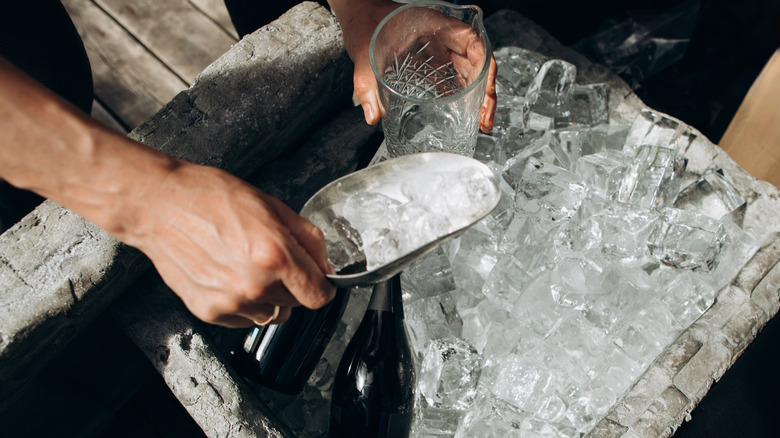
One myth about freezing is that low temperatures kill bacteria. This is not the case, since freezing merely stops the multiplication of bacteria, allowing food to be stored for longer without spoiling. This means that frozen water in the form of ice is not immune from bacteria, so any dangerous microbes in the water will still be in the ice cubes.
An investigation in the U.K. by BBC's Watchdog found three major coffee chains — Starbucks, Costa, and Caffè Nero — had an unacceptable number of bacteria in samples of their ice. Microbiologist Margarita Gomez Escalada was involved in the analysis, and explained that there were many times the number of allowed microbes, including fecal bacteria. "The levels allowed by law of bacteria in tap water are super low, so we would find say maybe 10 microorganisms per millilitre – we found hundreds per millilitre," she said.
While the sample size in this investigation was low, the findings are still worrying with one chain testing positive for fecal bacteria in 7 of the 10 samples. One possible source is poor hand hygiene from staff, especially those who are not handling food directly, so may not be wearing sterile gloves or washing their hands thoroughly in between doing other tasks. The ice machine itself can play a part, too. Bacteria-filled slime can grow in the ice cavity, which all ice cubes will then travel through. A dirty ice machine could result in every batch of ice being contaminated, potentially making a lot of people sick. Ice machines are not easy to clean properly, and moisture can build up in the hard-to-reach areas, creating an ideal environment for bacteria to multiply.
Can ice cause digestive upset?
There is a commonly held belief that drinking ice water or other cold drinks can have a detrimental effect on your digestive system. While the cold hitting your stomach may cause the speed of digestion to slow slightly, the body will rectify this quickly, and there are unlikely to be any long-term issues. In a 1988 study published in Gut, researchers measured the rate of gastric emptying relative to the temperature of the meal, testing at 39.2 degrees, 98.6 degrees, and 122 degrees Fahrenheit. The results showed that the cold drink emptied more slowly than the warm drink, but crucially, the temperature of the stomach returned to body temperature within 20–30 minutes of ingestion. This small study showed that although cold drinks do lower gastric temperature, the effect doesn't last more than a half hour.
There have been other health issues linked to consumption of very cold drinks in people with certain medical conditions, such as achalasia, which makes swallowing difficult, or those who have regular migraines. However, for the vast majority, ice cold drinks will have no worse an effect on health than a room temperature equivalent, other than the occasional bout of brain freeze.
Ultimately, the main issue with iced drinks is not the temperature but the potential contamination from whatever is lurking inside the ice cubes. There is no way to tell if the ice in your drink is pure, clean water, or has picked up a few nasties since it left the faucet. Although an ice cold drink can be incredibly satisfying, especially in warm weather, it is probably not worth the risk of getting sick.