

Scientists Sent A Robot Into The World's Deepest Lake. They Didn't Expect What Happened Next
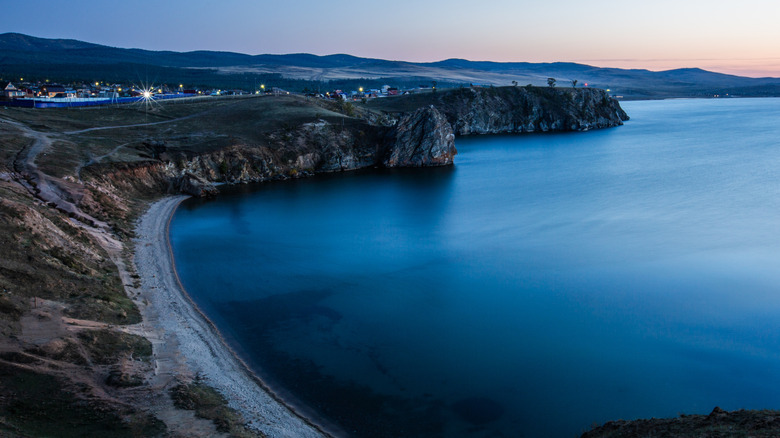
The mysteries of the deep are not limited to the world's oceans. Around the globe are freshwater lakes thousands of feet deep. The deepest lake on Earth, Russia's Lake Baikal, is home to as many as 1,800 different species of animals, many of which can only be found there. Scientists have been studying Lake Baikal and its ecosystem for years, with some researchers sending remote-controlled robotic submarines to explore the lake's immense depths. In 2023, these robots unexpectedly found evidence of recently active mud volcanoes: heaps of mud shoved upward to the surface from underground, hundreds of feet beneath the lake's surface.
Scientists surveyed the bottom of Lake Baikal at depths of between 340 and 350 feet in bays on the lake's northwestern shore. Cameras on the underwater robots found cracks and small cone-shaped craters in regions covered with soft sediments and mud from recent mud volcano eruptions. The lake bottom close to shore in this part of Lake Baikal typically consists of gravel and deposits of silt, so the presence of mud was a surprise. At the same time, the orientation of the cracks and craters parallel to the Severobaikalsk (North Baikal) fault, a seismic fault zone near the lake's shore, indicates that this fault could be active.
Tectonic activity shapes Lake Baikal and its life
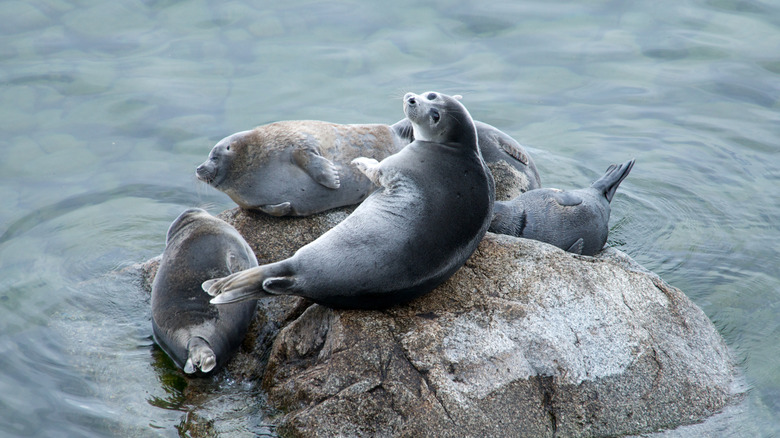
Lake Baikal, with a maximum depth of 5,315 feet, is the result of a rift valley formed by two tectonic plates moving away from each other. This gives Lake Baikal its characteristic crescent shape, stretching 395 miles long with an average width of 30 miles. For millions of years this rift has grown and continues to grow wider and deeper by a fraction of an inch per year.
Being in a rift zone also means that Lake Baikal is geothermally active as heat rises to the surface from deep inside the Earth. This heat fuels geothermal vents at the lake bottom. Fluids rising through these vents are warmer than the surrounding water, though at around 60 degrees Fahrenheit they are far cooler than the 750-degree vents that support life in the deep ocean. Heat from these vents combined with oxygenated deep waters have allowed life to flourish at all depths in Lake Baikal. In fact, the larvae of flying insects have been found at more than 4,000 feet beneath the surface. Researchers are working to determine how these insects get from that depth to the surface when they reach adulthood, though many suspect that the insects ride on bubbles of gas rising from the lakebed to the surface.
Are gas hydrates causing mud volcanoes?
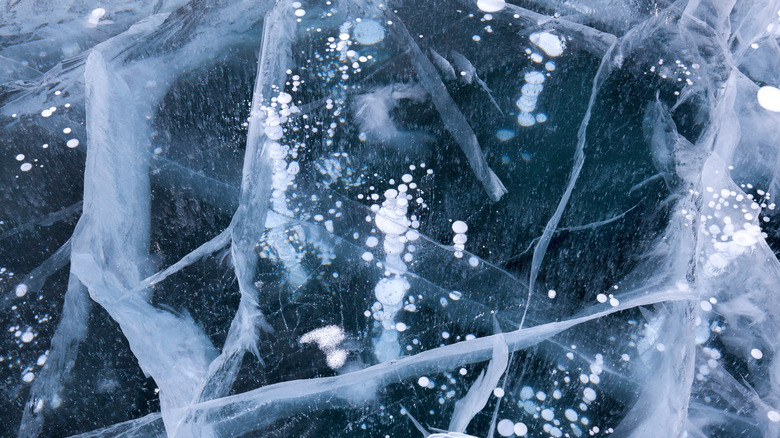
In addition to allowing life to thrive, subterranean heat is also likely what is driving much of the mud volcano activity in Lake Baikal. With the right combination of high pressure and low temperature, such as that found at the bottom of Lake Baikal, methane gas and water form crystals known as gas hydrates. Lake Baikal is the only body of fresh water on Earth known to have gas hydrates. Heat from the tectonic processes beneath the lake can cause gas hydrates in lakebed sediments to become unstable. This can lead to an eruption of mud and gas-saturated fluids that forms a mud volcano.
However, the newly found mud volcanoes are too shallow for there to be enough heat for this process. In this case the researchers suspect that movements and vibrations from the Severobaikalsk Fault are the driving force behind these eruptions. Scientists emphasize that more research is needed to better understand these shallow mud volcanoes and seismic activity in the region. As one of the oldest lakes lakes on Earth, Lake Baikal will continue to be the focus of research digging into the mysteries its waters hold.