

Not Weight, Not BMI: Scientists Say This Is A Great Indicator Of Health And Wellness
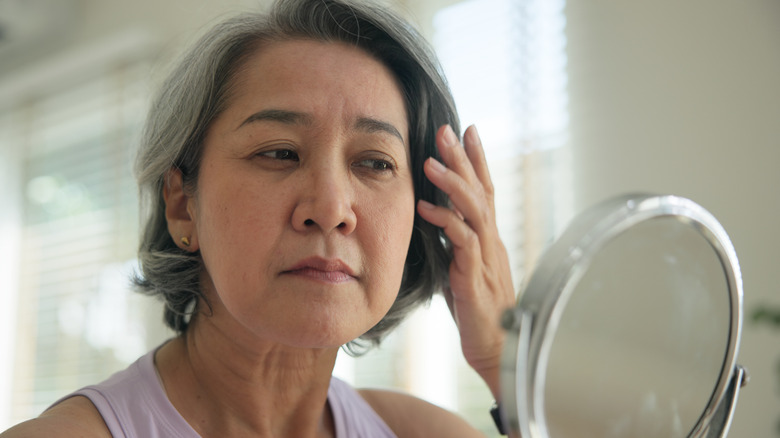
Many factors can be taken into account when we assess the state of our health, including our weight and body mass index. However, our bodies can give us subtle clues to our health through its largest organ — our skin. We look at it every day, and often berate it for misbehaving, but perhaps we should be trying to work out what messages it is trying to send us regarding the rest of our body.
According to the American Academy of Dermatology, the skin can give an excellent snapshot of the state of health inside a person's body, starting with clues about their lifestyle. Dermatologist Bruce Brod from the University of Pennsylvania explains that he can spot certain traits of a patient's lifestyle from their skin. "You can tell a lot about somebody by looking at their skin," he says, adding "droopy, saggy, dark circles under the eyes can be a clue to fatigue ... [and] dry skin can also indicate dehydration." He also observes that there are plenty of clues pointing to overexposure to the sun, including wrinkles and pigmentation changes.
These are not firm diagnoses of course, and we have all spotted the tell-tale under-eye circles after the occasional late night, but it's important to know what looks right for your skin. If you notice any changes in your skin, it could be a helpful first step in monitoring your own health, and working out whether there are places in your day-to-day routine that could do with some improvements.
Your skin could reveal a hidden health problem
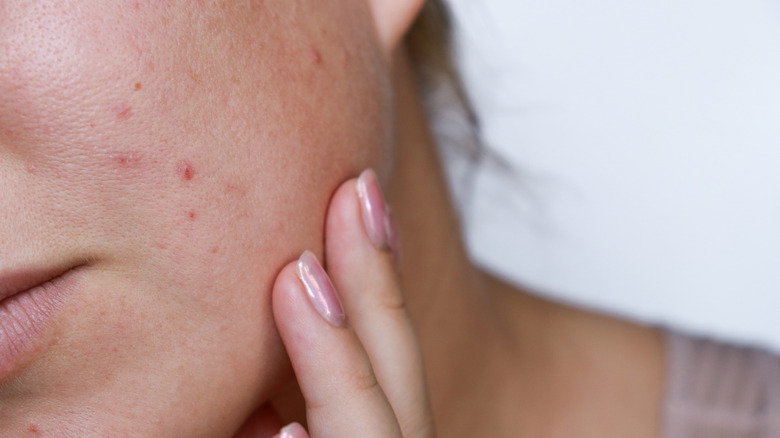
As a nation, we spend a lot of time and money trying to fix our skin from the outside — with Americans spending an average of $492 per person on cosmetic skincare. While the occasional blemish or dry patch may be a job for a good moisturizer, some skin changes can be a sign that something isn't right elsewhere in the body.
One example is a hormonal imbalance, where changes in the skin can often be an early clue. In the same way that hormone fluctuation in the teenage years causes acne, changing levels of estrogen, progesterone, and testosterone can cause acne in adults too. This can happen during pregnancy or after using birth control, but it can also be a symptom of hormonal conditions such as polyendocrine metabolic ovarian syndrome, formerly known as polycystic ovary syndrome.
Surprisingly, skin can also offer an early clue into insulin resistance, which can develop into type 2 diabetes. Dark patches in the folds of the skin, known as acanthosis nigricans, can be a warning sign that the body's response to insulin is being reduced, and can also be related to the risk of stroke and cardiovascular disease. Even dry skin can be symptomatic of underlying issues, especially if it is not normal for you. With an underactive thyroid, sweating rate is reduced, meaning that skin can dry out and become itchy. While skin issues are not automatically a symptom of something sinister, getting any changes checked out by a doctor can be a sensible precaution.
The surprising connection between your skin and your heart

While it may seem logical that your skin could reveal issues with dehydration or lack of sleep, it can actually reveal a lot about your heart health too. Some subtle signs may be symptoms of known skin conditions, meaning that the link to cardiac health could be overlooked. Dermatologist Dr. Saranya Wyles uses psoriasis as an example, saying, "The skin is not separate from the rest of the body ... psoriasis actually is now recognized in our American Heart Association cardiovascular guidelines as a risk-enhancing inflammatory condition."
Psoriasis appears on the skin as scaly, patchy, and often inflamed skin, and while for many patients, the main concern is reducing the symptoms, there are some clear links between the autoimmune condition and cardiovascular disease. According to a paper published in the Journal of the American Heart Association in 2013, "Mild and severe psoriasis are associated with an increased risk of myocardial infarction and stroke [while] severe psoriasis is also associated with an increased risk of cardiovascular mortality."
Another skin symptom that signals more than simply a cosmetic issue is xanthelasma. These yellow deposits on the eyelids, or elsewhere on the body, can be a sign of high cholesterol. While they are painless, they should not be ignored since they could be an early warning sign of elevated cholesterol, which is a risk factor for cardiovascular disease. Though many skin changes happen as a result of cold weather, temporary illness, or stress, monitoring fluctuations in your skin can help you pick up early clues if something isn't right inside your body, and allow for quick intervention.