

The Blood Type Health Myth That's Been Debunked By Science
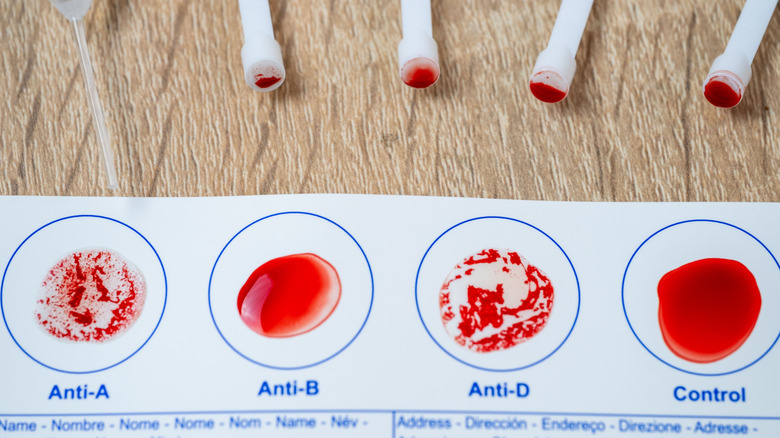
Fad diets tend to come and go, but one that has stuck around for a while is the Blood Type Diet. It was first proposed in 1996 and is based on the concept of eating different foods depending on your blood type. However, recent studies into the effectiveness of the diet suggest that while some people see positive results while following the system, this has nothing to do with their blood type.
The Blood Type Diet (BTD) was first introduced by Peter D'Adamo in his book "Eat Right 4 Your Type." He claimed that your ABO blood type gives you a genetic predisposition to certain foods, meaning that an optimal food for a Type A person might not be the case for Type O. In the book, he claims each blood type has evolved from a different social group, and their diet should be based on how they used to eat. Type A are suited to a mostly vegetarian diet; Type B should favor dairy; and Type O gets on best with a high animal protein diet. Type AB benefits from a cross of A and B. If you don't know which one applies to you, you can work out which blood type you are most likely to have from your parents' type.
D'Adamo suggests that the chronic inflammation that affects millions of people in the modern world is a result of a one-size-fits-all approach, and that individualized eating plans are much more effective. He also makes reference to lectins, which are sticky proteins that are found in many foods. The book claims that certain blood types react badly to some lectins, meaning eliminating those foods from the diet can help to reduce inflammation.
What the science says about the Blood Type Diet

Anecdotally, the Blood Type Diet appears to work for many people, with thousands of four and five star reviews for the book. However, the science is less certain, and researchers have found little evidence to support the concept. In 2013, a systematic review published in the American Journal of Clinical Nutrition found no evidence to support the concept. The following year, a study published in PLoS One followed participants on each of the four diets and measured markers such as body mass index (BMI), triglycerides, and waist circumference. Those following the A, AB, and O blood type diets showed improvements in various markers, but the improvements were shown across participants of all blood types, not only those whose type matched the diet. Those following the Type B diet did not show improvements in the measurements taken.
Two further studies failed to find convincing evidence of the benefits of the diet, comparing participants with different blood types on their results on specific eating plans. In a 2018 study involving almost 1,000 overweight adults, although BMI and waist circumference reduction was observed in participants following all three blood type diets, there was no greater improvement for those with a matching blood type. In 2021, as part of a larger weight loss study, blood types were monitored of participants following a low-fat vegan diet, and no link was found between results and blood type.
Why the Blood Type Diet can still make you healthier

If no evidence has been found to back up the claims in the Blood Type Diet, why have so many people been raving about it for 30 years? Well, one explanation is that following each of the diets requires an improvement in the intake of healthy food for the majority of people. On the Type A diet, a switch from processed foods to nutritious organic fruits, vegetables, and eggs will make most people feel better than they did before, regardless of their blood type. Type O diet followers will likely experience a surge in energy and an increased feeling of satiety as they transition to a diet filled with high-quality animal protein and fiber-rich veggies.
Even the Type B diet, which showed fewer health marker improvements in the studies, encourages a variety of nutrient dense nuts, veggies, and seafood in addition to the dairy. These foods can all form part of a healthy diet, meaning people switching from a more processed way of eating are likely to see improvements in how they look and feel.
Ultimately, the Blood Type Diet recommends removing many of the processed fats and sugars that contribute to an unhealthy diet in the modern world, and that switch alone can be enough for many followers of the plan to see results they are happy with. Whether that change is specifically due to blood type seems unlikely, and following a nutritious, balanced eating plan is the best move to improve health and longevity.