

The 'Useless' Organ That's More Important To Women's Health Than Doctors Thought
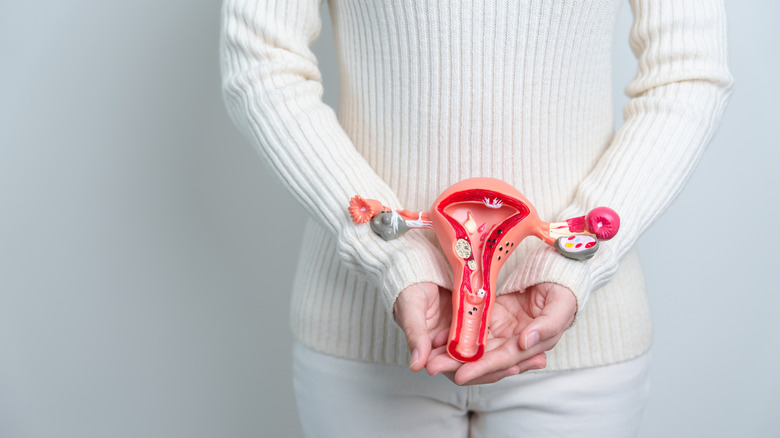
The human body is filled with organs that were once considered useless but now have an identified or theorized role. The appendix? Possibly plays a role in maintaining good bacterial balance in your gut. Your tonsils? Provide your body with an initial defense against microorganisms that make humans sick. The rete ovarii is another one of these organs once thought to be useless, but it's now theorized that it may play a role in supporting ovarian health and fertility.
The rete ovarii are a pair of small structures that consist of a series of tubes connected directly to the ovaries of females. They were first discovered in the 1800s and have been identified in many mammals, from guinea pigs to humans. They've been given so little attention over the years that they've even disappeared from most anatomy textbooks.
In a 2025 study, researchers revisited these structures in mice using a special form of microscopy to see a detailed image of the entire ovaries. The researchers found evidence that the rete ovarii may play a role in moving fluid and other essential materials. Although their exact function still isn't known, the structure of these horseshoe-shaped organs suggests they may influence the ovary during changing conditions in your body, such as dietary or immune changes.
What do the rete ovarii do?
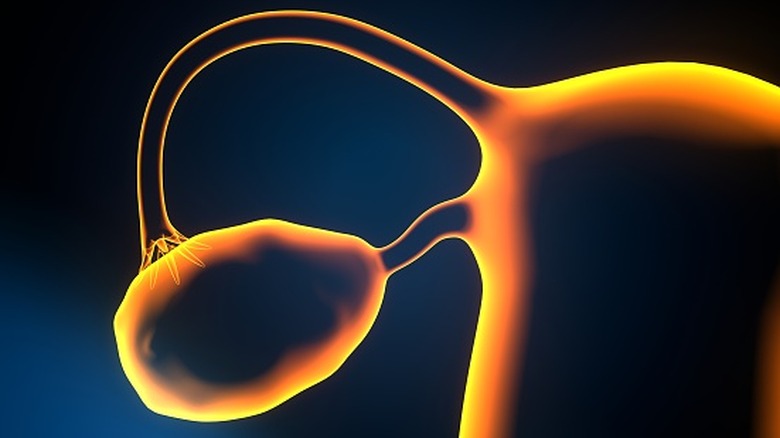
The rete ovarii are anatomical structures joined to the ovaries. Even if you know human anatomy well, there's a good chance you've never heard of them since they've been given little attention over the years and long been considered vestigial. Vestigial structures are those that once had a function but lost their original purpose during evolution. For example, the tailbone is a vestigial structure left over from the distant primate ancestors of humans who had tails.
The name "rete" translates from Latin as net or network, referring to the net-like appearance of the rete ovarii around the ovaries. Researchers still don't entirely know what their role is, but since an organ's structure often reflects its function, researchers now hypothesize that it may support the ovaries in some way. The ovaries contain the eggs in the female reproductive tract that are sent to the uterus once a month for fertilization.
In the 2025 study, researchers found that the rete ovarii contain three distinct regions called the intraovarian rete (IOR), the extraovarian rete (EOR), and the connecting rete (CR). The IOR seem to form solid cords that connect directly with the ovary, while the outer EOR contains a series of tubes that may contain protein-filled secretions with a potentially important role for ovarian function. The CR seems to act as a bridge connecting these structures.
Potential future research on the rete ovarii

The rete ovarii were forgotten for many years, but they've now regained the interest of researchers who will continue to examine how these structures may help support the ovaries. In the 2025 study, the researchers suggested that they be added to the list of organs in the female reproductive tract so their function can be more properly investigated.
There's still a lot left unknown about this mysterious organ, and future research may aim to see if diet or immune activity influences proteins secreted by the rete ovarii. There's already strong evidence that the ovaries respond to changes such as insulin, blood sugar, or amino acid level changes in the blood, but the exact pathway still isn't entirely known. Further understanding of the rete ovarii could potentially serve as a bridge in this knowledge gap for researchers and at least partially explain how the ovaries respond to bodily changes.