

This 'Useless' Body Part Was Lost To Evolution. Now It's Becoming Even More Common
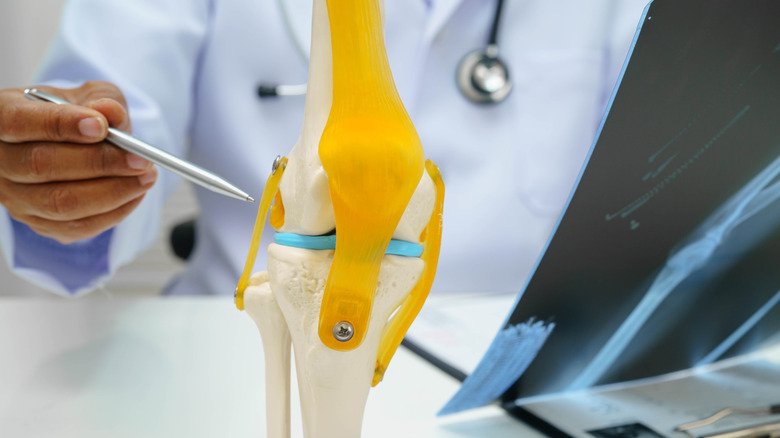
Long ago, when hominids diverged from other primates, changes occurred in their skeletal structure. Standing and walking upright more often triggered changes in how leg muscles were used. This, in turn, changed how the joints were structured. Over time, some parts of the joints that were more useful grew and changed, like the tendons that surround the knee. Other parts shrank or disappeared. One of these seemingly useless-to-great-apes parts, which might have been destined for the evolutionary dust heap, is the fabella.
What's a fabella, you might ask? It is a small sesamoid bone within the knee, behind the kneecap at the top of the femur (the thigh bone). Sesamoid bones are one of five categories of bones in the skeletal system. They are usually embedded in a tendon where that tendon passes over a bone. Sesamoid bones give tendons a smooth surface to move over, increasing the mechanical advantage of the attached muscles. Like a pulley, if you enjoy simple machines.
The importance of the fabella
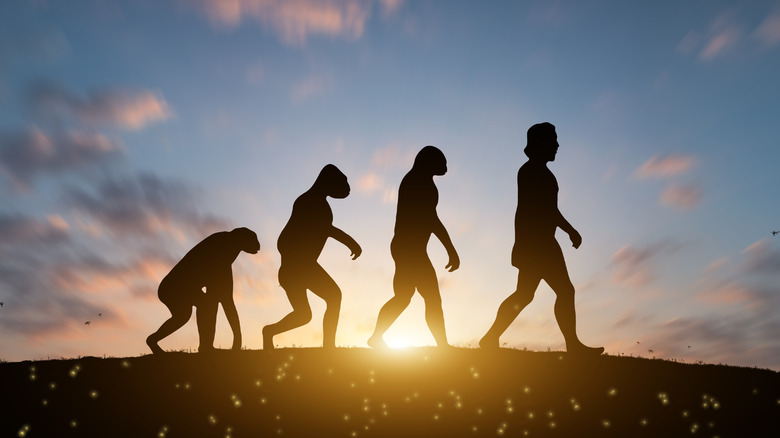
How does something that develops as part of an organism later disappear? This happens more frequently than you might imagine. The structure would have been important to the species' survival at some point in its evolutionary history. Eventually, these structures lose their primary function as the organism evolves.
In the early development of human fetuses, for example, each of us grows a tail. It is usually reabsorbed by the eighth week of fetal development. Some people are born with vestigial (leftover) tails that extend beyond the coccyx (tailbone) that all of us have. Other examples of vestigial structures in humans include the appendix and the wisdom teeth.
The fabella remains an important part of the knee joint in most non-hominid primates and in other four-legged mammals. It has several functions, including increasing muscle leverage, load sharing across joints, and joint reinforcement. When your daily activities include walking on all fours and leaping across gullies or into trees, these functions are important.
How humans (almost) lost the fabella

By the time Homo erectus evolved 1.89 million years ago, upright posture and walking on two feet were well established. Human bodies have evolved to be taller and thinner than our distant primate relatives, which made it easier to travel long distances on two feet. This anatomical arrangement changed the mechanical arrangement of human knees. Where primate knees are located directly below the hips, human knees angle inward to position the joint below our center of gravity.
Mechanically, this was great for humans — until approximately 100 years ago, when human nutrition improved dramatically. Better nutrition changed human bodies to become taller and heavier. We have longer shin bones and larger calf muscles than our 19th-century ancestors did. Simultaneously, the number of humans with fabellae has increased by three and a half times to approximately 31% today. Unfortunately, our newfound fabellae are causing more problems than they solve in our anatomical arrangement. Changes to knee anatomy in modern humans can cause a fabella to grind painfully against the femur. The next time your knee twinges, you may have a new (old) structure to blame.