

NASA Sealed 4 People Inside A Windowless Mars Simulation For 378 Days. Here's What Happened
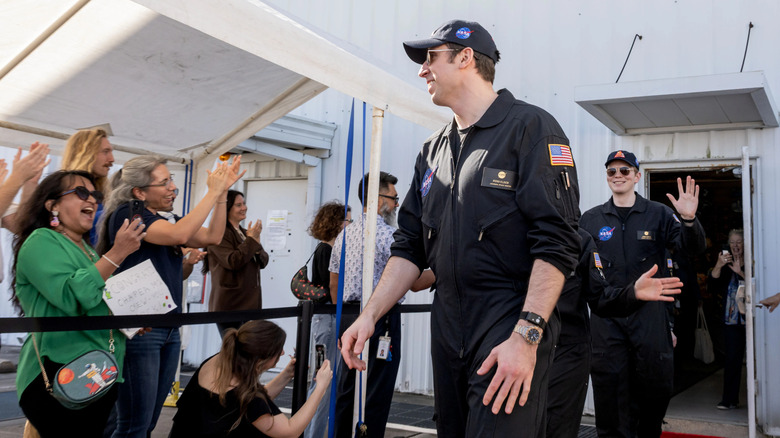
On October 31, 2026, four volunteer researchers stepped out of a simulated Mars habitat they they had called home for more than a year. For 378 days, the crew of NASA's second Crew Health and Performance Exploration Analog, or CHAPEA, lived and worked in a 1,700-square-foot, windowless habitat inside a hangar at Johnson Space Center in Houston, Texas. During that span, the four volunteers carried out simulated Marswalks, worked with robots to survey the ground and collect rock samples, and collected data on their health and performance to see how to best support astronauts on future missions to the moon and Mars.
This CHAPEA mission started on October 19, 2025, when NASA sealed the four-person crew inside the 3D-printed habitat. While the volunteers had no face-to-face interactions with any other people during the study, they received support from researchers and ground crews from across NASA. The crew was also not completely cut off from the world as they could communicate with friends and family. However, the simulation built in delays of up to 22 minutes each way into all communications with the outside world. This was to mimic communications delays crews traveling to and from Mars would experience.
Simulating living and working in space
Communications delays were just one of the features meant to accurately simulate a long-duration space mission. Planners also included a two-week communications blackout to simulate what would happen when the sun was between Earth and Mars. Additionally, the crew started the mission with limited supplies of food, water, and other items ranging from respirator filters to dish soap. As part of the mission, the volunteers carefully tracked and managed their supplies to make sure they didn't run out of anything during their 378-day simulation.
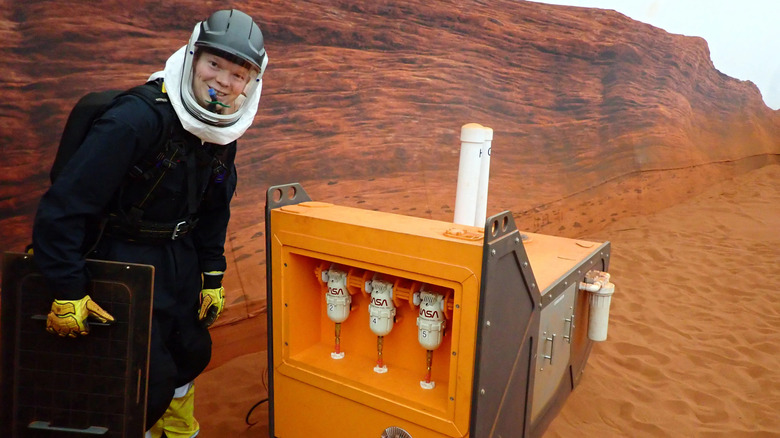
The crew conducted routine maintenance of their habitat and practiced preparing for and carrying out Marswalks. This included inspecting and preparing space suits and running airlock procedures. They piloted remotely operated drones and rovers from inside the habitat to carry out surveys and collect samples of simulated Mars rocks. During the mission the crew also tried out their hand at farming by germinating seeds and growing plants in simulated Martian soil.
Outside of their scientific and maintenance tasks, the volunteers followed the rigorous exercise programs that astronauts traveling to Mars would need to engage in to limit bone and muscle loss due to reduced gravity. The crew also spent downtime on relaxing and creative activities, like forming a band, to maintain their mental and emotional wellbeing.
Learning from the CHAPEA missions
This expedition follows the first CHAPEA mission that had four volunteer researchers live in isolation during 2023 and 2024. After the second mission, researchers spent two weeks going over mission logs and evaluating the crew and their activities to gain a better understanding of what happened over those 378 days.
As NASA works toward its goal of establishing permanent infrastructure on the moon, officials are finalizing plans for future CHAPEA missions to focus on travel to both the moon and Mars. Over the next several years, NASA anticipates returning humans to the moon with its Artemis mission and is planning a lunar outpost called Moon Base near the moon's south pole.
The second CHAPEA mission adds to knowledge of how people respond to stresses like isolation, communications delays, limited supplies, and equipment malfunctions to better prepare crews for long-duration space missions. Lessons from these experiments will also help mission planners improve designs of food and water systems and other critical equipment needed to keep astronauts healthy and productive during long missions to the moon and Mars.