

The Unsettling Pink Eye Myth That's Been Debunked By Science

There are a lot of misconceptions and myths around pink eye. One common myth is that pink eye is always contagious. Although some types of pinkeye can spread between humans very easily, it can also develop secondary to allergies or irritants.
Pink eye is a catchall term for any condition that causes your eye to become reddish pink and swollen. It's medically known as conjunctivitis because it affects the conjunctiva, the thin membrane that lines the inside of your eyelid and your eye's white. It's not a diagnosable medical condition by itself but a symptom of other conditions.
One of the likely signs that pink eye is caused by allergies is when it develops in both eyes. Irritant pink eye may affect one or both eyes depending on the cause, but it often occurs in one eye in the case of chemical contact (think having an industrial chemical on your hands and then rubbing your eye). Viral and bacteria pink eye also generally develops in one eye at a time.
How does pink eye spread?

Pink eye can be infectious or noninfectious. Both bacteria and viruses can cause infectious pink eye, and many of the leading causes are highly contagious. Infectious pink eye tends to cluster in areas where people (especially children) are in close proximity with each other. Many types of viruses can lead to viral pink eye but adenoviruses are the leading types. Adenoviruses are a common group of viruses that typically cause mild cold or flu-like symptoms when they infect humans.
Allergic conjunctivitis is the leading cause of non-infectious pink eye, but it can't be passed between people. Pollen, dust, and pet dander are some of the potential causes. It's particularly common in the springtime when pollen counts are high. Another form of non-infectious pink eye (irritant pink eye) can occur when you have a foreign object in your eye.
For example, grains of sand, smoke, or irritating chemicals. It can be difficult to prevent allergic pink eye when it's caused by pollen (or pet dander if you have a pet in your home). Antihistamines can help reduce your allergic reaction by blocking the chemical histamine that triggers the immune reaction. You can reduce your chances of developing irritant pink eye by wearing proper safety glasses or googles when in environments when you're likely to get irritants in your eyes (like cleaning or industrial chemicals).
Pink eye isn't caused by farting in people's faces
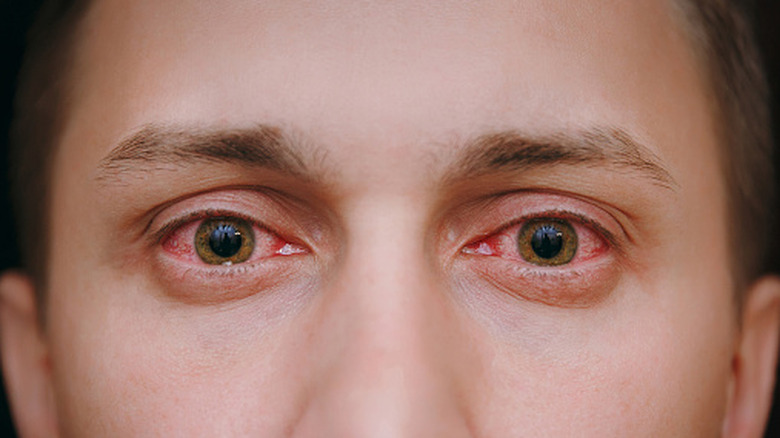
Another common myth about pink eye is that it can develop from farting in somebody's face. Contrary to what you may have heard as a child, farting in somebody's face can't give them pink eye (under most realistic conditions), but it's still obviously bad etiquette to do it intentionally. Farting in somebody's face can't give them pink eye because they aren't coming into direct contact with fecal bacteria. Despite the noxious smell, gas from farts is effectively sterile.
Although there's never been a confirmed case of pink eye being transmitted through a fart, pink eye can be passed through bacteria found in fecal matter. The only plausible way that farting in somebody's face could cause pink eye is if the person was naked and projected fecal matter into the other person's face.
While it's a myth that farting can give somebody pink eye, not thoroughly washing your hands after the bathroom is a well-established cause of eye infections. Preventing pink eye is just one more reason to wash your hands thoroughly with soapy water and regularly do so throughout the day. If you have children, it's a good idea to teach them the importance of washing their hands at a young age. Children are particularly vulnerable to infectious pink eye because they tend to be in close quarters with other children who don't always have great hygiene.