

In The '90s, Scientists Launched 6 Frogs Into Space For 8 Days. They Didn't Expect What Happened Next
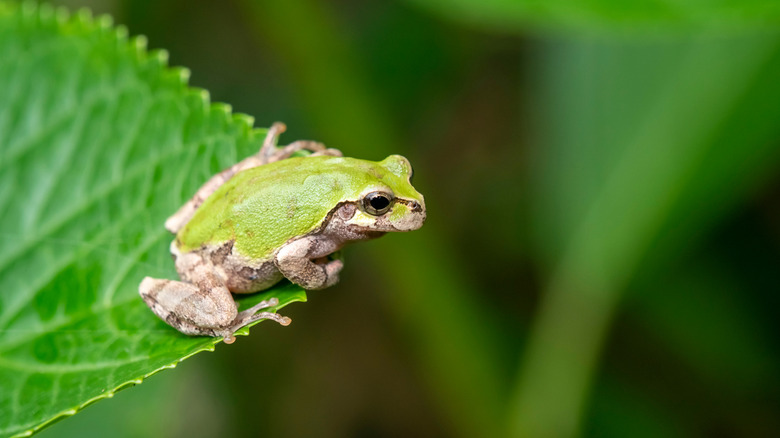
For as long as there have been space programs, scientists have been sending animals into space. The United States sent monkeys on several rocket launches through the late 1940s and into the '50s, while the Soviet Union launched the first dog, Laika, into orbit with Sputnik 2 in 1957. Since then a multitude of animals have been the subject of research in space. In the 1990s, Japanese scientists sent six frogs to the Soviet space station Mir to learn how the amphibians moved and behaved without gravity. As expected, they found that the frogs showed unusual behaviors, moved more slowly, and had trouble jumping accurately. However, after a few days, the frogs had adapted to microgravity and were landing jumps they might have missed a few days before, and quickly readapted to normal gravity after returning to Earth.
Scientists were interested in seeing how frogs react to microgravity in part because of inner ear similarities between humans and frogs. The inner ear is home to the vestibular system, a set of sensory organs that helps maintain a sense of balance and orientation. All animals evolved to live with normal gravity, so scientists wanted to investigate how the vestibular system would behave in microgravity.
Can frogs jump in space?
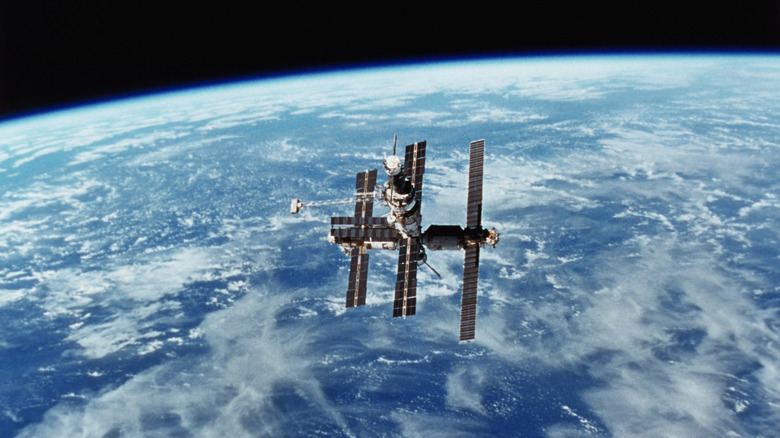
The frog experiment of the 1990s was an extension of a student-proposed project to see if frogs could jump in microgravity. In December 1990, six Japanese tree frogs traveled to Mir aboard a Soyuz spacecraft while a second set of frogs stayed on Earth in similar enclosures as a control group. The frogs then spent eight days inside a clear box where they were closely observed. On the third day after launch, scientists captured video footage of the frogs' posture and movements in microgravity as well as their responses to stimuli. On the sixth day the crew repeated the same tests.
The frogs had unusual postures during their time in space. They arched their backs, extended their abdomens, and spread all four limbs when floating. This posture was almost identical to that seen when tree frogs jump from branches to the ground. When sitting on surfaces the frogs pressed their abdomens against the surface while bending their necks back sharply. This posture is seen in frogs on Earth when they are vomiting, raising the possibility that the frogs were experiencing motion sickness from being in zero gravity. Additionally, the frogs responded to stimuli, including the presence of food; however, some responses to stimuli were slower than normal.
Adapting to space and returning to Earth
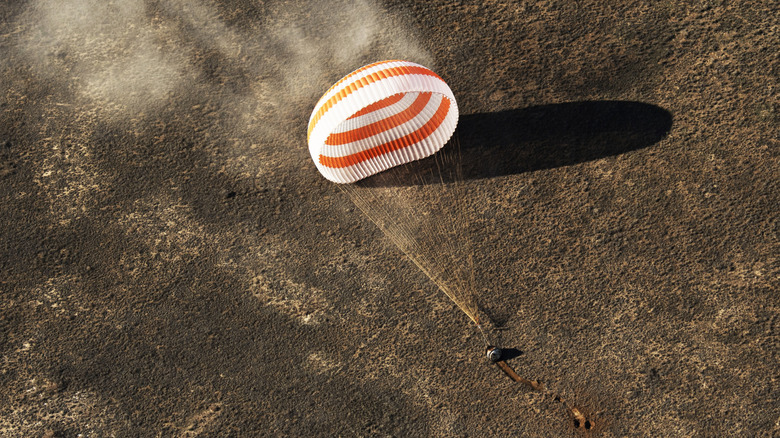
Between the third and sixth days in space the frogs appeared to adapt to their new surroundings somewhat. At first they had trouble accurately landing after jumps, but that accuracy had improved by the second round of observations. After eight days, scientists loaded the six frogs back into their protective life support boxes for a return to Earth. All six frogs survived the landing and were studied for an additional 12 hours on Earth.
After returning to Earth the frogs no longer had the same posture they had had while on Mir. They also moved more slowly and jumped less frequently than normal and did not respond to moving lights the same ways as the control frogs did. After two-and-a-half hours, the space frogs started behaving more normally and were moving and behaving like the control frogs after 12 hours. Further study of two of the frogs showed bone density loss and changes in liver protein synthesis, likely caused by their exposure to microgravity.
Since this experiment, scientists have conducted many studies on how space affects animals and humans. It may seem unusual to send frogs to space, but understanding how animals and humans respond to microgravity and recover after returning to Earth can reveal a lot about the effects of space flight, aging, and disease progression.