

In The 1920s, A Scientist Accidentally Contaminated His Work. He Didn't Expect What Happened Next
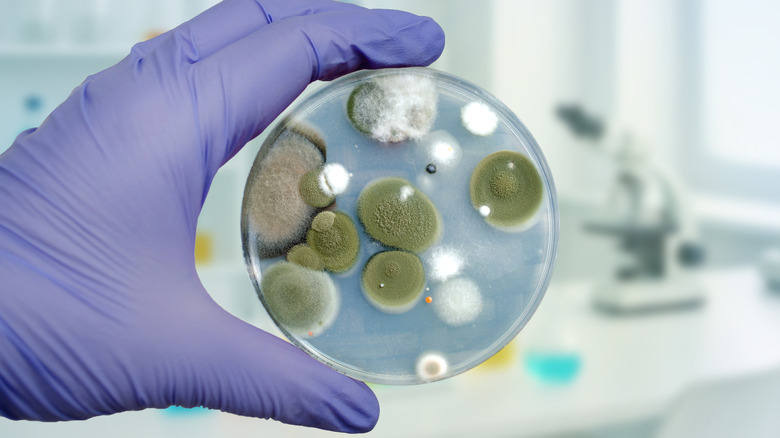
Cleanliness is a vital part of many scientific fields. Microbiologists will go to great lengths to clean and sanitize their equipment and take extra steps to avoid contaminating their experiments. Getting a random germ in a specimen can undo hours or even days of hard work. But for one scientist, a messy lab table brought about one of the greatest discoveries of the 20th century. British scientist Alexander Fleming accidentally contaminated a petri dish of bacteria before leaving for a summer vacation in 1928. He came back to his lab at London's St. Mary's Hospital to find what we now know as the antibiotic penicillin.
Fleming found spots on petri dishes where he was growing colonies of Staphylococcus aureus that had no bacterial growth. Further investigation showed that bits of a species of mold known as Penicillium notatum in the dishes were keeping bacteria from growing. He worked to isolate the active ingredient from the mold and tested it against other species of bacteria. Fleming published details about his work in 1929, thinking it could be useful for scientists looking for a way to separate penicillin-sensitive and insensitive bacteria in a mixed culture. However, Fleming and his lab lacked the ability to do much more with penicillin and the mold fell into relative obscurity for the next decade.
The road to penicillin
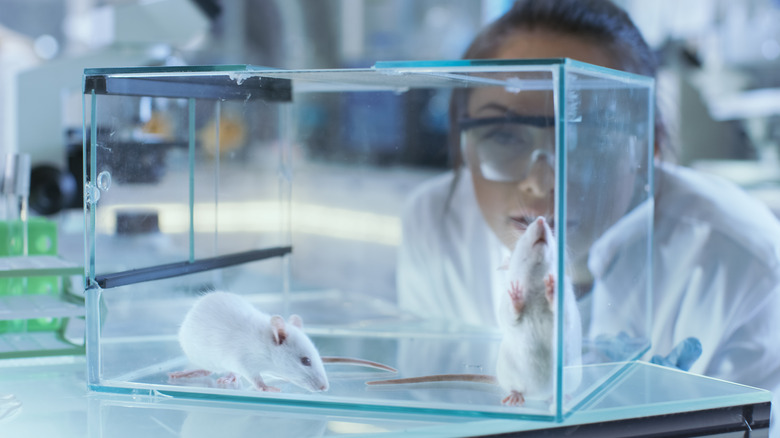
In 1938, a researcher at Oxford University named Ernst Chain found Fleming's 1929 paper and brought it to his boss, professor Howard Florey. For years Florey had been studying how bacteria and mold kill each other. In 1939, Florey put together a research team that included Chain and fungal researcher Norman Heatley to isolate pure penicillin from mold. The team soon produced a small amount of purified penicillin for an experiment using laboratory mice infected with bacteria. The mice they injected with penicillin recovered from their infection, but the others that served as a control group died.
Following this success researchers decided it was time to test their new drug on human subjects. However, the amount of pure penicillin needed for human subjects would be far greater than what mice required. After some work the team found a different strain of mold, P. chrysogenum, that could produce a far larger amount of penicillin. This discovery, refinements to the purification process, and a new partnership between British and American research groups made it possible to start human testing and eventually treat a human patient with penicillin. By 1945 pharmaceutical companies were making billions of units of penicillin a month.
The world-changing power of antibiotics
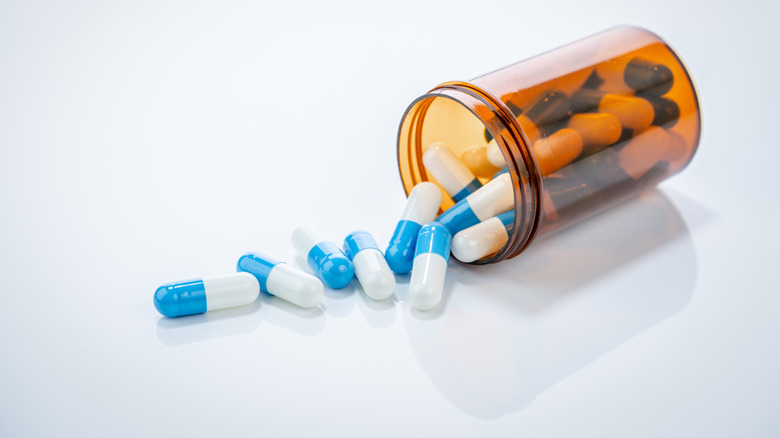
The first successful use of penicillin to treat a patient occurred in 1942 and attracted the attention of the press. Early reporting portrayed Fleming as the force behind penicillin's development, in part because Fleming was willing to speak to reporters while Florey and his colleagues avoided interviews. However, over time the work of everyone involved in developing penicillin came to light. And in 1945, Fleming, Florey, and Chain all received the Nobel Prize in Physiology or Medicine. The Nobel Committee did not highlight Heatley's crucial work on mold, though he was awarded Oxford's first-ever honorary doctorate of medicine in 1990.
The effect that penicillin has had on the world over the past several decades is plain to see. Before its development, a simple infected scratch could become fatal. The discovery of penicillin saved many lives; however, the power of antibiotics calls for responsible use. In his Nobel acceptance speech, Fleming noted that overuse of antibiotics could drive antibiotic resistance, which has gone on to become a growing problem worldwide. Researchers are searching for new antibiotics to overcome this problem, using knowledge and procedures that can ultimately be traced back to the first efforts to make penicillin and an accidental discovery on a messy lab table.