

Scientists Used Human Poop To Grow Lettuce. The Results Are Stomach-Churning
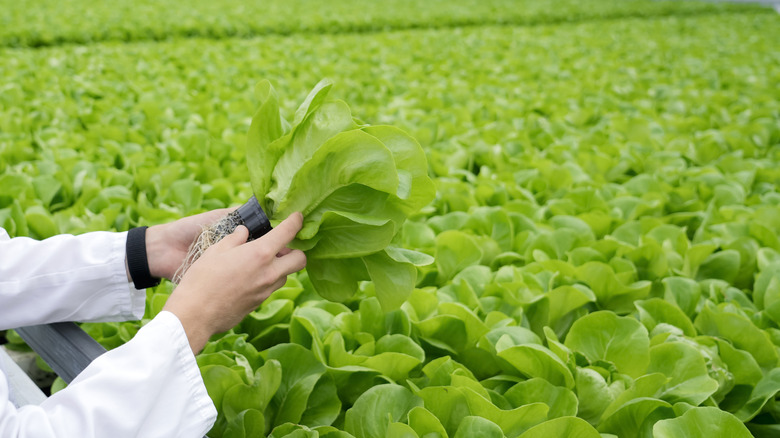
Matt Damon may have used his poop to grow potatoes on Mars in the movie "The Martian," but we can probably all agree that his character was in dire circumstances — and it was also fictional. But using human excrement as a fertilizer — aka "biosolids" — is very real in research labs as we try to find ways to reduce our sewage going into the oceans and hurting aquatic life. But, we're having some bumps along the road to figuring this out. A 2018 paper showed just how bad biosolids are for growing leafy greens, as the seedlings that germinated contained bacteria like E. coli and other gnarly pathogens.
The problem came from using untreated human waste as a soil fertilizer. Untreated poop contains things our bodies have flushed out to protect us, like harmful pathogens, bacteria, and infectious diseases. Dropping a deuce near your crops means that whatever was ejected from your body is still able to pass from your soil to your food. So, if you've gotta go, we recommend popping a squat somewhere a little more remote. Or, at least, find a way to turn that sewage into something useful.
Why would you even want to use human poop as a fertilizer?
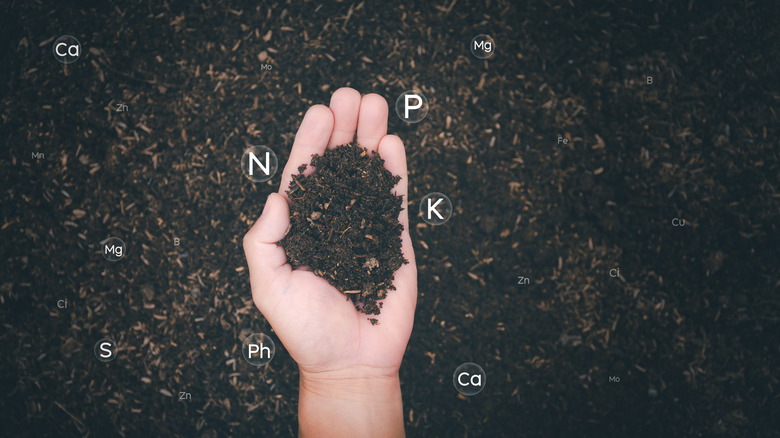
The minerals and other goodies in soil get depleted over time as plants siphon them out for food. So, if you want your plants to grow faster and be healthy, you'll need to replenish the soil. Of course, you can always skip the natural fertilizer for a chemical option. On the plus side, customized fertilizers can prevent soil from receiving too much of one nutrient and too little of another. However, chemical fertilizers can contaminate soil and groundwater, make your soil more acidic , and are becoming more expensive, leading to higher food costs.
On the other hand, natural fertilizers, including biosolids and manure, are cheap and replenish depleted organic material that plants love. While poop contains the bad stuff animal and human bodies expel, manure also typically has high levels of essential nutrients for plant growth like nitrogen and phosphorous. So, turning excrement into fertilizer means those extra components get to go back into the soil.
But, what about pathogens or even forever chemicals being passed into the soil from our waste? The trick is to use processed manure so that you get all of the good without the bad. Typically, manure is processed via composting, carbon filtration, pasteurization, or having its raw nutrients extracted as standalone products. The more methods we find to convert our waste to safe and useful byproducts, the more we can lower our environmental impact, landfill use, and food production costs.