

What Does Hearing Loss Actually Sound Like? These Audio Clips Simulate The Different Types

Tens of millions of Americans have some degree of hearing loss. Losing one's hearing can make routine activities like work, watching television, and conversing with loved ones more challenging. However, it can be difficult for people without hearing loss to understand what those with the condition are going through. But thanks to a simulation made by hearing aid company Starkey, it's possible to hear what the world sounds like for people with different levels of hearing loss.
Hearing loss is something that often occurs gradually. Those undergoing hearing loss will increasingly have to ask people repeat themselves in conversations or turn the volume up when watching television or listening to music. There are four levels of hearing loss. People with mild hearing loss might have trouble hearing softer sounds, while difficulty understanding normal speech would be considered moderate hearing loss. At the more serious end of the scale, those with severe hearing loss may hear little to no speech at normal levels, and people with profound hearing loss can at most only hear very loud sounds. Similarly, there are three different types of hearing loss: conductive hearing loss, sensorineural hearing loss, and mixed hearing loss, which is a combination of conductive and sensorineural.
Types and causes of hearing loss

Conductive hearing loss occurs when the ability of sound to reach the inner ear is limited, usually because of some kind of obstruction in the outer or middle ear. A buildup of earwax or a foreign body lodged in the ear canal are common causes of conductive hearing loss, as are tumors, abnormal bone growth in the middle or inner ear, and the buildup of fluid caused by an ear infection. People with conductive hearing loss often report sounds being softer or more distant. This type of hearing loss can often be treated with medication or a procedure to remove an obstruction.
The most common type is sensorineural hearing loss, which largely can't be treated with medicine or surgery. This occurs when the tiny hairs known as cilia inside the inner ear, or the nerves attached to them, become damaged. Sensorineural hearing loss is often the result of long-term exposure to loud noises, though vaccine-preventable diseases like measles, mumps, and shingles can also damage sensory cells in the ear. There is also the risk that medications like certain kinds of antibiotics or chemotherapy drugs can cause hearing damage when taken for a long time at high doses. Avoiding loud noises, using ear protection, and helping your immune system with vaccines are simple ways to reduce the risk of hearing loss.
What does hearing loss sound like
Sensorineural hearing loss can manifest itself in several ways. An article posted by NPR gave examples of how different forms of hearing loss can sound, along with an undistorted audio clip for comparison. The first, and most common, form is difficulty hearing high-frequency sounds. This can make it hard to distinguish softer consonant sounds and cause higher-pitched voices to be more difficult to understand.
Low-frequency sound loss is less common, making speech sound distorted, and some people may have trouble hearing both sounds at the low and high ends of the scale. Another form is losing the ability to tell the difference between pitches, which can make sounds less clear. Additionally, some people with sensorineural hearing loss experience something called recruitment, where undamaged sensory cells fill in for damaged ones, causing sounds to quickly go from inaudible to so loud they are painful.
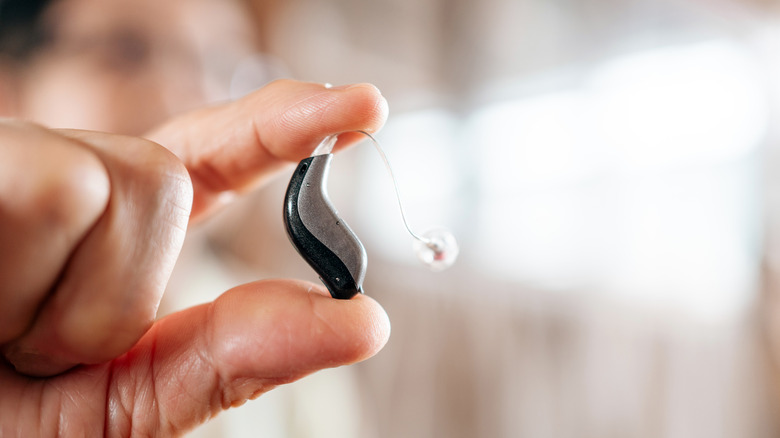
The typical treatment for sensorineural hearing loss is the use of hearing aids. Hearing aids can increase overall volume and boost different frequency ranges to compensate for hearing loss. Modern digital hearing aids can also make fainter sounds louder and louder sounds softer to help with recruitment.
Audio clips can simulate what hearing loss sounds like, which helps emphasize the importance of protecting one's hearing. At the same time, these clips can help people without hearing loss understand what millions of Americans live with.