

Science Vs Religion: Here's What Archeologists Have Said About The Existence Of The Garden Of Eden
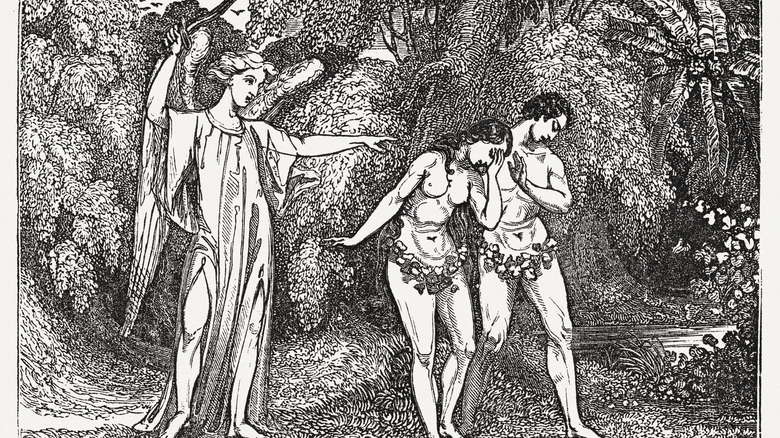
In the Bible, the Garden of Eden is described as a mythical land where Adam and Eve lived in harmony with nature and God. Inside the garden, the bible recounts a paradise with lush vegetation and the two central trees. To date, archeologists haven't unearthed any evidence to suggest that the Garden of Eden existed. There have been various theories by theologians throughout history about where it might have been (or hypothetically been if it was a non-literal story).
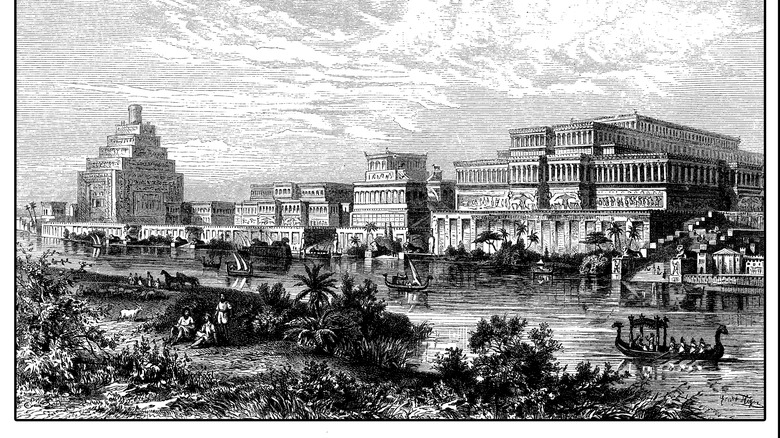
Pulling from the Bible itself, there are few clues of where it might have existed. In Genesis 2:10, it's written, "A river flowed out of Eden to water the garden, and there it divided and became four rivers." In Genesis 2:14, the bible describes one of the rivers as flowing east of Assyria, which today falls into modern-day northern Iraq, northeastern Syria, and southeastern Turkey.
Any theories of where the Garden of Eden may have been are grounded in speculation based on biblical clues, not direct archaeological evidence. In 2009, Joel Klenck theorized in a paper that it may have been in Southeast Anatolia (the Turkish peninsula). In a 2024 paper, one researcher argued that it was situated in Egypt and The Tree of Life was situated in Giza.
Is there any evidence that the Garden of Eden existed?
One of the problems with using the Bible as a primary scholarly text is that it's debatable how much should be taken literally and how much is metaphorical. Scientists have debated the existence of God and the literalness of the Bible for millennia. Passages in Genesis make reference to Adam and other early figures living for hundreds of years, defying modern science's understanding about human biology. There also seems to be incongruence with many of the historically referenced places and people.
As it's written in the Bible, a single river flowed through the Garden of Eden before splitting into four rivers. The names of the rivers were Phison, Gihon, Tigris, and Euphrates. The Tigris and Euphrates are real rivers that flow through Turkey, Syria, and Iraq and end in the Persian Gulf. Neither the Phison nor the Gihon are known rivers, and their modern locations are uncertain. It's possible that they represent rivers that once flowed but dried up through history.
In the 1990s, researchers found evidence of a river that dried up over 5,000 years ago called Wadi al-Batin (Kuwait River). This river winds through modern-day Kuwait, Iraq, and Saudi Arabia. Some researchers, such as James A. Sauer have theorized that it could be the Phison River referenced in the Bible.
Other proposed locations of the Garden of Eden
In 2010, researchers at the University of Tel Aviv unearthed an ancient royal garden near Jerusalem believed to have belonged to a royal family. Although it's unlikely to be the garden referenced in the Bible, it does show that some of the secrets of ancient civilizations can be buried for thousands of years. Theological archeologists continue to look for evidence of the Garden of Eden and many other places referenced in the Bible.
The medieval theologian Saint Augustine of Hippo saw the Garden of Eden as a literal account of the origins of mankind. Through most of this period of history, much of the world was left unexplored and gave rise to speculation that the location of the garden must be somewhere unexplored. The prevailing theory at the time seems to be that the Garden of Eden was located beyond an impassable sea, uncharted island, or mountain.
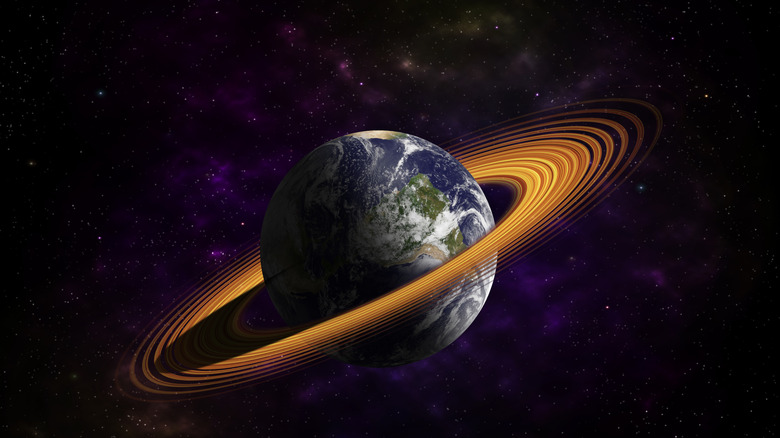
Some theologians have theorized that the Garden of Eden represents the Earth as a whole, but this has led to another problem. Where would Adam and Eve have gone when expelled from Eden for eating the forbidden fruit? To get around this, some theologians speculated the Garden must have been somewhere around the equatorial region. Other locations proposed in history include on rings wrapping around the Earth like Saturn's (there's no evidence these rings ever existed), in the same region as Atlantis (the mythical island referenced by Plato in Ancient Greece), and the North Pole. For now, you can add the location of the Garden of Eden to the list of religious mysteries that scientists are still debating, along with the presence of an afterlife and the origins of the universe.