

Not Redwoods, Not Giant Sequoias: The Largest Living Land Organism On Earth Is Hidden Underground
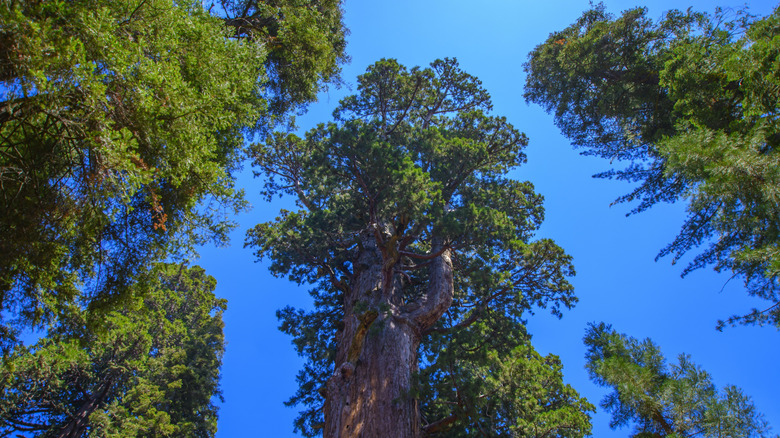
Ask someone to name the largest living thing on land and you might get answers like the African elephant, the largest living land animal, or the giant sequoia, a mammoth redwood tree that can reach heights of around 275 feet. But the correct answer isn't an animal or even a tree, it's a fungus that lives mostly underground. The fungus Armillaria ostoyae is the world's largest living land organism, and second largest organism on Earth. The largest known specimen of this fungus, living in Malheur National Forest in Oregon, spreads out over about 3.5 square miles and is estimated to weigh as much as 35,000 tons.
This gigantic organism was found in 2003 by U.S. Forest Service researchers studying the extent of A. ostoyae in Oregon forests. Armillaria is a genus of fungus that kills a wide range of trees, both natural and planted, including pine, poplar, and apple. The fungus is only visible during the fall when it sprouts golden fruiting bodies, commonly known as honey mushrooms, from tree trunks to release spores and reproduce. Scientists had found massive spreading fungi in other parts of the Pacific Northwest, but while the existence of this giant fungus wasn't a complete surprise, it's sheer size was unexpected.
A giant, underground mushroom
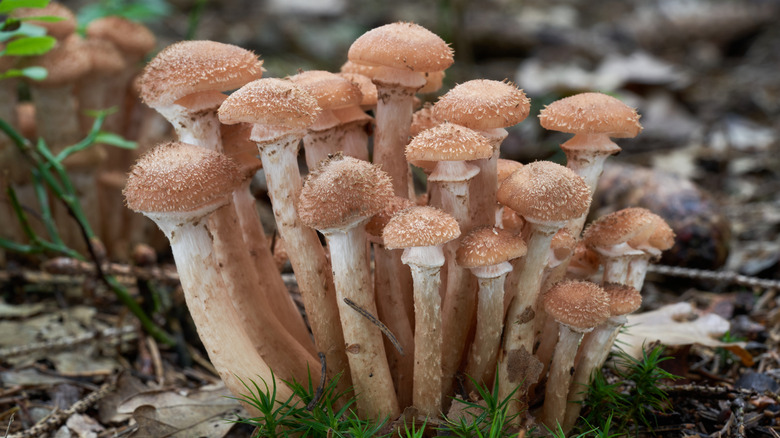
Most people would correctly identify a fruiting body as being part of a fungus. However, the familiar mushroom cap is a mere fraction of the overall organism. Beneath the ground lies a part of the fungus known as mycelium made of a network of fibers called hyphae. These interconnecting fibers make up the main part of a fungus and are responsible for breaking down organic matter in the soil to supply its energy.
These fiber networks also allow fungi to spread widely, sending up fruiting bodies over large areas. Scientists knew they were dealing with a single organism when the samples of honey mushrooms they collected were all genetically identical. Scientists first discovered a massive fungus, a different species of Armillaria, in Michigan in 1992. This fungus covered approximately 37 acres. What researchers learned about fungi from that discovery is what allowed scientists to find even larger fungi, including the current record holder.
While the size of this A. ostoyae is impressive, the organism's size says a lot about its age. Given the fungus' size and how quickly it can spread through its fruiting bodies, scientists estimate it to be somewhere between 2,400 and 8,650 years old. This makes it not only larger than a giant sequoia, but possibly older than all living sequoias, which typically live 1,000 to 2,000 years.
Not a friend of the trees
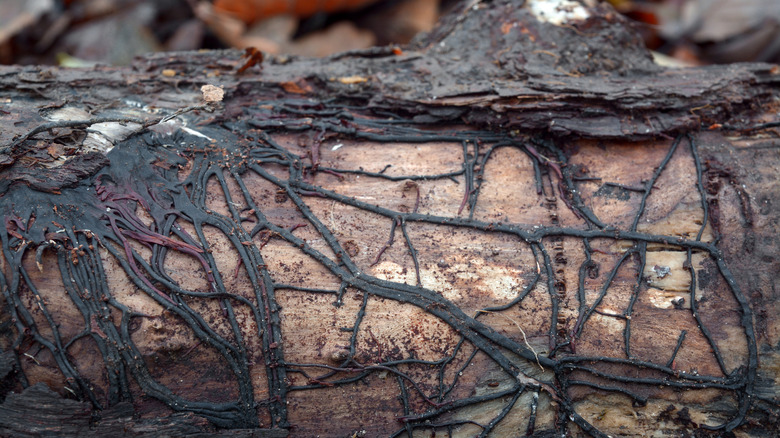
While most of the work that A. ostoyae does is hidden from human eyes, its impact is obvious. In addition to spreading underground, it sends out threadlike fibers known as rhizomorphs that wrap around tree roots and grow underneath bark. There, the rhizomorphs absorb water and nutrients, feeding the fungus while killing the tree. And after a tree dies, the fungus can continue feeding on the decaying remnants of the tree. Armillaria fungi can affect more than 500 species of trees and shrubs and are responsible for the loss of large numbers of trees in North America and Europe.
Because of this, some researchers have been looking into ways to control the spread of Armillaria. Conventional fungicides are mostly ineffective and more effective formulas can be harmful to forest ecosystems. One possibility for controlling the spread of fungi is by removing infected trees and planting tree and shrub species that are more resistant to the fungus.
However, A. ostoyae has been living and growing in Pacific Northwest forests for thousands of years. Given the age and size of the largest known specimens of this fungus, the best scientists and forest managers can likely do is to keep it from spreading to previously unaffected areas and keep their eyes out for other hidden underground giants.