

Scientists Turned Human Poop Into Rocket Fuel. Here's What Happened When They Tested It

There are many challenges to overcome to make long-duration space missions to the moon and Mars a reality. Supplying astronauts with enough food to be away from Earth for a year or more is hard enough, but there's also the issue of what to do with their waste. Urine can be treated and recycled to supply water, but poop is a different story. But what if there was a way to turn human waste into fuel for maneuvering the spacecraft or producing electricity? More than 50 years ago, scientists tested a type of fuel made with a mixture containing human poop and found that it could be used to propel different kinds of rockets.
In the late 1960s the company Rocket Research created a fuel called Monex W. They mixed human feces with carbon, ammonium nitrate, and aluminum to make a thick gel that could be pumped into a fuel tank. The black, dough-like blend could be easily made with relatively simple equipment and could be used as a solid or liquid propellant. The researchers then tested different blends of Monex W in rocket motors. Rockets fueled this way fired and produced thrust, though less than conventional rocket fuels. Additionally, the researchers found that mixtures of less than 40% poop worked, but those containing more waste wouldn't ignite.
New ways to turn poop into fuel
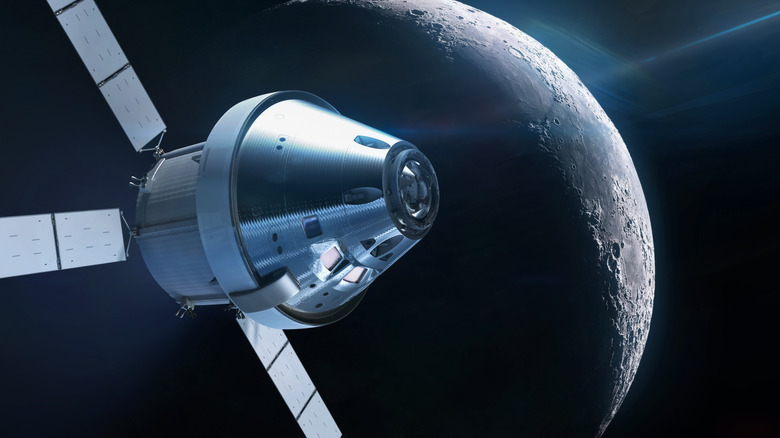
This fuel, while simple to make, would not replace normal rocket fuel. However, it could meet some needs like keeping a space station in orbit or changing a spacecraft's position. It also helped solve the waste disposal problem. A three-person crew on a year-long mission would generate almost a ton of poop. So scientists have been looking into other ways to manage astronaut waste.
In 2015, researchers at the University of Florida tested a new way to use poop to make rockets fly. Rather than simply mixing poop with other substances, the research team developed a prototype anaerobic digester that would break down human waste, uneaten food, and food packaging to create methane gas and carbon dioxide. Purified liquid methane can then be used as an effective rocket fuel. The process also produces large amounts of water thanks to the high water content of human waste. Additional equipment on the spacecraft can split that water into oxygen the astronauts can breathe and hydrogen that can be combined with exhaled carbon dioxide to make more methane.
Experiments showed that the anaerobic digester design could be an effective way to turn human waste into rocket fuel on long-duration space flights. Doing this would reduce the amount of fuel a spacecraft would need to launch with and would decrease the mass returning to Earth at the end of the mission.
Turning waste into fuel and electricity
While human poop shows promise as a feedstock for rocket fuel, human waste products could find other uses on long missions. One research group has been working on ways to use genetically modified microbes to turn urine into plastics, while another has focused on finding a way to use the ammonia in human waste. A molecule of ammonia has three hydrogen atoms, making it a useful fuel source.
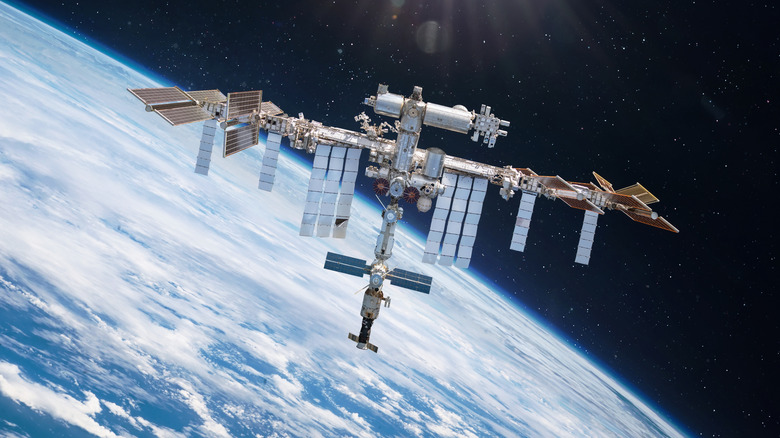
Researchers are also developing ways to convert ammonia into nitrogen and electrical energy through a process known as the ammonia oxidation reaction. They tested a small reaction device in an experiment on the International Space Station that showed the process could be scaled up for use on long-duration space missions. Being able to turn waste into electricity would be especially useful for a mission to Mars. Being farther from the sun means that a spacecraft flying to Mars would have a harder time making electricity with solar panels.
Finding methods to turn waste into fuel is one of the ways that scientists and engineers are preparing humanity to travel deeper into space than ever before. More than 50 years of research is going into ways to power spacecraft, reduce the amount of mass that has to be launched, and handle the problem of waste disposal all at the same time.