

An Amateur Archaeologist Found 15 Ancient Roman Coins Buried In Germany. The Real Discovery Was Still Hidden
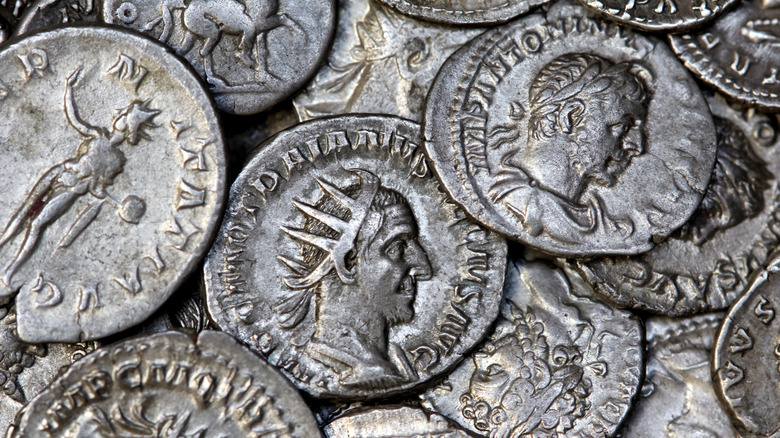
Finding a silver coin that could potentially date back to Roman times would be exciting for anyone, and especially an amateur metal detectorist. In the case of German archaeology enthusiast Oliver Riedl, his excitement at finding one ancient coin was quickly elevated by the discovery of another ... and another. Once the total number of coins reached 15, Riedl suspected there may be even more to come, and decided to contact the experts to complete the excavation.
Riedl was practicing his hobby in a field near his home in western Germany with his metal detector when it signaled something was hiding below him. A metal detector works by transmitting an electromagnetic field that can penetrate the ground. If it comes across a metal object, it creates electrical currents which form a second magnetic field, and turns that into an audible signal, which would have alerted Riedl to the presence of the coins below the surface. He began to dig, but his detector signaled the presence of yet more metal. "It was clear to me that there was something bigger buried here," Riedl explained in a statement after the discovery. "So I immediately notified the authorities."
Experts from the Office for the Preservation of Archaeological Monuments in the Rhineland attended the scene where he discovered the coins, and were amazed to uncover an incredible 934 coins, confirmed as being Roman silver denarii. The coins seem to be from the time of Emperor Hadrian, almost 1900 years ago. The stash weighed a total of 6 pounds, 13 ounces and is the largest finding of its kind in Germany, and the fifth largest ever found from that time.
X-rays were used to reveal what was hidden in the soil
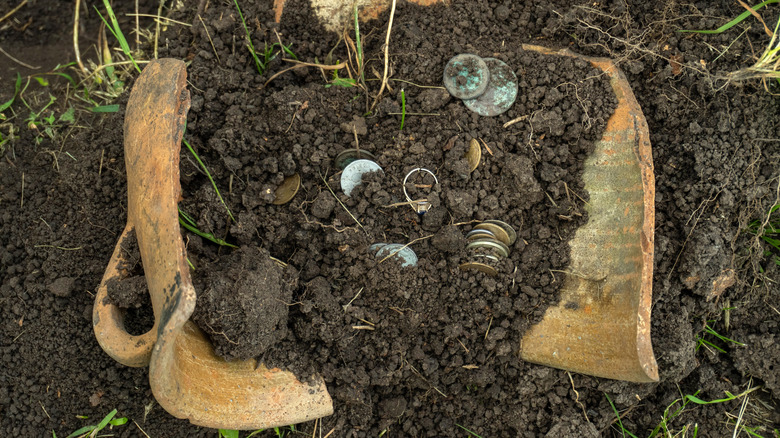
Riedl's actions were key in the science behind the discovery of these coins. His decision to contact the authorities rather than dig up the treasure trove himself allowed the archeology experts to carefully remove the surrounding soil and take it to a museum to be inspected. X-rays were used to inspect the soil and estimate how many coins were present before they were extracted. The electromagnetic radiation from the X-ray passed through the soil and revealed the silver coins, as well as a few other items that were undisturbed thanks to Riedl's consideration. This technique is often used when archaeological remains are found, to give the experts a non-invasive way of finding out what lies below, and a better chance of extracting it without damage.
In the German discovery, the remains of a ceramic container and some straw were found in the soil too, leading experts to assume that the coins were stored in the pot for safekeeping. The pot had been broken over the centuries, but its discovery gave further insights into the actions of the owner of the coins in around AD 150.
Why was such a valuable haul left behind?

The biggest mystery for archaeologists and historians is why such a huge sum of money would have been left buried in the soil. Estimates of the value of the coins at the time suggest it was a small fortune, which in the absence of a bank system, was likely buried to prevent it being stolen. "We can only speculate about the motives, of course, but it's very likely someone wanted to keep this money safe," said state archaeologist Dr. Erich Claßen.
The average wage for a Roman soldier at the time would have been 300 denarii per year, but they would only have been able to keep about half of that. This means the haul of more than 900 coins would represent six years of savings; not something you would be likely to forget about or leave behind. "Perhaps the owner died before they could pass on the knowledge of the coins," suggested Dr. Claßen.
While they may never know exactly what happened to the owner of the substantial wealth, this an incredibly significant archaeological discovery and provides a further glimpse into life at the edge of the Roman Empire, along the banks of the Rhine. The use of electromagnetic technology has helped to finally bring this 2nd century treasure back to light.