


Timothy Burns
Sciencing Editorial Policies
The unique content on Sciencing is a result of skilled collaboration between writers and editors with broad journalistic, academic, and practical expertise across the wide variety of scientific fields we cover.
In pursuit of our mission to provide accurate and ethical coverage, the Sciencing editorial team consistently fact-checks and reviews site content to provide readers with an informative, entertaining, and engaging experience. Click here for more information on our editorial process.
Stories By Timothy Burns
-

-

Science Fair Projects With Limestone Popcorn Crystals
A crystal growing experiment can give students deepened understanding of how mineral crystals grow. Popcorn rock is a naturally occurring light weight, aragonite limestone crystal found at some outcrops in the Great Basin of the western United States. The popcorn-like crystals are formed from limestone formations. Students can try various experiments using this rock. Growing crystals is not only easy, but also fun and educational.
Read More -

How To Make A Homemade Thermos Bottle For A Science Fair Project
Thermos is the brand name for a particular type of thermal insulated flask. It basically consists of a watertight container placed inside another container with some type of insulating material placed between them. The inner container of a typical Thermos bottle is usually glass or plastic, and the outer container is usually metal. You can impress your science class by making your own flasks with plastic bottles and experimenting with different insulating materials to determine which one works the best.
Read More -

What Are The Particles Formed From Covalent Bonding?
Covalent bonding occurs when two or more atoms share one or more pairs of electrons. The layers of electrons spinning around an atom's nucleus are stable only when the outermost layer has a specified number. Compare this chemical property to a three-legged stool -- in order for it to be stable, it must have at least three legs. Atoms function the same way, as stability depends on the right number of electrons.
Read More -
How To Boost Amperage
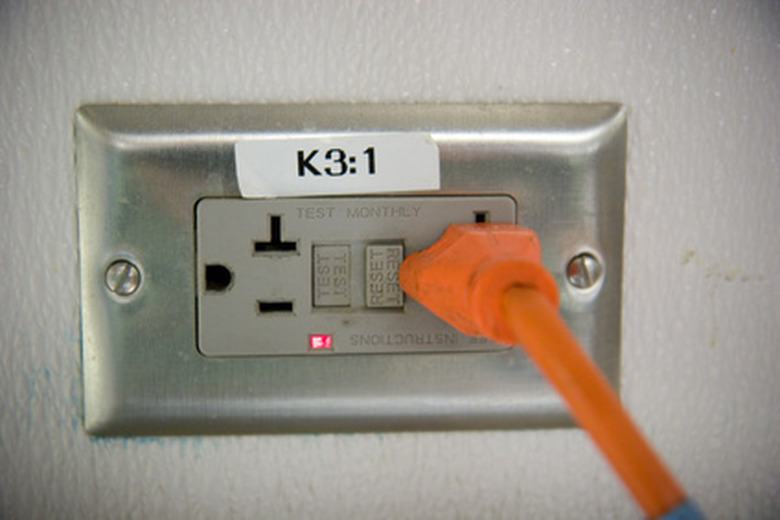
Ohm's Law defines the relationship between voltage, amperage and resistance in an electrical circuit. These three properties are forever joined at the hip -- any change in one of them affects the other two directly. Voltage (V) is the measure of amperage (I) multiplied by the amount, or level of resistance (R ). These three variables are related to each other mathematically according to the following equation, known as Ohm's Law: V=IR. Therefore boosting the amperage in an electric circuit can be accomplished through two separate means.
Read More -

Refining Systems Used To Make Gold Bars
Gold refining is a process that involves recovering gold metal from gold ore and converting it to pure gold, free from impurities. There are several refining systems used to make gold bars. Electrolyte process, chemical treatment, smelting and cupellation are some of the common refining methods used to make gold bars. Any of these methods can be used to smelt pure gold.
Read More -

Safe Combustion Reaction Experiments
Combustion is an exothermic reaction in which a chemical is oxidized to produce heat. The chemical is called as fuel and the substance that oxidizes it is called as oxidant. The most common types of fuels burned today are hydrocarbons used in vehicles and power plants. Many combustion reactions are useful for learning about chemistry, and energy transfer.
Read More -

Electrical Engineering Capstone Project Ideas
A capstone project for an electrical engineering student involves extensive research. The project is designed for the student to demonstrate a thorough knowledge of the course work. Projects such as designing an electrical generator, an electric motorcycle, a red light detector or a controller to rotate a solar panel are some of the capstone project ideas for electrical engineering students. These capstone projects help the student to demonstrate his competence in his field, while at the same time giving him a platform to interpret and apply classroom information to real life engineering solutions.
Read More -

How Does The Distance Between Dominoes Affect The Rate At Which They Fall?
Children set up lines of dominoes to topple them in visually interesting chain reactions, but university professors and students have converted domino chain reactions into serious business. The physics which affect chains of falling dominoes are subject to measurable physical forces, including gravity, momentum, and force vector analysis. The reaction is affected by the size and mass of the dominoes as well. As a result, determining the optimal rate of a domino cascade reaction requires serious mathematical analysis.
Read More


