

Why You Should Pet Your Dog Before Leaving Them Alone, According To Science
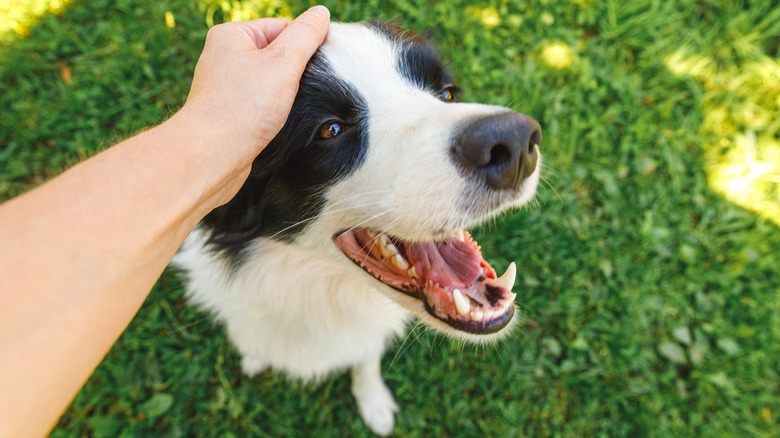
One of the great joys of having a dog is returning home from a tiring day and being met with a flurry of joyful energy. The excited look on your dog's face tells you how happy they are to see you, but it also indicates how impactful your absence is to them. Research consistently shows that dogs become stressed when their human companions leave their side. A dog can't understand the context of your absence, so while you may just be popping out for a few minutes, from your dog's perspective, you walk through the door and vanish into oblivion. Fortunately, a study into canine behavior suggests that petting your dog before you leave could potentially make your absence easier for them.
Dogs' emotional bond with humans has been well-established since ancient times, and our canine companions have grown quite adept at reading our emotional needs. When it comes to understanding their needs, however, our knowledge is still very much evolving. While it is plain to see that our dogs miss us when we're gone, the way we approach this issue is changing. The longstanding belief has been that dogs who experience separation distress should be denied attention, forcing them to get used to being alone. However, a 2018 study published in the Journal of Veterinary Behavior compared the heart rates of dogs who were left like this versus dogs who were pet before being left alone, and the results showed that a little extra love can go a long way.
What research shows about petting your dog
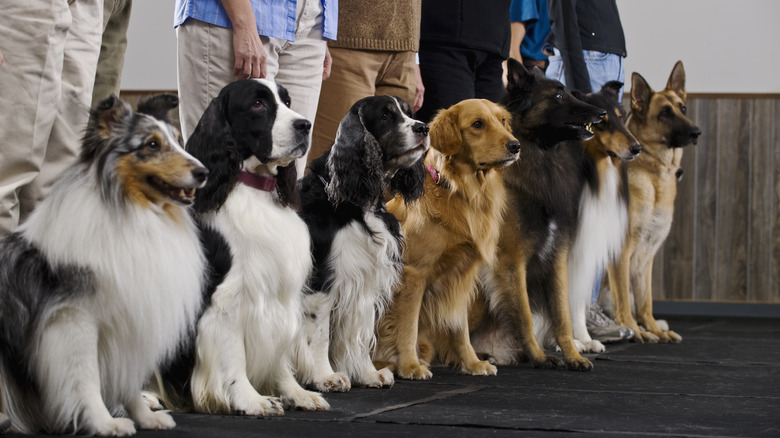
To test whether dogs respond best to tough love or a gentle touch before their owners leave the home, a team of researchers from the Universities of Pisa and Perugia in Italy studied 10 dogs of varying breeds and ages. To establish a baseline for general canine behavior, they specifically selected dogs that did not have a history of separation anxiety or chronic medical conditions.
Each of the dogs went through two tests. For the first test, owners walked their dog into a fenced yard where a researcher immediately tested their heart rate. The owners then talked to a researcher for one minute while ignoring their dog. The second test began the same way, but this time the owners pet their dogs throughout the minute they spent talking to the researcher. After a minute of conversation, the owners left the area, going far enough to hide their scent from the dogs. They remained there for three minutes, then returned to greet their pets.
The researchers observed the dogs throughout the three minutes that their owners were gone, and noticed that in both tests, the dogs spent about half of the time searching for their owners. However, when dogs had been pet before the absence, they searched for their owners at a more relaxed pace, and showed other calm behaviors like lying down. Researchers also found that the dogs' heart rates after separation were less elevated when they had been pet first.
Petting your dog is good for both of you

This research suggests that the old tough love approach of ignoring anxious dogs is less effective at reducing their stress than giving them gentle attention, and it's not just something you should do on the way out the door. Attention from humans, including petting, playing, and even just sharing space together, is shown to reduce stress in dogs in general. This isn't exactly novel knowledge either. A 1998 study in Applied Animal Behavior Science showed that petting reduced levels of the stress hormone cortisol, and could soothe dogs in frightening settings like veterinary clinics and shelters.
Petting your dog doesn't just reduce their stress levels; it's good for you, too. A fascinating study published in Anthrozoos in 2015 revealed a close correlation between cortisone levels in dogs and their owners, and showed that humans who kissed their dogs more frequently had higher levels of the stress-reducing hormone oxytocin. Just as we recognize the stress factors that affect our pets, like separation, dogs also appear to be attuned to the things that stress their owners out. Some research even suggests that your dog can tell when you feel unsafe around another person. There is a mutual sense of empathy in a human-pet relationship, and showing affection to your dog will only help them grow more confident in the security of that bond.