

An Unexpected Home Appliance Could Help Lower Blood Pressure
We may receive a commission on purchases made from links.
Blood pressure is one of the most important vital statistics that people don't pay enough attention to. Elevated blood pressure is directly linked to an increased risk of cardiovascular disease, which kills more people in the U.S. than any other condition. It's responsible for one out of every three deaths in the U.S. There are lots of things you can do to help moderate your blood pressure and reduce your risk of heart disease, but you probably never thought that buying an air filter like the WINIX 5510 was one of them.
A study published in the Journal of the American College of Cardiology set out to see if using a HEPA (high-efficiency particulate arrestance) air filter could reduce the blood pressure of study participants who lived within 650 feet of a highway. It turns out, under the right conditions, it can. Study participants whose initial systolic blood pressure was over 120 mmHg (which is elevated according to the American Heart Association's new blood pressure guidelines) saw an average 2.8 mmHg reduction compared to the control group.
Those are very promising results, but the changes weren't reflected in participants whose starting systolic blood pressure was less than 120 mmHg, nor was the diastolic blood pressure significantly different between groups. The trial itself was also relatively limited, with just 154 participants who were mostly white, middle-class Bostonians.
How do air filters lower blood pressure?
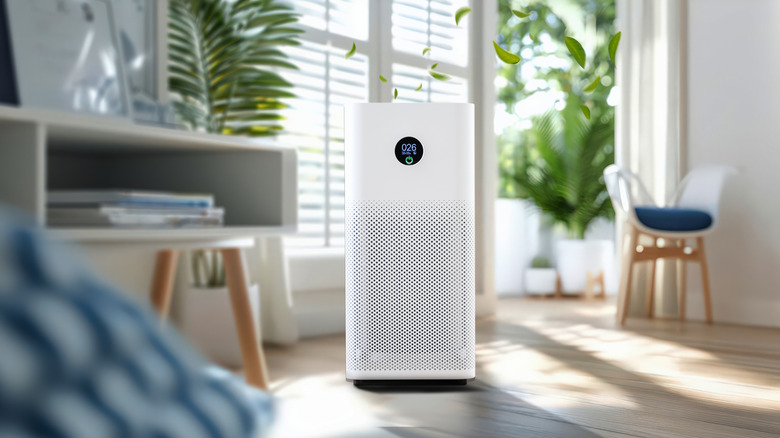
The key to how these HEPA air filters were able to reduce the blood pressure of study participants lies in the fine-particulate matter that they remove from the air. Recall that study participants lived within 650 feet of a major highway, exposing them to higher levels of exhaust, road dust, and tire and break wear. Numerous studies have pointed out the connection between these tiny particles and increased blood pressure.
In particular, a 2021 study published in Hypertension found that exposure to traffic-related air pollution has an immediate negative effect on systolic blood pressure. But, the researchers also found that this change in blood pressure could be just as quickly mitigated by removing the fine particles from the air via a HEPA filter.
If you think this could be a solution for you, make sure that you're getting an air filter that uses HEPA filters (it might cut down on odors, too). And do not mistake this for a medical intervention; a 2.8 mmHg reduction in blood pressure is meaningful, but it's not a lot. If you're concerned about your blood pressure, talk to your doctor before you go shopping on Amazon.