

Here's Why Scientists Use Mice To Do Experiments
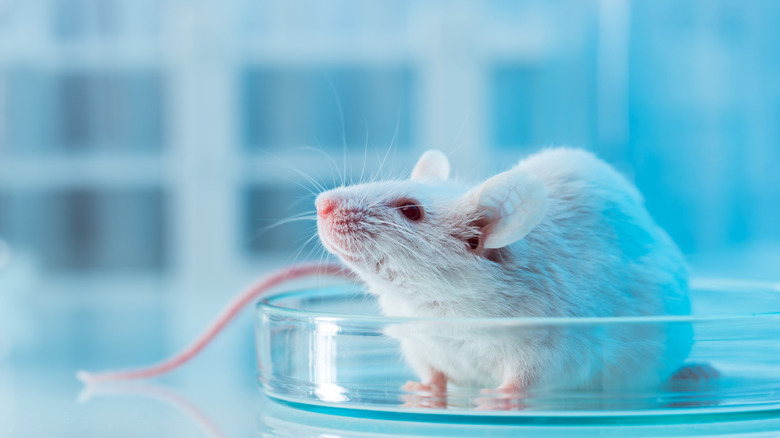
The ancient Greeks were the first recorded people to dissect animals and study their insides for science some 2,400 years ago, and the practice hasn't stopped. Today, fish, dogs, cats, invertebrates, and primates make up roughly 5% of the animals used for medical research. Unsurprisingly, the other 95% are rodents. Every year, mice, rats, hamsters, and guinea pigs meet their demise in laboratories across the world by the millions. But for those of us who desire life-saving medicines, cancer treatments, and surgical assurances, when looking at the pros and cons of animal testing, the ends justify the means.
The use of mice for biomedical research is called "murine studies." But scientists aren't searching for medications for rodents; they're searching for medications for people. There's an ethical advantage to it: Subjecting rodents to potentially deadly experiments in place of people is obviously preferred. Plus, mice reach sexual maturity within a few weeks, so they're abundant and dispensable. But why mice and not, say, lizards? The choice boils down to the fact that lab mice are physiologically and genetically similar to human beings.
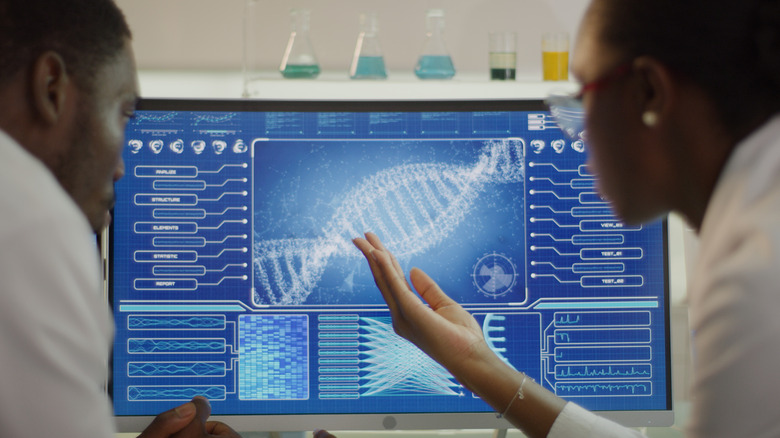
The similarities between mice and people are greater than you might think. In fact, laboratory mice have been bred for so long a time that they now comprise their own distinct domesticated subspecies, mus musculus domesticus. While a few mammals' genes more closely match our own, such as other primates, the domesticated lab mouse's long-studied behavior, physiology, and genetics makes it the ideal candidate. As a result, the entire mus musculus domesticus genome has been sequenced, allowing scientists to compare the effects of experiments on a genetic level. Side-by-side on a computer screen, the comparison is starkly equivalent; lab mice share about 85% of their functional DNA with humans, while the remaining 15% of genes are still closely related.
The genetic 'knockout' mouse model
Mice weren't always the first choice for science experiments. For instance, Louis Pasteur conceived of his germ theory of disease in the 19th century after experimenting primarily on dogs, as well as cows, sheep, primates, and many other mammals. It wasn't until 1902 that American businesswoman Abbie Lathrop purposefully bred mice for scientific laboratories, introducing a breed that eventually became the domesticated lab mouse of today. However, the use of mice for biomedical experiments skyrocketed in the 1980s with the birth of genetic modification, or "gene editing."
The advent of gene editing technology coincided with another revolutionary enterprise: the Human Genome Project (HGP). Started in 1990 and completed by 2003, the HGP was a massive collaboration between numerous countries that sought to sequence and map the entire human genome. Among its many groundbreaking discoveries, the HGP revealed the striking similarities between mouse and human DNA. We share virtually all the same sets of genes as mice — only 10 out of 4,000 don't have an equivalent counterpart.
And thanks to mice, it's easy to find out which genes do what. Since the gene editing boom, scientists have been able to study the function of individual genes by using 'knockout' mice. Simply knock out, or remove, a gene from the DNA of a mouse embryo, and observe the differences between the knockout mouse and a control group to see what the missing gene did. Such experiments provide biologists with deep insights into the roles of genes in human diseases, such as cancer. Many lab mice have perished in the pursuit of biology, but their sacrifices have allowed many people to live.