

The 11 Most Indestructible Organisms Of All Time
Life is a wonderful thing, but it can also be pretty squishy. The world's most biodiverse ecosystems can be threatened if their conditions change enough, and even the toughest animal species with no natural predators may find themselves in trouble when they're still young or if the actions of humanity influence their habitat.
Of course, life can also be very resilient. There is a handful of life forms out there that can survive things that make them seem outright indestructible. Some of them are simply sturdy enough to survive the conditions in some of the most hostile environments on Earth. Others have developed specific abilities and physical properties that enable them to live through situations that would see pretty much any other organism throw in the towel. And others still have simply found themselves a cozy spot in the circle of life, and taken it over in a way that makes it extremely clear that they're not about to leave regardless of what the rest of the planet throws at them.
They may be very different from each other, and their survival strategies are all across the board, but the following 11 organisms all belong to a very exclusive club. They're some of the most indestructible things of all time.
The immortal jellyfish is precisely what it says on the label
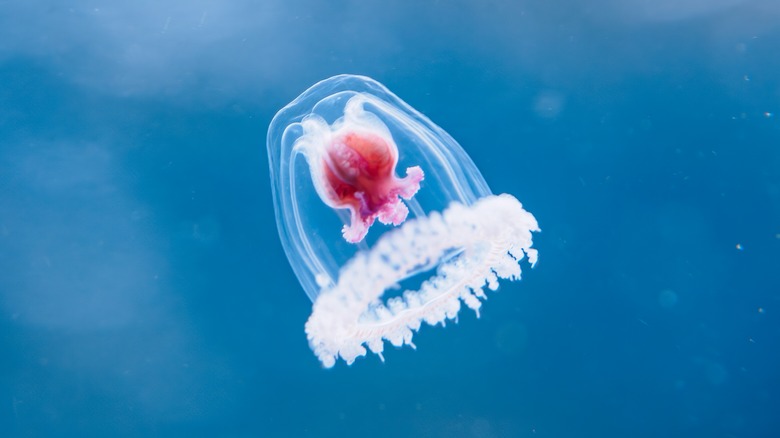
When you hear the word "jellyfish," it's easy to imagine something truly fragile and malleable, perhaps something that couldn't possibly live more than a few months in the harsh, predator-filled conditions of the ocean. Normally, that assessment would be pretty correct, too. The average jellyfish rarely makes it beyond 18 months or so ... but there's an exception. A potentially immortal exception.
The jellyfish in question is Turritopsis dohrnii, colloquially (and quite understandably) known as the immortal jellyfish. The trick behind this tiny organism's ability to potentially live forever is surprising. Instead of just staying alive for an indeterminate period of time, the jellyfish reacts to injuries or other physically risky factors by effectively reversing its aging process and shrinking back to the same sort of minuscule polyp it spent its early childhood as. The polyp will then grow back into the jellyfish ... until the next bout of starvation or trauma starts the process anew.
This system is known as transdifferentiation, and while it's obviously hard to determine that something is functionally immortal, scientists believe that the aging reversal process of the immortal jellyfish gives it the potential to live forever. Understandably, this ability has earned T. dohrnii plenty of interest from the scientific community, which is attempting to seize its transdifferentiation ability's considerable potential for the field of medicine.
Tardigrades can survive pretty much anywhere
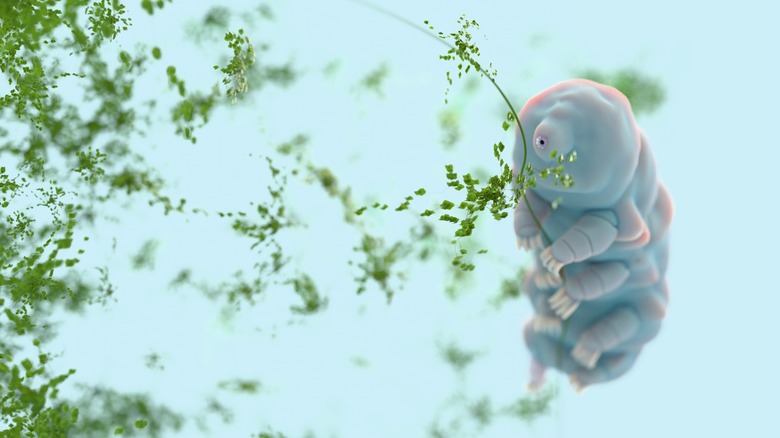
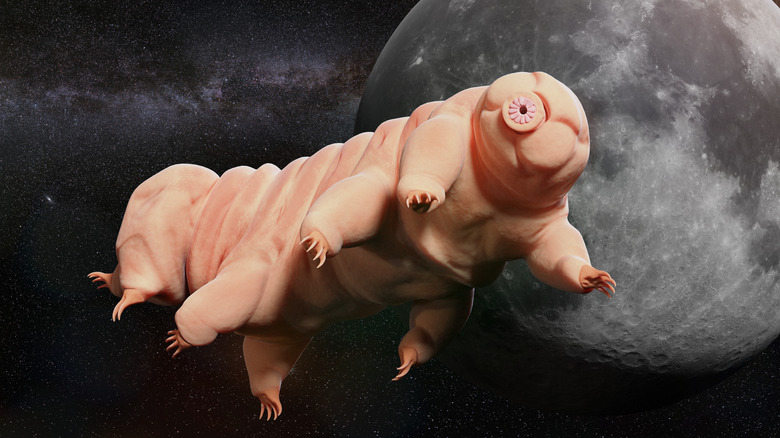
Tardigrades might be the most famously indestructible organism ever discovered. They're minuscule organisms that are only about 0.04 inches long, and usually enjoy damp, vegetation-heavy outdoors environments. Still, they aren't really particular about their hangouts when push comes to shove. There are some 15,000 tardigrade species out there, and they have proved themselves able to survive just about any environment or condition life throws at them.
The tardigrade can survive physical threats like severe radiation, drying, and temperatures that range from very close to the coldest possible temperature — aka absolute zero — to a scorching 300 degrees Fahrenheit. Because of this, tardigrades can handle some of the most hostile environments to exist on Earth, from the depths of the ocean to extremely high mountains.
Even the cold vacuum of space isn't necessarily a game-ender for tardigrades. While space permanently damages astronauts, one 2007 experiment sent a group of tardigrades to orbit Earth on a space craft while subjecting them to the vacuum and radiation of space. They eventually dried out and UV-B ultraviolet radiation killed many, but amazingly, some of them still survived their 10-day space trek. Tardigrades have made multiple space trips since, and their extreme survival abilities mean that science is very interested in them. There are hopes that their unique survival abilities could be the key to not only finding ways to make space travel safer, but to unlock new possibilities on the fields of agriculture and medicine.
Habrobracon wasps can withstand absurd amounts of radiation
Historically speaking, cockroaches enjoy a reputation as survivors. The old joke about them and The Rolling Stones guitarist Keith Richards being the only things sturdy enough to survive a nuclear war is so famous that in 2020, the Children's Museum in West Hartford, Connecticut, named a Madagascar hissing cockroach after the musician. It's all in jest, of course, but such stories reflect the way cockroaches are seen as ultimate survivalists of the insect kingdom when it comes to apocalyptic nuclear scenarios.
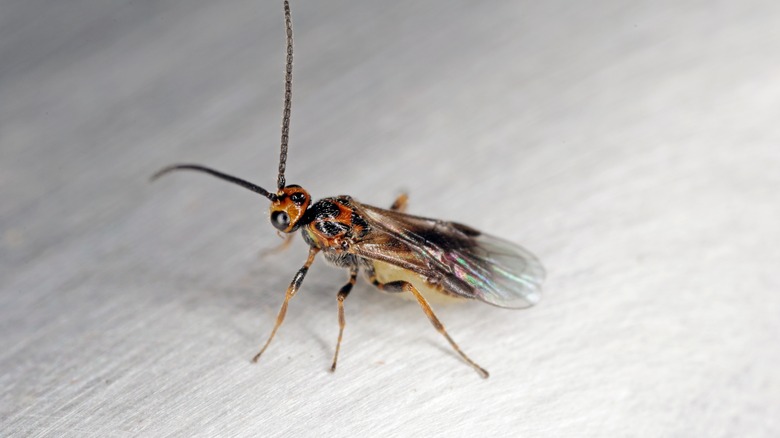
But there's another insect that fits this bill far better. Habrobracon hebetor is a small parasitic wasp that uses its stinger to inject its eggs into other insects, which will be then eaten alive by those growing larvae. This sounds pretty nasty, but the Habrobracon is harmless and even benevolent to humanity — there are ways to use it as a watchdog insect that reduces the need for pesticides, given its tendency to live in grain storages and target pests like weevils.
While parasitic wasps that hang around in our food and inject their hungry offspring into other insects doesn't exactly lend itself well into the cultural archetype of a sturdy survivor, that's exactly what this particular one is. Habrobracons, as it happens, can withstand an astounding 180 times the human being's lethal dose of radiation. For comparison, cockroaches — the supposed post-nuclear holocaust alpha species — can only take six to 15 times the human lethal dose.
Glass sponges are ridiculously long-lived
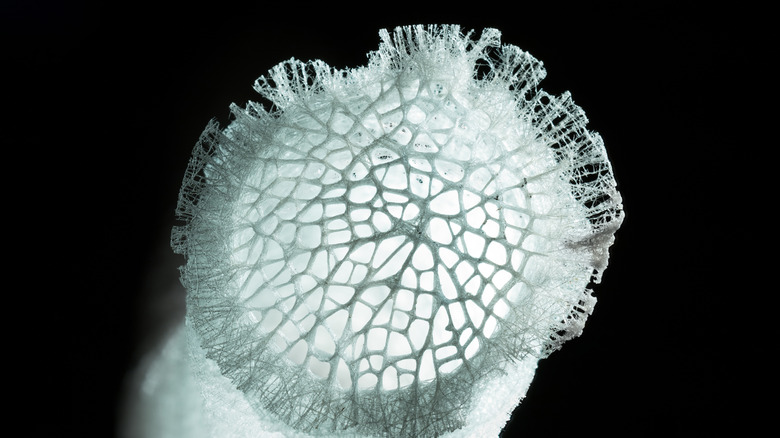
What's the longest time an organism could possibly live without indulging in immortal jellyfish-style reboot hijinks? The go-to answer might be something like the Greenland shark, which might be able to reach the incredibly advanced age of 500 years and beyond. However, the age of merely five centuries would barely qualify it as a newborn if you ask the glass sponge, which may be able to live as long as 15,000 years.
In all fairness, though, it's not a particularly glamorous existence. Glass sponges start their life as larvae that the parent sponge releases in the water. They float around until they land on a firm ocean floor surface, at which point they set up shop and start growing a complex skeleton made of thin silica spicules, which both protects the organism and filters sea water to provide plankton and bacteria for sustenance.
This quiet way of life and the fact that they live on deep ocean floors has enabled the glass sponge to go about its business relatively unnoticed by humanity. In fact, until researchers stumbled upon a living glass sponge colony in 1987, we were pretty sure that these organisms had been extinct for 40 million years.
Arapaimas are armored water tanks with backup breathing systems
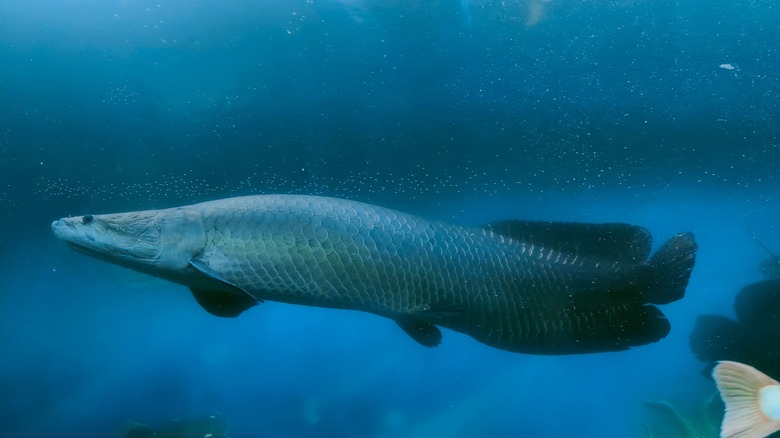
Water is a tough environment for any animal, but if you follow the food chain high enough, there just might be a point where you find an organism that has evolved into a ludicrously invincible survival machine. As far as freshwater fish go, this honor might just go to the not-so-humble arapaima.
The largest freshwater fish in South America, the arapaima's maximum length hovers around 10 feet. As an apex predator of the Amazon River and its adjacent waters, it feeds by suddenly hoovering whatever catches its fancy into its mouth to be crushed and devoured. However, for the purposes of this article, the really interesting thing about the arapaima is its sheer sturdiness. Its scales are enforced by a collagen layer that makes the animal so durable that other dangerous and notoriously bitey animals in its living environment — caiman and piranhas — can't bite through it.
In addition to its own formidable hunting method and the fact that it's protected from hostile jaws that haunt its habitat, the arapaima has another survival trait that makes it stand head and shoulders above your average fish — and it has nothing to do with size. Even when the arapaima gets stranded in a body of water with an inadequate oxygen supply, it doesn't mind. That's all thanks to a special swim bladder that can double as a sort of lung, which allows the massive fish to breathe air whenever necessary.
Armillaria ostoyae spreads, sweeps, and lives for thousands of years
Not every organism is an animal. As we're about to learn, some of the most impressively indestructible survival methods come courtesy of fungi and flora, thanks to their ability to spread their existence in ways that are perfectly normal to them but would look like a horror movie if an animal tried the same.
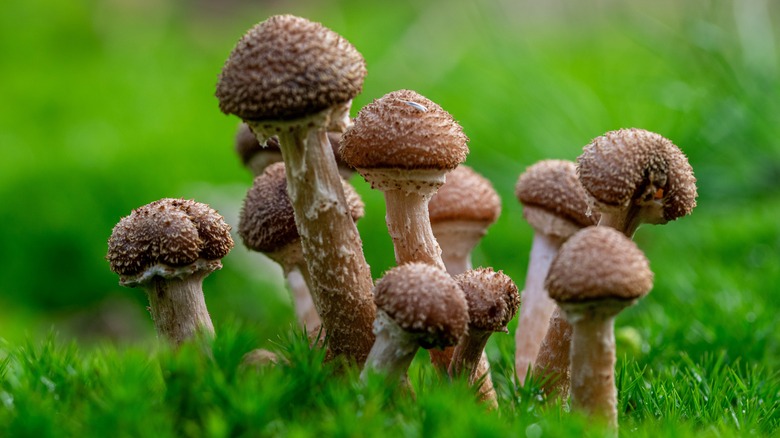
On the fungal front, a very viable candidate for ultimate durability is a fungus called Armillaria ostoyae. Its power is based on its ability to spread over a large area. It grows around tree roots and can reach into nearby areas with stringy rhizomorphs, which is a method of growth that can lead to a truly gigantic fungal web that lives for an absurdly long time.
A particularly large and long-lived A. ostoyae specimen can be found in Oregon's Malheur National Forest. Jokingly known as the Humongous Fungus, this colossus could be around 8,650 years old. Measurements have indicated that the Humongous Fungus is an extremely fitting name, since its growth seems to cover around 2,385 acres. Thanks to its method of growing, the fungus is a web of interconnected and largely underground components rather than a single, gigantic biomass — but if it was all collected in one place, the organism could weigh around 35,000 tons.
Echidnas treat wildfire as an inconvenience
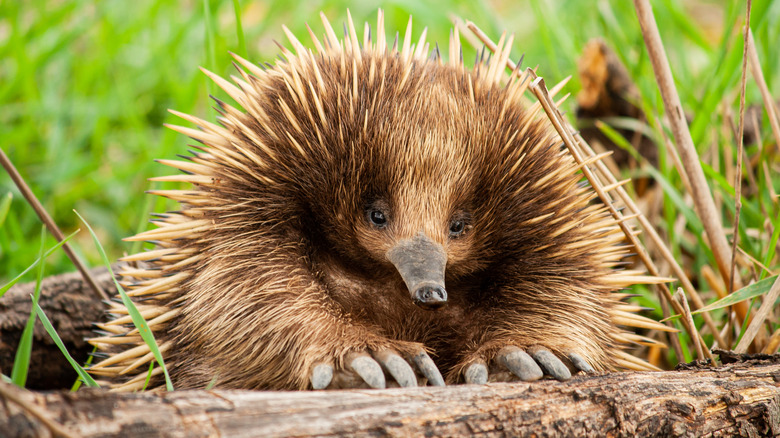
As durable, sturdy, and generally invincible as the organisms on this list are, subjecting them to a rampaging wildfire without an obvious escape might put a serious dampener on many of their survival abilities. But then, after the fires would eventually stop raging, the humble short-beaked echidna would emerge from the ground, sniff the ashes, and start feasting on ants that can't stay hidden among the vegetation anymore.
Echidnas are already tiny survivalists thanks to their elusive nature and the spiny quills that make them a tough encounter for prospective predators and opponents. What takes them above and beyond is the fact that they can shrug off fire. First, they burrow underground or under things that can shelter them. Then, they hit torpor — a "hibernation lite" state where the animal's system slows down — to let the situation cool down. An echidna can remain in this state for weeks, so it can use it to ride out quite a lengthy fire. In some cases, the shelter isn't quite good enough, in which case the fire might, for instance, partially melt their spikes down ... but nevertheless, the echidna has all the tools it needs to survive a dangerous large-scale threat that its habitat can face.
Pando is a clone forest that may have been around since the last ice age
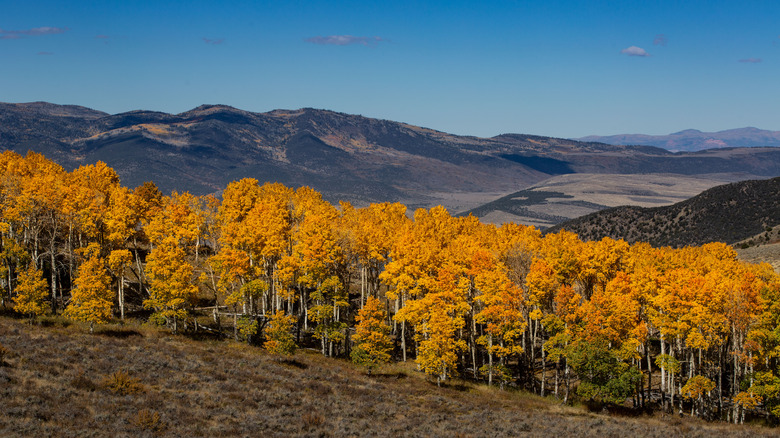
When is a forest not a forest? It's a good question ... that the very existence of the quaking aspen system Pando will open for debate.
Located in Utah, Pando looks like your average forest that spreads over 106 acres. However, looks can be deceiving. The truth about Pando is that it's comprised of a single organism's root system, which has created a forest's worth of clone trees over time. Individual clone trees come and go, and the tree count hovers somewhere between 40,000 and 47,000. Yet, Pando as a whole may have been around since the last ice age, so its estimated age could be as high as 80,000 years.
Pando's age alone speaks to its durability, and with an estimated total weight of almost 13 million pounds, it's a truly mighty organism — heaviest one on record, in fact. While various bugs and tree diseases have caused Pando some issues as of late, the mighty clone tree system is still standing as part of the Fishlake National Forest.
Olms can eschew food for a decade
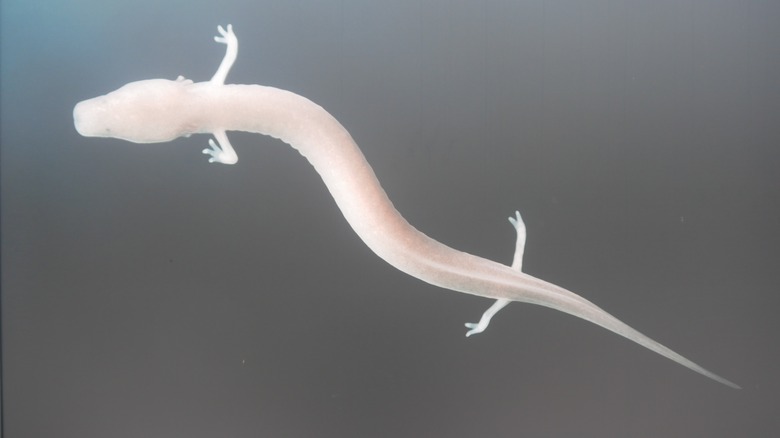
Being sturdy, long-lived, or well-armored is one thing. Being able to survive for an unbelievably long time without food is a different game altogether. This is the superpower of the olm, a sightless cave salamander and a surprising grand master of energy conservation.
Olms can afford to take things slow, having a comparatively luxurious life span that can exceed 100 years. It's impressive just how slow they can go, too. If they don't have enough food available, they can slow down their metabolism and nourish themselves with the reabsorption of their own body tissue. This isn't just something they can keep up for a few week or months — an olm can get by without eating for as long as 12 years.
Not only can an olm skip dinnertime for years on end, but its lifestyle is so slow that it can completely stop moving and still remain alive without issue. This, too, can last for far longer than you might guess: In 2020, one particular olm started moving after spending seven years completely immobile.
Deinococcus radiodurans can withstand pretty much anything

Any list of durable organisms is bound to feature at least one stubbornly unkillable germ. In this case, the bacteria kingdom is represented by one very special bacterium, which stands proudly above all others when it comes to sheer indestructibility.
Playfully dubbed Conan the Bacterium, Deinococcus radiodurans lives up to the moniker by being far and away the most indestructible organism on this list. Where human limit for radioactivity comes to a hard stop at around 10 Grays, D. radiodurans can take a thousand times that and survive. That sheer amount of radiation should kill any bacteria, but it's just one part of Conan the Bacterium's amazing powers of survival.
Researchers suspect that D. radiodurans is so sturdy because its composition features the metal manganese, and a metallic theme is certainly a good thematic fit for its array of bacterium superpowers. Apart from radioactivity, it's very resistant to several other environmental extremes — so much, in fact, that when scientists have discussed the kind of ancient remains of life that might be able to stay dormant just under the surface of Mars for hundreds of millions years, they have noted that Earth's very own D. radiodurans would be able to do precisely that.
Honey badgers are willing to take on anything
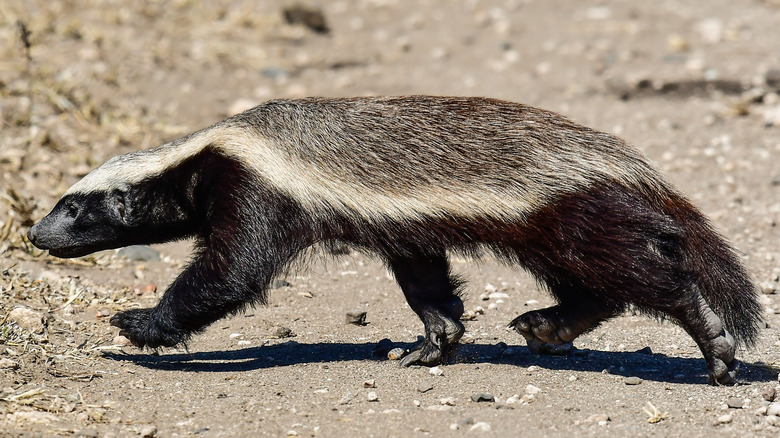
When indestructible organisms are discussed, furry mammals are rarely first-ballot entries on the list. Then again, the honey badger loves to exceed expectations.
Even large honey badgers weigh only around 30 pounds, but they make up for their lack of size on other fronts. Their thick skin is effectively natural leather armor that can withstand attacks like bites, and loose enough that an attacker soon discovers that a honey badger with teeth on its neck has plenty of wriggle room to reach its attacker with its own teeth and claws. They're also deceptively smart, their constitution is sturdy enough to survive venomous snake bites, and they have skunk-style scent glands to terrorize opponents with.
Another thing in the honey badger's bag of indestructibility tricks is its peerless aggression. While they're generally peaceful, an opponent that startles them will notice that the honey badger's "fight or flight" mode is closer to a "fight and fight some more" mode. In these cases, they rush their enemy and deploy their scent glands. Their fearless attitude doesn't make them entirely safe from other animals, but they still compete in a weight class that's far beyond their actual size: Though they can and do eat pretty much everything, they're fully capable of attacking prey animals 10 times bigger than they are. Honey badgers have even been known to chase lions away from carcasses so they can feed on the big cat's catch of the day themselves.