

Pretty Plants That Can Also Help Purify The Air In Your Home

There are certainly many causes and effects of air pollution you might think of, which can include toxins from vehicle emissions, fires, power plants, and more. However, air pollution is not an outdoor-exclusive problem. The inside of your home or workplace can be just as toxic as the air outdoors, and there are a variety of sources that contribute to this environment. Among these items are volatile organic compounds (VOCs) that start off as solids or liquids, but then emit harmful gasses over time. Unfortunately, there are numerous sources of VOCs in the average home, including in stationary items like carpeting, paint, and furniture, as well as cosmetics and cleaning products. Common types of these gasses are benzene, formaldehyde, trichloroethylene, and xylene. To combat these harmful off-gasses, it makes sense to try to reduce the use of certain chemicals indoors and to try to open windows as often as possible. There may also be some benefit to adding certain houseplants to your indoor spaces, many of which have attractive qualities as a bonus.
Since there are a number of chemical reactions involved in the growth of plants, scientists have been looking at how certain plants might possibly purify indoor air. Part of this interest harkens back to a landmark study conducted by NASA in the 1980s, when the agency tested numerous plants to remove specific toxins. Overall, more clinical studies are needed to determine the quantity of toxins that specific plants may be able to remove from indoor air, but even nominal benefits are better than nothing at all. Just keep in mind no plant can literally "clean" the air in your home.
Bamboo palm offers a high transpiration rate
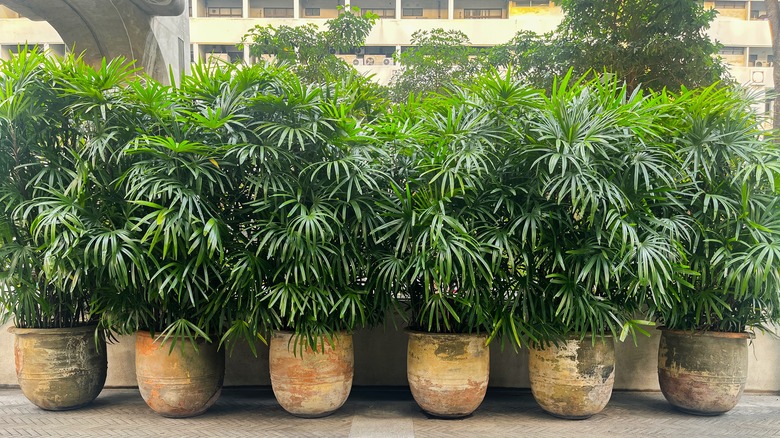
Known for its interesting cane like stems, bamboo palm (Chamaedorea seifrizii) isn't technically a member of the bamboo family. As a small palm tree, this durable plant is commonplace indoors because it's relatively easy to grow and doesn't require a lot of direct light to thrive. It's also coveted as one of the best plants for indoor air thanks to its ability to remove toxins like formaldehyde; this ability boils down to bamboo palm's higher than average transpiration rate. Transpiration itself is the process in which plants lose water, and it also allows for the natural exchange in gasses to take place.
Before bringing bamboo palm in your home for the purposes of better air quality, know that it has the potential to grow 7 feet tall. For this reason, the plant works best when placed on the ground. Place the plant in an adequate sized container with moist, well-draining soil. Also, if your bamboo palm bears fruit, you'll want to handle these with care as they are known to emit oxalic acid, which causes contact dermatitis in humans.
Boston fern may remove formaldehyde from indoor air
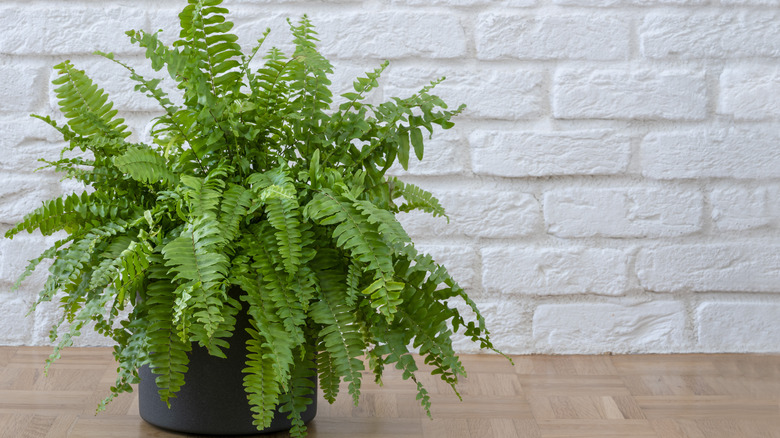
Boston fern (Nephrolepis exaltata) is an attractive ornamental plant that is native to warm forests in Central America, South America, and parts of the Caribbean. Despite its affinity for warmth and humidity, Boston fern can do well as a container grown houseplant in almost any climate. As a bonus, the plant has the capability of removing a variety of volatile organic compounds from the air. Online blogs explain that while it can remove common indoor toxins like benzene, toluene, and xylene, Boston fern is most adept at filtering formaldehyde, and a 2022 study from Applied Sciences confirms Boston fern's possible formaldehyde removing capabilities. Interestingly though, the authors also found the plant's soil substrate removed the harmful substance more so than the plant itself (which was especially effective at removing carbon dioxide). This effect might be attributed to microorganisms that thrive in the soil.
The key with growing Boston fern indoors is to position it in a way that the foliage is allowed to hang downward over the container; you can grow the plant in a traditional pot, or even in a hanging basket. Boston fern also prefers medium bright sunlight exposure, as well as temperatures between 65 and 95 degrees Fahrenheit. Use well-draining soil while ensuring it stays moist, and try to maintain good humidity levels in your home. This will ensure the health of your Boston fern while also increasing its potential air purifying capabilities.
Chinese evergreen might also help remove formaldehyde
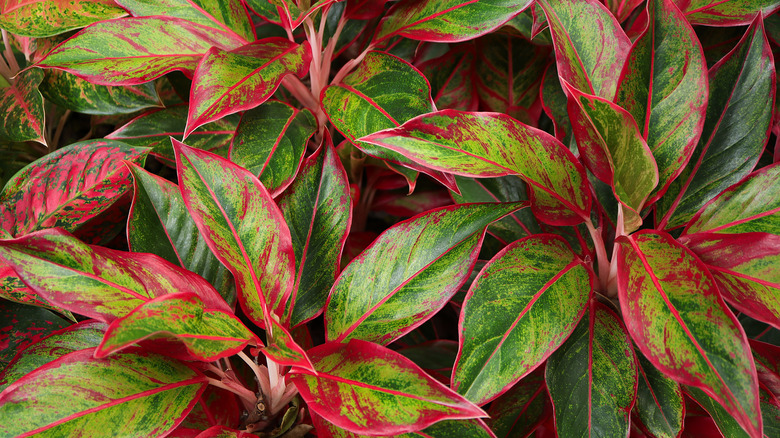
Best known for its interesting variegated leaves, Chinese evergreen (Aglaonema) is historically a perennial plant from Southeast Asia. In recent years though, the plant has grown a reputation as an attractive houseplant. The Chinese evergreen's smaller maximum height of over 1 foot also makes it particularly ubiquitous in office settings. If you bring a Chinese evergreen plant into your home or workspace, you may even gain some air quality benefits, according to both the Cornell University Cooperative Extension and the University of Connecticut. While the exact impacts of the plant on indoor air warrant further study, the famous 1988 NASA Clean Air Study found Chinese evergreen removed formaldehyde in particular.
Chinese evergreen plants aren't terribly difficult to grow, but there are some key points to understand about their care so they can thrive and continue to possibly clean your air. First, these plants prefer partial to deep shade, so you'll want to keep them away from prolonged sources of bright sunlight. All cultivars prefer higher humidity and moist, well-draining soil. Also be aware that the plant can emit calcium oxalate crystals that are considered toxic to humans and pets. You might also consider wearing gloves when caring for your Chinese evergreen to prevent possible contact dermatitis rashes.
English ivy can be grown indoors to remove pollutants
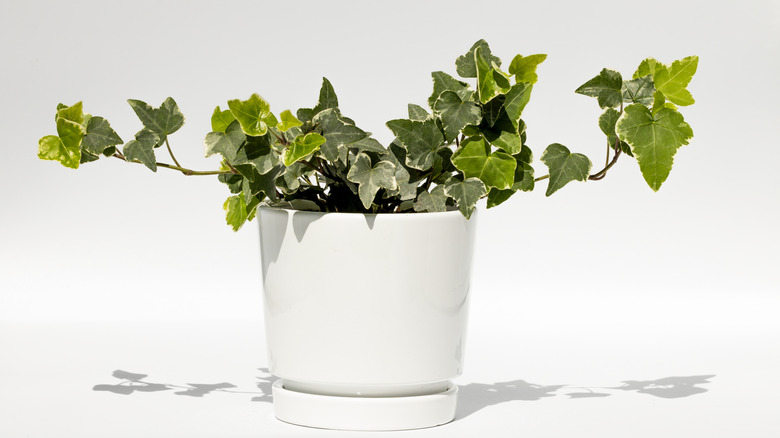
English ivy (Hedera helix) is a type of perennial vining plant known for its large green leaves. Unfortunately, this is an invasive plant that can become a gardener's nightmare because of its ability to quickly spread. While you certainly ought to avoid planting English ivy outdoors in your yard or garden, it can make for an attractive houseplant when contained in pots indoors. As a bonus, this plant may possibly remove indoor pollutants that may contribute to respiratory disorders. In particular, the plant is capable of removing benzene, formaldehyde, trichloroethylene, and xylene from the air. A previous study published in Science of the Total Environment even noted English ivy's ability to remove vehicle pollutants when grown in outdoor urban areas.
If you're looking for houseplants specifically for air quality control in your home, know that English Ivy prefers cooler temperatures; specifically, it thrives in daytime temperatures of 50 to 70 degrees Fahrenheit, and up to 10 degrees cooler than this at night. Like other types of ivy plants, English ivy does best in indirect medium to bright light. Rather than sunlight near a window though, the plant prefers artificial lighting. Handle English ivy with care, as it's possible to develop contact dermatitis. The leaves are also considered toxic to humans and pets when ingested.
Peace lily may promote better mood and air quality
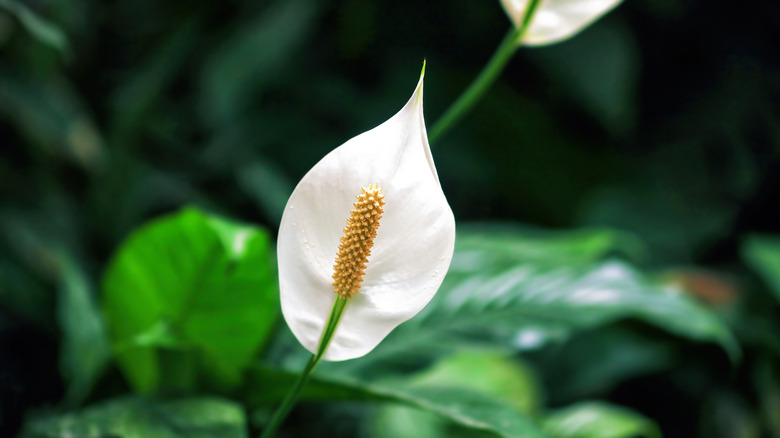
Arguably one of the best known plant houseplants, the peace lily (Spathiohyllum) is also an attractive plant that may boost overall mood. If you see it around office settings, this often has to do with the plant's reputation for boosted work productivity, and not solely its aesthetic appeal. This plant is known for its large green leaves and elegant white flowers, but it's also relatively easy to grow and maintain indoors. Aside from aesthetics and possible mental benefits though, peace lily also has a reputation for helping indoor air spaces. In fact, it might help to remove ammonia, benzene, formaldehyde, trichloroethylene, and xylene from the air. When identifying sources of pollution around your home, it's therefore possible peace lily can help out in a variety of ways.
To grow peace lilies for better air quality control, you can place the plants — which may grow up to 4 feet tall — in areas that receive a lot of indirect sunlight, as well as those with low light. These plants aren't particularly fussy about other growing conditions, except they do not like oversaturated soil and they don't care for temperatures below 55 degrees. Also, like Chinese evergreen, peace lily contains calcium oxalate crystals, which can be toxic when ingested.
Rubber plants may absorb formaldehyde from indoors
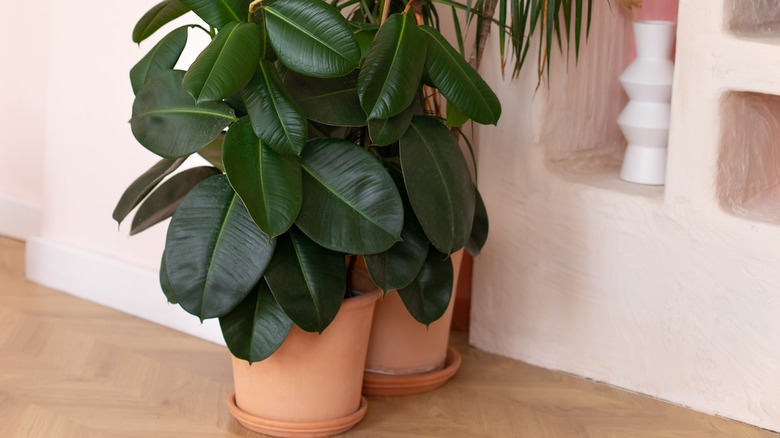
Rubber plant (Ficus elastica) is a popular houseplant due to its great visual appeal. Notably, the plant has long green leaves that are usually thick and shiny with purple or dark pink stipules on their stalks. On top of its ornamental nature, the rubber plant is thought to help remove VOCs from the air. The rubber plant is most discussed when it comes to formaldehyde control – a study by the International Journal of Environment and Pollution Research found that formaldehyde concentrations in a small room decreased by about 60% over the course of four weeks, with the researchers adding more rubber plants over that period.
If you're interested in adding rubber plants to part of your indoor air quality arsenal, pick a spot that offers low light away from any air vents. You'll also need to keep it in a spot that doesn't dip below 55 degrees at night. Interestingly, unlike other houseplants, the rubber plant is rather picky about placement. Once you've put it in an ideal location, it doesn't like to be moved. While a rubber plant can grow up to 100 feet tall in the wild, it usually keeps between 2 and 10 feet indoors.
Spider plants may remove a variety of air pollutants
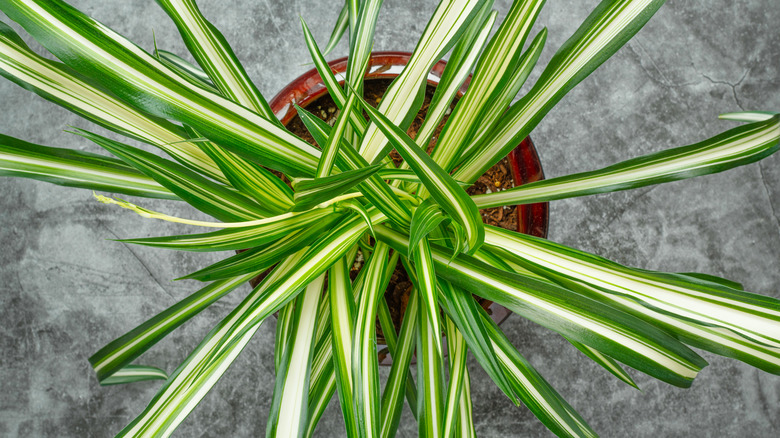
Known as a more beginner friendly houseplant, spider plant (Chlorophytum comosum) is coveted for its interesting leaves that spread out in a sort of spider-like fashion. Spider plant can be grown outdoors as a perennial, but many people grow it indoors for year-round visual interest, too. Aside from the aesthetic benefits of spider plant, there's also a possibility that it may absorb air toxins. Previous studies have suggested the plant may remove a variety of indoor air pollutants, including ammonia, benzene, cigarette smoke, and formaldehyde, as reported by the journal Air Quality, Atmosphere, & Health.
Unlike other houseplants that may be a bit more particular with light, water, and soil conditions, spider plant is relatively easygoing. With that said, it can still suffer from leaf burn due to lack of water or too little humidity. Spider plants are also sensitive to chemicals in tap water, so be sure to use distilled or filtered water during weekly watering sessions. For best results, place your spider plant in a well lit area and replant it in new pots when the spider-like leaves start to crowd out the container.
Snake plants might remove benzene and formaldehyde
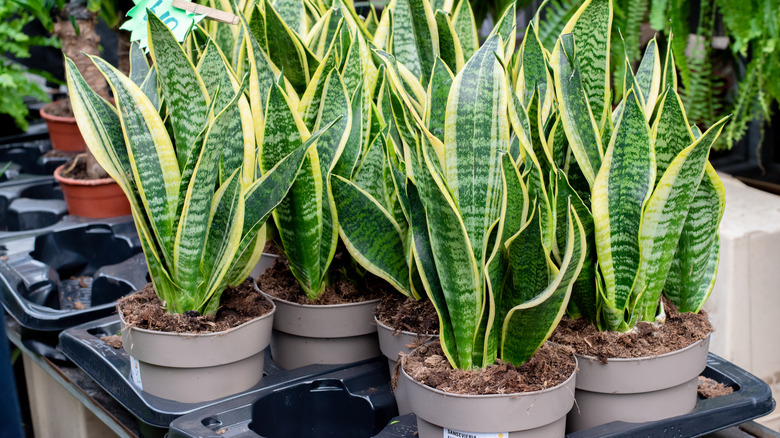
The snake plant (Dracaena trifasciata) is another appropriately named specimen that's named for the interesting shape of its leaves. Also nicknamed "mother-in-law's tongue," this plant has a reputation for being low maintenance thanks to its low light and water needs. Another key part of the snake plant's reputation is its ability to remove certain toxins from the air, which harkens back to NASA's Clean Air Study. Per results published in 1989, researches reported that snake plants were capable or removing large amounts of benzene and formaldehyde in the tested 24-hour period. The plant did not remove as many trichloroethylene particles as other tested plants, though.
Overall, if you want to possibly improve air quality with houseplants but you're not sure about your green thumb, it may be worth giving snake plant a try. Generally, plants need varying amounts of water, sunlight, and warm soil to grow. But unlike many other plants that prefer moist soil, snake plant can survive in dry conditions for several days. Be sure to water the plant at least once a month, though, or whenever the soil feels dry to the touch. Snake plant will also thrive in a low-light location around your house, making it ideal for a small rooms with few windows.
Weeping fig is also capable of removing air pollutants
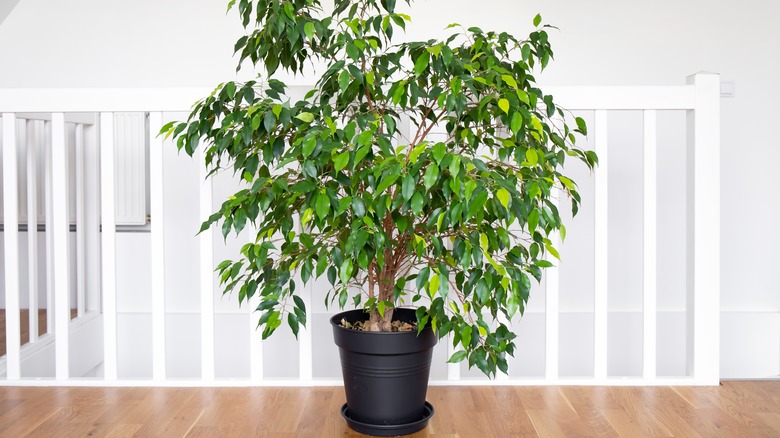
As a member of the same family as rubber plant, the weeping fig (Ficus benjamina) is also known for its interesting large leaves and its ability to survive with little care. Many weeping fig varieties sport stems that interlace with one another, which provides an additional aesthetic to this seemingly simple houseplant. Aside from its attractive qualities, it's possible that the plant can remove toxins from indoor air, too. During NASA's Clean Air Study, the agency noted that weeping fig was among several plants that was capable of removing large amounts of formaldehyde and benzene, as well as smaller numbers of trichloroethylene chemicals.
When grown indoors, weeping fig can grow between 2 and 10 feet tall. There are also dwarf varieties available if you're short on floor space, though. This plant also has a long lifespan of at least two decades when properly cared for. The key is to keep it in a singular spot with bright indirect light, and to water it whenever the soil is dry. If you have small children or pets, be mindful that weeping fig can be toxic to both the skin and digestive system. Weeping fig is also a slow-growing plant when container grown, so you should not count it among the plants you want to grow fast for science projects.