

The Unexpected Reason Sauropod Dinosaurs Swallowed Stones
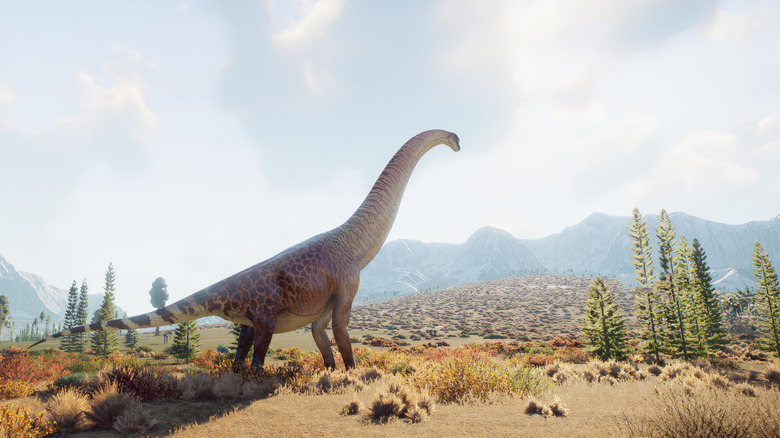
It's well-accepted that the sauropod dinosaurs were some of the most successful and largest animals to walk the earth. Paleontologists have uncovered hundreds of species within the clade Sauropoda, yet for all their genetic diversity, the sauropods shared many common features. They had long necks, long tails, walked on all fours, and were almost exclusively herbivorous. But plants weren't the only things the sauropods consumed. According to a long-held theory, many sauropods also swallowed rocks.
Stomach stones, or "gastroliths," aren't a novel concept. Many animals today swallow stones to aid in digestion, including numerous species of reptiles, birds, and even mammals. Once swallowed, the stones are tumbled around using stomach muscles to break down tough food fibers in a process called a "gastric mill." Some gastroliths today, such as those in whales and seals, may also be used to aid in buoyancy. For sauropods, however, gastroliths were likely used in their massive stomachs to help digest a diet of nearly 75 pounds of plant matter per day.
The first clue that sauropods used gastroliths is in their teeth. Sauropod dentition indicates that most species did very little chewing. Modern cows have four stomach chambers to break down plant matter, while humans have molars for chewing. Sauropods had neither; at least, not in any closely comparable way. Instead, sauropod teeth were like simple pegs or chisels — great for tearing leafy greens from tree tops (sticks and all) and poor for chewing. Thus, sauropods depended on their gut bacteria to do the actual food processing. Such evidence alone provides a strong argument for sauropods employing gastric mills. However, new analyses have raised contradictions in the theory, with some researchers pointing out holes in the fossil record.
The enduring mystery of fossilized stomach stones
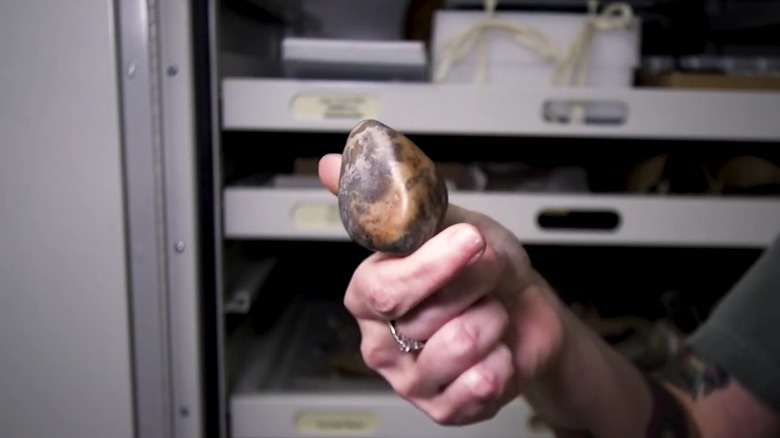
Sauropod teeth indicate they didn't chew, and many fossilized sauropods have been found with smooth stones embedded in their stomach area. Thus, paleontologists have long believed that sauropods must have used those stomach stones in gastric mills to help in digestion. But in the past few decades, the long-standing assumption has been brought into question. A 2006 research paper published in Proceedings of the Royal Society B: Biological Sciences pointed out how the stones found in sauropod fossils are smooth and polished, while modern birds' gastroliths are abrasive. The authors argue that, while some sauropods may have used gastroliths, their stomachs didn't churn the stones in gastric mills.
But lead author Oliver Wings didn't stop there. Eight years later, Wings penned a follow-up research article, this time arguing that very few sauropods used gastroliths at all. According to the 2014 paper, published in Fossil Record, many of the sediments that earlier paleontologists had interpreted as gastroliths were likely the result of pyroclastic flows from volcanic activity. In other words, the rocks found in fossilized stomachs were actually deposited there well after the dinosaur died or simply transported via erosion.
While most paleontologists still accept the theory that sauropods swallowed gastroliths to help them digest fibrous plant matter, the exact nature of extinct organisms will always be up for debate. Paleontology is a science of interpretation based on few clues. From fossilized bones to dinosaur eggshell fragments, we can only make educated guesses about the distant past. That's not to say the surmising of paleontologists is pure imagination — but a time machine would certainly help end the debate.